
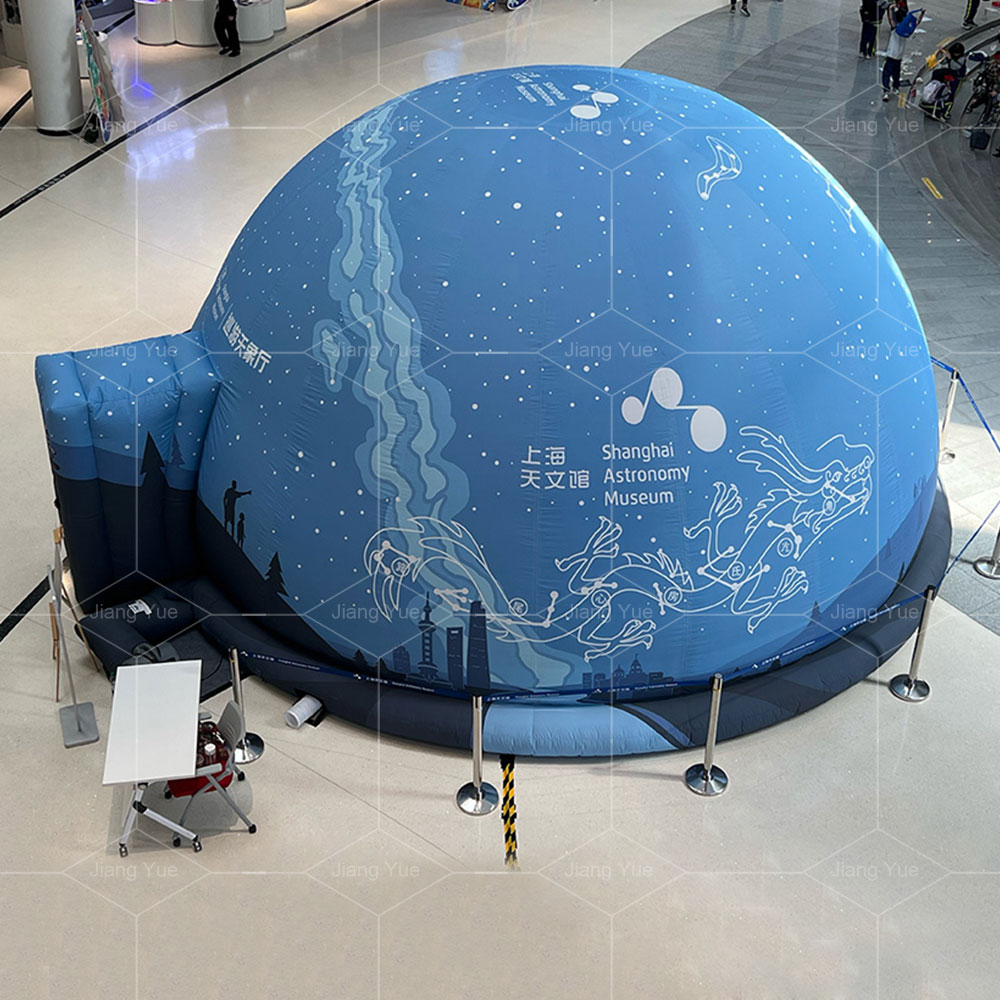
Portable Planetariums for Schools: Bringing the Universe to the Classroom
A portable planetarium can turn an ordinary school space into an immersive environment for exploring the night sky. With an inflatable dome and a projection system, students can look up at stars, planets, and galaxies without leaving campus. For schools, it offers a memorable way to make astronomy and other science topics feel vivid, accessible, and engaging.
What Is a Portable Planetarium?
A portable planetarium is a temporary, dome-shaped theater that can be set up in a gym, multipurpose room, or other suitable indoor space. A presenter or projection system displays educational content across the inside of the dome, surrounding viewers with images of the sky and space.
Programs may introduce students to constellations, the solar system, lunar phases, eclipses, or the scale of the universe. Depending on the equipment and provider, presentations may also cover topics beyond astronomy, such as Earth science, weather, or the human body.
Why Schools Choose a Portable Planetarium
Seeing the night sky projected around them can help students connect abstract ideas to a visual experience. Instead of only reading about the movement of planets or the pattern of constellations, learners can watch those concepts unfold in a space designed for exploration.
- Supports classroom learning: Programs can complement lessons in science, math, geography, and technology.
- Encourages curiosity: An immersive presentation can prompt questions and discussion before and after the visit.
- Serves multiple grade levels: Many providers offer age-appropriate programs, from basic introductions for younger students to more detailed topics for older learners.
- Brings an experience to campus: Students can take part without the travel time and logistics of an off-site field trip.
- Creates a shared learning moment: A whole class or grade can explore the same subject together.
Planning a Visit
Before booking, schools should confirm that the available room can accommodate the dome and the number of students attending each session. Providers typically specify the required floor space, ceiling height, access to power, and setup time. A clear route into the building is also important, since the equipment must be brought to the installation area.
It helps to coordinate the visit with classroom instruction. Teachers can introduce key vocabulary or questions beforehand, then use the presentation as a starting point for follow-up activities. Students might map constellations, compare planet sizes, keep a moon journal, or research a question that came up during the show.
Choosing the Right Program
When comparing portable planetarium providers, schools can ask about the program’s learning goals, age range, presentation length, and alignment with current classroom topics. It is also useful to find out whether the show is live, recorded, or a combination of both, and whether students can ask questions during or after the presentation.
Accessibility matters, too. Ask how the provider can accommodate students with sensory, mobility, or other access needs. Schools should also clarify how groups are scheduled, how many students can attend at one time, and what supervision is expected from school staff.
Making the Most of the Experience
A portable planetarium works best as part of a broader learning experience rather than a standalone event. Before the visit, teachers can invite students to share what they already know about space and what they hope to discover. Afterward, students can draw a scene they remember, explain a newly learned concept, or investigate a question as a class.
For younger learners, a simple activity such as spotting familiar patterns in the sky can reinforce observation skills. Older students might explore how evidence from telescopes and spacecraft helps scientists understand distant objects. These follow-up discussions help connect the excitement of the presentation to lasting learning.
A Classroom Experience That Looks Up
Portable planetariums give schools a practical way to bring astronomy and other science topics to life. With thoughtful planning and a program suited to students’ ages and curriculum, a visit can inspire curiosity, support classroom learning, and remind students that discovery can begin right where they are—by looking up.
6 Essential Tips for Choosing the Right Portable Planetarium for Your School
- Choose a dome size that fits your classroom or gym.
- Check setup time and storage requirements before buying.
- Look for age-appropriate astronomy programs.
- Ensure the projector works with your school’s devices.
- Compare brightness and image quality in dim rooms.
- Train staff on setup, safety, and operation.
Choose a dome size that fits your classroom or gym.
Choose a portable planetarium dome that fits the space where it will be set up, whether that’s a classroom, library, or gym. Before booking, measure the available floor area and ceiling height, and check how much room is needed for entrances, seating, and safe movement. A dome that’s too large may not fit or leave enough space for students, while a smaller option can make it easier to schedule sessions in a standard classroom. Verify the provider’s requirements so setup goes smoothly and every student can enjoy a clear, comfortable view.
Check setup time and storage requirements before buying.
Before buying a portable planetarium, check how long it takes to set up and take down, and how much storage space the dome and equipment require. A system that fits your school’s schedule, room access, and storage capacity will be easier for staff to use and more practical to bring out for lessons and events. Ask the supplier about the number of people needed for setup, any special site requirements, and how the equipment should be stored between uses.
Look for age-appropriate astronomy programs.
Choose astronomy programs that match your students’ ages and learning levels. Younger children may enjoy simple introductions to the Moon, planets, and constellations, while older students can explore topics such as orbits, galaxies, and the scale of the universe. An age-appropriate presentation helps keep students engaged and makes the concepts easier to understand.
Ensure the projector works with your school’s devices.
Before booking a portable planetarium, confirm that its projector is compatible with your school’s devices and setup. Ask the provider which connections, operating systems, and software are required, and whether adapters or a dedicated computer are included. Testing the equipment in advance can help prevent technical delays and ensure the presentation runs smoothly.
Compare brightness and image quality in dim rooms.
When choosing a portable planetarium for schools, compare projector brightness and image quality in a dim room similar to the space where the dome will be set up. A brighter, sharper image can make stars and other details easier for students to see, while weak projection may look washed out or blurry—even in a darkened environment. If possible, ask for a demonstration or sample footage, and check how clearly the system displays fine details across the dome, not just at the center.
Train staff on setup, safety, and operation.
Train staff on how to set up, operate, and take down the portable planetarium before hosting students. Review the equipment manufacturer’s instructions, check that the dome is properly secured and exits remain clear, and explain any capacity limits and supervision procedures. Staff should also know how to use the projection and sound systems, troubleshoot common issues, and respond to an emergency. A practice run can help ensure the experience is safe, smooth, and focused on learning.