
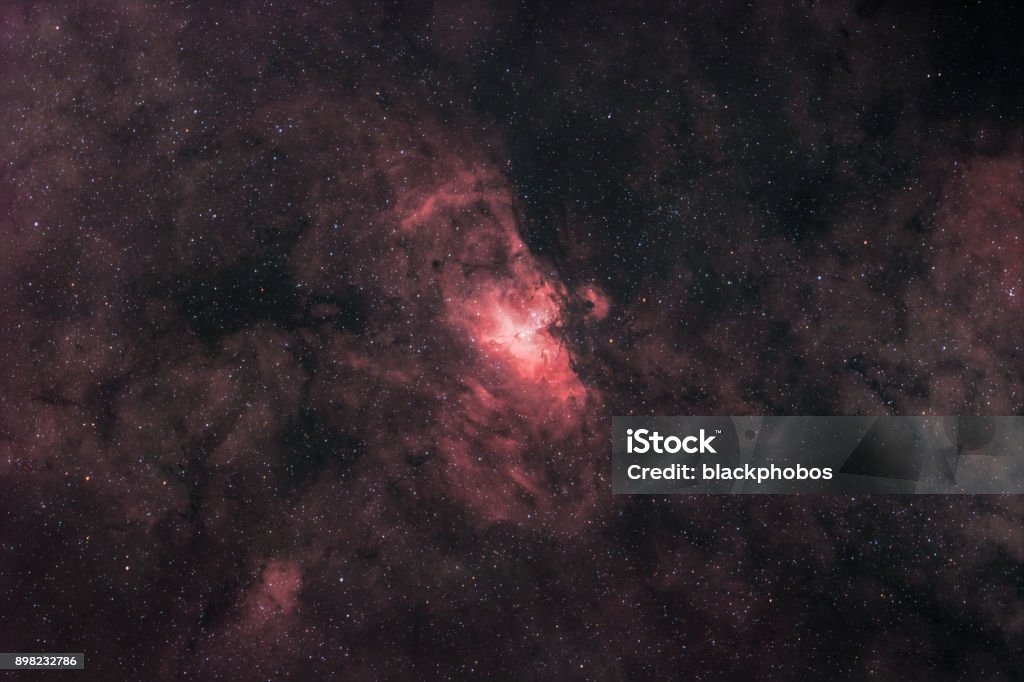
James Webb and the Eagle Nebula: A New View of the Pillars of Creation
The James Webb Space Telescope has given astronomers a remarkable new view of one of space’s most recognizable scenes: the Pillars of Creation. These towering columns of gas and dust lie within the Eagle Nebula, a vast star-forming region about 6,500 light-years from Earth.
A familiar cosmic landmark
The Eagle Nebula, also known as Messier 16 or M16, is home to the Pillars of Creation. The pillars are dense clouds of interstellar gas and dust where young stars are forming. They became famous after the Hubble Space Telescope photographed them in 1995, revealing a dramatic landscape of towering structures and glowing gas.
In 2022, NASA released new views of the pillars captured by Webb’s Near-Infrared Camera (NIRCam) and Mid-Infrared Instrument (MIRI). Webb’s images do more than offer a sharper look: they reveal features that are difficult to see in visible-light images.
How Webb sees through the dust
Much of the material in the pillars blocks visible light. Webb observes infrared light, which can pass through some of this dust and reveal stars and structures hidden from view. In the NIRCam image, numerous stars appear across the scene, while some of the thickest regions of dust remain dark.
MIRI observes longer infrared wavelengths, which are especially useful for studying cooler dust. Its view emphasizes the dusty structures and shows fewer stars than the NIRCam image. Together, the instruments help scientists examine different parts of this complex region.
Stars taking shape
The pillars are not solid columns. They are clouds of gas and dust sculpted by radiation and powerful winds from nearby massive stars. Inside the densest pockets, gravity can draw material together until new stars form. As young stars grow, they heat their surroundings and send out jets of material. These processes shape the clouds over time.
In Webb’s images, small reddish features near the edges of some pillars are associated with newly forming stars. Such details give researchers clues about how stars emerge from dense clouds and how their formation affects the material around them.
A snapshot of a changing nebula
The Pillars of Creation look majestic and still, but they are part of an active, evolving environment. Radiation from nearby stars gradually erodes the clouds, while denser regions can persist and continue forming stars. The scene captured by Webb is a snapshot of these processes unfolding across vast distances and timescales.
By combining Webb’s infrared observations with earlier images from Hubble and other telescopes, astronomers can compare what is visible at different wavelengths. Each view reveals a different aspect of the Eagle Nebula, helping scientists better understand how stars are born and how they transform their cosmic surroundings.
Why the images matter
Webb’s images of the Eagle Nebula are both visually striking and scientifically valuable. They show how infrared astronomy can uncover details hidden by cosmic dust, while offering researchers new ways to investigate star formation. Nearly three decades after Hubble introduced many people to the Pillars of Creation, Webb has brought the famous landscape into sharper focus—and revealed that there is still much to discover within it.
6 Fascinating Facts About the Eagle Nebula Through James Webb’s Eyes
- The Eagle Nebula is also called M16.
- Its famous Pillars of Creation are inside the nebula.
- Webb’s infrared cameras reveal stars hidden by dust.
- The nebula is about 6,500 light-years from Earth.
- Webb images show glowing gas and newborn stars.
- Compare infrared views to see details hidden in visible light.
The Eagle Nebula is also called M16.
The Eagle Nebula is also known as Messier 16, or M16, a name commonly used by astronomers and skywatchers. It is a star-forming region in the constellation Serpens and is famous for the Pillars of Creation, towering clouds of gas and dust photographed by the James Webb Space Telescope and other observatories.
Its famous Pillars of Creation are inside the nebula.
The Eagle Nebula is home to the famous Pillars of Creation, towering clouds of gas and dust where new stars are forming. Made especially well known by images from the Hubble Space Telescope, these cosmic pillars have also been observed by the James Webb Space Telescope, whose infrared instruments reveal details hidden within the dusty clouds.
Webb’s infrared cameras reveal stars hidden by dust.
Webb’s infrared cameras can peer through some of the thick dust in the Eagle Nebula, revealing stars that are difficult or impossible to see in visible-light images. This helps astronomers study young stars forming inside the nebula and better understand how they shape the clouds around them.
The nebula is about 6,500 light-years from Earth.
The Eagle Nebula, home to the famous Pillars of Creation, is about 6,500 light-years from Earth. That means the light captured by the James Webb Space Telescope began its journey across space roughly 6,500 years ago, giving us a view of the nebula as it appeared in the distant past.
Webb images show glowing gas and newborn stars.
Webb’s images of the Eagle Nebula reveal a vivid landscape of glowing gas and newborn stars. By observing infrared light, the telescope can peer through some of the cosmic dust that hides details in visible-light images, bringing young stars and the clouds around them into view. These observations offer a closer look at how stars form and gradually reshape their surroundings.
Compare infrared views to see details hidden in visible light.
Compare James Webb Space Telescope infrared images of the Eagle Nebula with visible-light views to discover details that dust can hide. Infrared light can pass through some of the thick clouds, revealing stars and structures that are difficult to see in visible light. Looking at both views gives a fuller picture of the Pillars of Creation and the active star-forming region around them.