
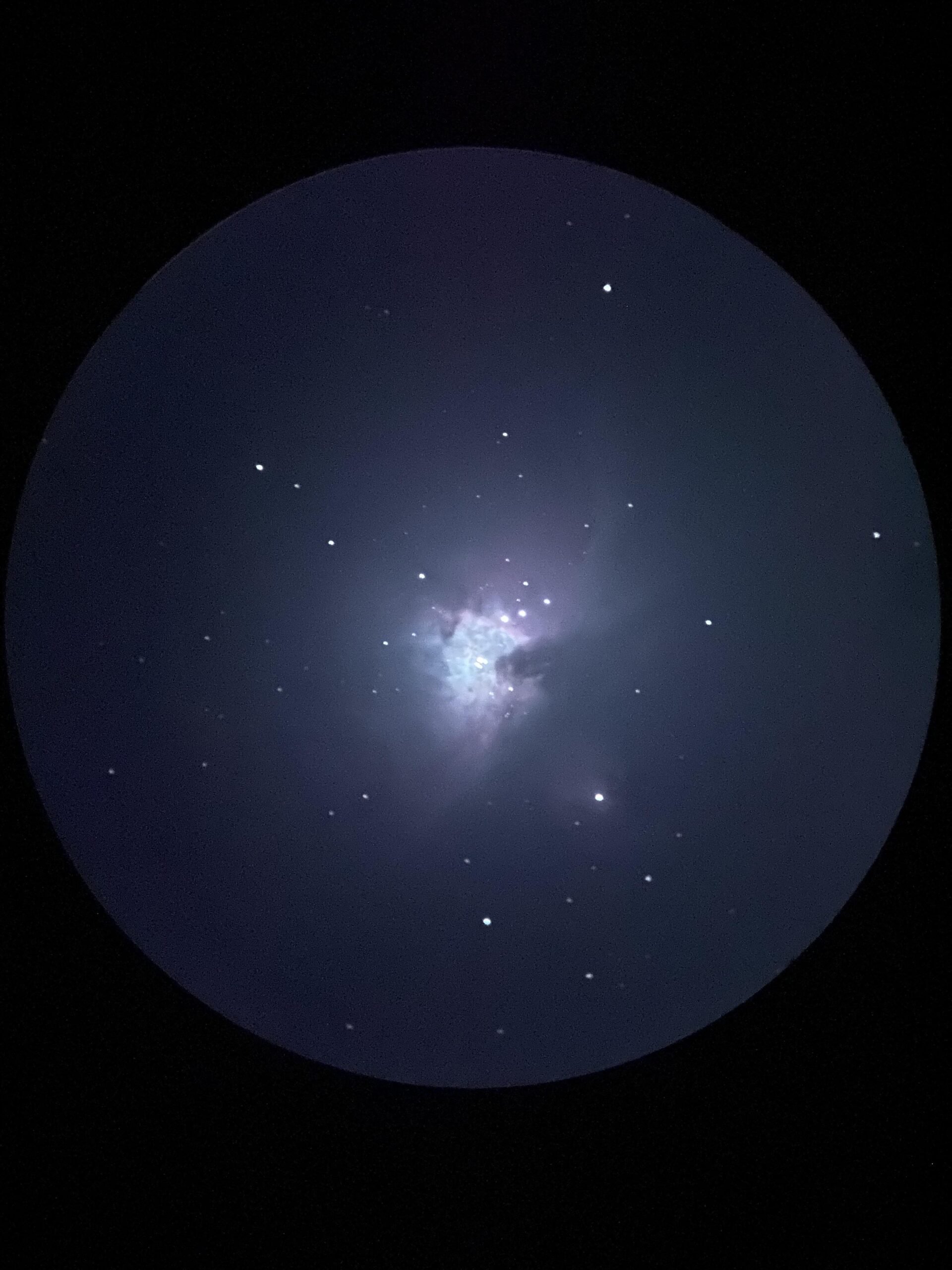
The Hubble Telescope’s Stunning Images of the Orion Nebula
The Orion Nebula, also known as Messier 42, is a mesmerizing stellar nursery located in the Milky Way galaxy. It is one of the brightest and most photographed celestial objects visible to the naked eye in the night sky. The Hubble Space Telescope, a revolutionary observatory orbiting Earth, has captured breathtaking images of this cosmic wonder, providing us with unprecedented insights into the formation of stars and planetary systems.

Spanning over 24 light-years across, the Orion Nebula is a region of intense star formation where young, hot stars illuminate and sculpt the surrounding gas and dust clouds. The Hubble Telescope’s high-resolution images reveal intricate details within this stellar nursery, showcasing delicate wisps of gas and dust, brilliant star clusters, and protoplanetary disks where new planets may be forming.
One of the most iconic features of the Orion Nebula captured by Hubble is the Trapezium Cluster, a group of four massive stars at the nebula’s core. These young stars emit powerful ultraviolet radiation that energizes the surrounding gas clouds, causing them to glow in vibrant hues of red, orange, and blue.
Through its observations of the Orion Nebula and other celestial objects, the Hubble Space Telescope has revolutionized our understanding of star formation processes and cosmic evolution. Its stunning images not only inspire awe and wonder but also drive scientific discoveries that shape our knowledge of the universe.
As we continue to explore the depths of space with tools like the Hubble Telescope, we uncover more mysteries waiting to be unraveled in distant galaxies and nebulae like the breathtaking Orion Nebula.
Exploring the Orion Nebula: 9 Fascinating Insights from the Hubble Space Telescope
- The Hubble Space Telescope has captured stunning images of the Orion Nebula, a vast stellar nursery located in the Milky Way galaxy.
- The Orion Nebula is one of the brightest and most beautiful nebulae visible to the naked eye from Earth.
- Hubble’s observations have revealed young stars, protoplanetary disks, and even brown dwarfs within the Orion Nebula.
- Studying the Orion Nebula helps scientists understand how stars are born and evolve within such stellar nurseries.
- The intricate details of the Orion Nebula’s structure can be best observed in high-resolution images taken by Hubble.
- Hubble’s observations have shown that the Orion Nebula is a site of intense star formation activity, with young stars surrounded by glowing gas and dust clouds.
- The distance between Earth and the Orion Nebula is approximately 1,344 light-years.
- Hubble’s infrared capabilities allow it to penetrate through dusty regions in the Orion Nebula, revealing hidden structures and objects.
- The study of the Orion Nebula with instruments like Hubble provides valuable insights into how planetary systems like our own solar system may have formed billions of years ago.
The Hubble Space Telescope has captured stunning images of the Orion Nebula, a vast stellar nursery located in the Milky Way galaxy.
The Hubble Space Telescope has astounded astronomers and stargazers alike with its breathtaking images of the Orion Nebula, a sprawling stellar nursery nestled within the Milky Way galaxy. These captivating snapshots reveal the intricate beauty and dynamic nature of this celestial region, where new stars are born amidst swirling clouds of gas and dust. The Hubble’s unparalleled clarity and detail offer a glimpse into the mesmerizing process of star formation, showcasing the cosmic ballet that unfolds within this captivating corner of our galaxy.
The Orion Nebula is one of the brightest and most beautiful nebulae visible to the naked eye from Earth.
The Orion Nebula stands out as a celestial gem among the night sky, showcasing its brilliance and beauty to stargazers on Earth. As one of the brightest nebulae observable without the aid of telescopes, its ethereal glow captivates observers with its intricate details and vivid hues. This cosmic masterpiece serves as a testament to the wonders of the universe, inviting us to marvel at the natural artistry of star formation and cosmic evolution in the vast expanse of space.
Hubble’s observations have revealed young stars, protoplanetary disks, and even brown dwarfs within the Orion Nebula.
Hubble’s observations of the Orion Nebula have unveiled a fascinating array of celestial phenomena, showcasing the birth and evolution of stars within this stellar nursery. Through its powerful lenses, the telescope has captured images of young stars in various stages of formation, protoplanetary disks swirling around these stellar infants, and even elusive brown dwarfs lurking amidst the cosmic clouds. These discoveries not only deepen our understanding of star formation processes but also offer a glimpse into the intricate interplay between gravity, gas, and dust that shapes the dynamic landscape of the Orion Nebula.
Studying the Orion Nebula helps scientists understand how stars are born and evolve within such stellar nurseries.
Studying the Orion Nebula provides scientists with a unique opportunity to delve into the intricate processes of star formation and evolution within stellar nurseries. By observing the dynamics of gas clouds, protoplanetary disks, and young star clusters in this cosmic region, researchers can gain valuable insights into the conditions and mechanisms that give rise to new stars. The data collected from studying the Orion Nebula not only enhances our understanding of stellar birth but also sheds light on the complex lifecycle of stars as they evolve and shape their surrounding environments.
The intricate details of the Orion Nebula’s structure can be best observed in high-resolution images taken by Hubble.
The intricate details of the Orion Nebula’s structure come to life in stunning clarity through high-resolution images captured by the Hubble Telescope. These close-up views reveal the delicate interplay of gas clouds, dust particles, and newly forming stars within this stellar nursery, offering a glimpse into the dynamic processes shaping our cosmos. The Hubble’s unparalleled precision allows us to appreciate the beauty and complexity of the Orion Nebula in ways that were previously unimaginable, showcasing the wonders of our universe with unparalleled depth and clarity.
Hubble’s observations have shown that the Orion Nebula is a site of intense star formation activity, with young stars surrounded by glowing gas and dust clouds.
Hubble’s observations have unveiled a captivating insight into the Orion Nebula, revealing it as a vibrant hub of stellar creation. The telescope’s findings showcase the intense star formation activity within this cosmic region, where young stars are cocooned by luminous gas and dust clouds. These celestial nurseries not only illuminate the surrounding space with their brilliance but also provide a glimpse into the dynamic processes that shape new stars and planetary systems within the vast expanse of the universe.
The distance between Earth and the Orion Nebula is approximately 1,344 light-years.
The Orion Nebula, a captivating stellar nursery located in the Milky Way galaxy, lies at a distance of about 1,344 light-years from Earth. This vast expanse of space serves as a celestial cradle where new stars are born and evolve, surrounded by intricate formations of gas and dust. The sheer magnitude of this distance highlights the cosmic scale of the universe and emphasizes the remarkable capabilities of instruments like the Hubble Telescope in capturing the beauty and complexity of distant celestial objects.
Hubble’s infrared capabilities allow it to penetrate through dusty regions in the Orion Nebula, revealing hidden structures and objects.
Hubble’s advanced infrared capabilities play a crucial role in unveiling the mysteries of the Orion Nebula by penetrating through dense clouds of dust that obscure visible light. By harnessing infrared wavelengths, the telescope can peer deep into the heart of this stellar nursery, exposing hidden structures and objects that would otherwise remain invisible. This capability enables astronomers to study the intricate processes of star formation within the nebula, shedding light on the birth and evolution of stars and planetary systems in this captivating cosmic environment.
The study of the Orion Nebula with instruments like Hubble provides valuable insights into how planetary systems like our own solar system may have formed billions of years ago.
The study of the Orion Nebula with instruments like the Hubble Telescope offers valuable insights into the processes that may have shaped planetary systems, including our own solar system, billions of years ago. By examining the intricate details of star formation and planetary disk structures within the nebula, scientists can piece together the evolutionary timeline of celestial bodies and better understand the conditions that led to the birth of planets and their orbits. This research not only sheds light on our cosmic origins but also deepens our appreciation for the dynamic and interconnected nature of the universe.