
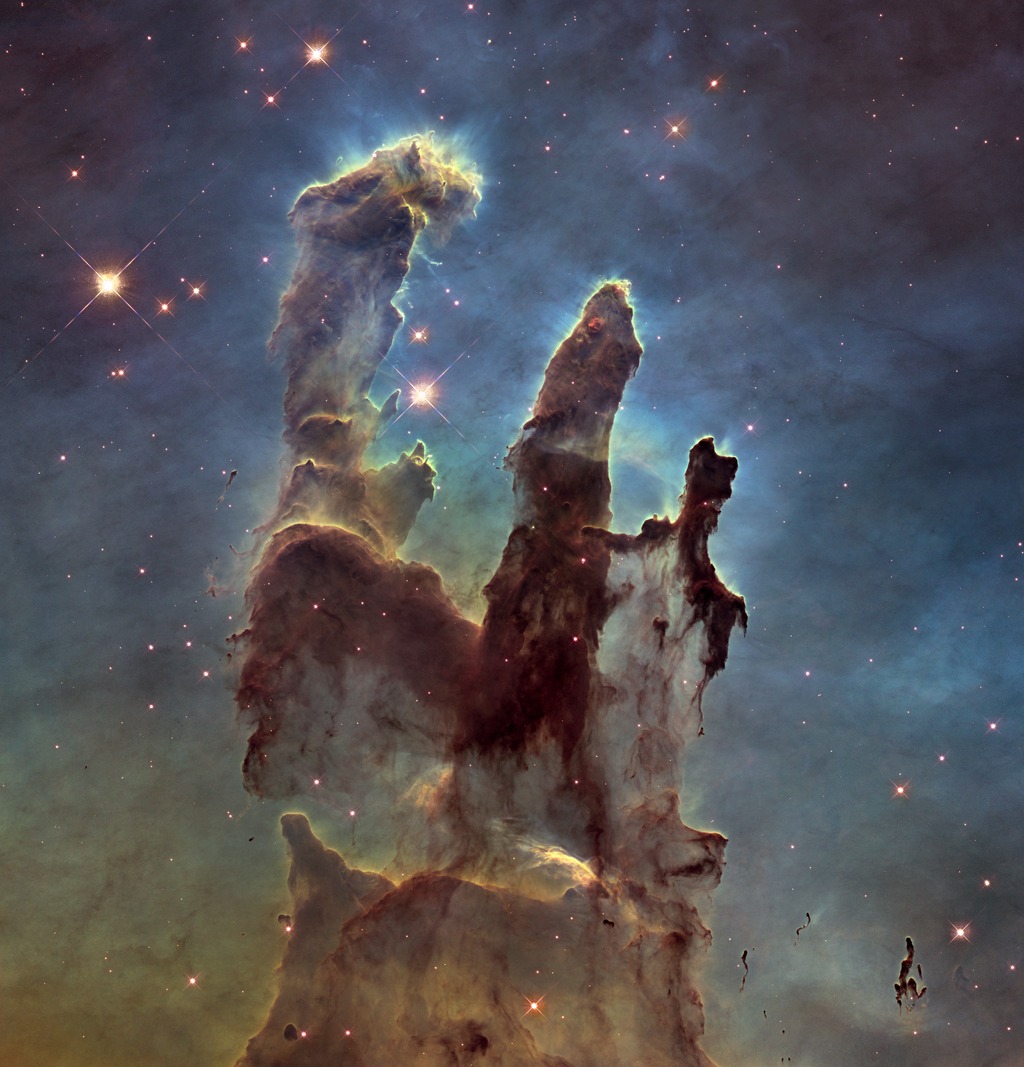
The Hubble Orion Nebula: A Window into Cosmic Beauty
Located in the constellation of Orion, approximately 1,344 light-years away from Earth, lies one of the most stunning celestial sights in our universe – the Orion Nebula. Also known as Messier 42 or M42, this stellar nursery has captivated astronomers and stargazers alike for centuries with its ethereal beauty and scientific significance.
The Hubble Space Telescope’s View
Thanks to the remarkable capabilities of the Hubble Space Telescope, we have been granted a front-row seat to the mesmerizing spectacle that is the Orion Nebula. The Hubble’s high-resolution images have unveiled intricate details of this cosmic masterpiece, showcasing a vibrant tapestry of gas clouds, dust lanes, and newborn stars.
A Stellar Nursery in Action
At the heart of the Orion Nebula lies a cluster of young stars known as the Trapezium Cluster. These hot, massive stars emit intense ultraviolet radiation that illuminates the surrounding gas and dust clouds, creating a stunning interplay of light and shadow. The nebula’s dynamic environment is a breeding ground for new stars, where dense cores of gas collapse under gravity to form protostars.
Scientific Insights and Discoveries
Studying the Orion Nebula provides valuable insights into the process of star formation and evolution. Astronomers have observed protoplanetary disks around young stars within the nebula, offering clues about how planetary systems like our own solar system may have formed billions of years ago. The Orion Nebula serves as a natural laboratory for understanding the complexities of stellar birth and early planetary development.
Appreciating Cosmic Beauty
Beyond its scientific importance, the Hubble Orion Nebula reminds us of the awe-inspiring beauty that exists beyond our own world. Its swirling clouds of gas and dust, illuminated by brilliant young stars, evoke a sense of wonder and humility as we contemplate our place in the vast expanse of space.
As we continue to gaze at celestial wonders like the Orion Nebula through the lens of instruments like the Hubble Space Telescope, we are reminded of the boundless mysteries awaiting exploration in our cosmic backyard.
Exploring the Orion Nebula: Hubble’s Window into Star Birth and Cosmic Wonder
- Stunning celestial beauty that captivates astronomers and stargazers.
- Located in the constellation of Orion, approximately 1,344 light-years away from Earth.
- High-resolution images captured by the Hubble Space Telescope reveal intricate details of the nebula.
- The Orion Nebula is a stellar nursery where new stars are born within dense gas clouds.
- Scientifically significant for studying star formation and protoplanetary disk dynamics.
- Provides valuable insights into early planetary system development processes.
- A natural laboratory for understanding the complexities of stellar birth and evolution.
- Evokes a sense of wonder and humility as we contemplate our place in the universe.
Challenges in Observing the Orion Nebula with Hubble: Distance, Time, and Dust
Stunning celestial beauty that captivates astronomers and stargazers.
The stunning celestial beauty of the Hubble Orion Nebula captivates astronomers and stargazers alike with its ethereal charm and mesmerizing allure. Its vibrant tapestry of gas clouds, dust lanes, and newborn stars, as revealed through the lens of the Hubble Space Telescope, serves as a testament to the breathtaking wonders that lie beyond our earthly realm. This cosmic masterpiece not only enchants the eyes but also sparks a sense of wonder and curiosity, inspiring us to gaze skyward and ponder the vast mysteries of the universe.
Located in the constellation of Orion, approximately 1,344 light-years away from Earth.
Situated within the constellation of Orion, at a distance of about 1,344 light-years from Earth, the Hubble Orion Nebula offers a mesmerizing glimpse into the depths of our universe. This vast cosmic expanse not only showcases the beauty of celestial formations but also serves as a reminder of the immense scale and complexity of the cosmos. The sheer distance that separates us from this stellar nursery highlights the incredible journey that light undertakes to reach our eyes, inviting contemplation on the wonders of space and time.
High-resolution images captured by the Hubble Space Telescope reveal intricate details of the nebula.
The high-resolution images obtained by the Hubble Space Telescope offer a breathtaking glimpse into the intricate tapestry of the Orion Nebula. These detailed observations unveil a mesmerizing display of swirling gas clouds, intricate dust lanes, and the delicate dance of newborn stars within the nebula. The clarity and precision of the Hubble’s images allow astronomers and enthusiasts alike to marvel at the beauty and complexity of this stellar nursery, providing valuable insights into the processes of star formation and evolution in our cosmic neighborhood.
The Orion Nebula is a stellar nursery where new stars are born within dense gas clouds.
The Orion Nebula stands as a celestial cradle, nurturing the birth of new stars within its dense gas clouds. This stellar nursery, located in the constellation of Orion, serves as a captivating reminder of the continuous cycle of creation and renewal that unfolds across the cosmos. Within its swirling nebulous embrace, protostars take shape and evolve, offering astronomers a glimpse into the intricate process of stellar birth and the formation of planetary systems. The Orion Nebula’s role as a cosmic incubator highlights the dynamic and ever-changing nature of our universe, where stars are born amidst the vast expanse of space, perpetuating the cycle of cosmic evolution.
Scientifically significant for studying star formation and protoplanetary disk dynamics.
The Hubble Orion Nebula stands as a beacon of scientific significance, offering a unique opportunity to delve into the intricate processes of star formation and protoplanetary disk dynamics. By studying this celestial marvel, astronomers gain invaluable insights into the mechanisms that govern the birth of stars and the evolution of planetary systems. The nebula’s rich tapestry of gas clouds and young stars provides a natural laboratory for unraveling the mysteries of cosmic creation, shedding light on the fundamental principles that shape our understanding of the universe.
Provides valuable insights into early planetary system development processes.
Studying the Hubble Orion Nebula offers a unique opportunity to gain valuable insights into the early development processes of planetary systems. By observing protoplanetary disks around young stars within the nebula, astronomers can unravel the mechanisms that lead to the formation of planets and other celestial bodies. This research not only enhances our understanding of how planetary systems like our own solar system came into existence but also sheds light on the intricate dynamics at play during the early stages of planetary evolution. The Orion Nebula serves as a captivating cosmic laboratory, offering a glimpse into the fascinating journey from stellar birth to planetary formation.
A natural laboratory for understanding the complexities of stellar birth and evolution.
The Hubble Orion Nebula serves as a natural laboratory for understanding the intricate processes of stellar birth and evolution. By studying the formation of new stars within this cosmic nursery, astronomers gain valuable insights into the fundamental mechanisms that drive the creation and development of celestial bodies. The dynamic environment of the nebula provides a unique opportunity to observe firsthand the stages through which stars emerge from dense gas clouds, shedding light on the mysteries of how stars are born and evolve over time.
Evokes a sense of wonder and humility as we contemplate our place in the universe.
The breathtaking beauty of the Hubble Orion Nebula has the remarkable ability to evoke a profound sense of wonder and humility within us as we gaze upon its celestial splendor. This cosmic masterpiece, with its swirling clouds of gas and dust illuminated by the brilliance of young stars, serves as a poignant reminder of our place in the vast universe. In the face of such magnificence, we are humbled by the sheer scale and complexity of the cosmos, prompting us to reflect on our own existence and ponder the mysteries that lie beyond our earthly realm.
Distance
The distance of approximately 1,344 light-years separating the Orion Nebula from Earth presents a significant challenge for astronomers aiming to study this cosmic wonder in intricate detail. The vast expanse of space that separates us from the nebula makes it difficult to capture precise observations and measurements, hindering our ability to fully understand its complex dynamics and structures. Despite technological advancements such as the Hubble Space Telescope providing us with remarkable insights, the sheer distance of the Orion Nebula serves as a reminder of the immense scale of the universe and the limitations we face in exploring its distant realms.
Limited Observation Time
Limited Observation Time: Despite the Hubble Space Telescope’s powerful capabilities, observing the Orion Nebula is constrained by various factors. Earth’s orbit around the Sun and the Hubble telescope’s packed schedule dictate the limited time available for capturing detailed images and data of this cosmic wonder. Astronomers must carefully plan and prioritize observations to make the most of the fleeting opportunities presented by these constraints, highlighting the delicate balance between scientific exploration and logistical challenges in studying celestial phenomena like the Orion Nebula.
Interstellar Dust
Interstellar dust poses a significant challenge when studying the Hubble Orion Nebula, as it can obscure intricate details and structures within the cosmic landscape. This fine dust, scattered throughout the nebula, acts as a veil that hampers our ability to fully grasp the composition and dynamics of this stellar nursery. Despite the remarkable capabilities of the Hubble Space Telescope, the presence of interstellar dust serves as a reminder of the complexities and limitations inherent in unraveling the mysteries of distant celestial phenomena like the Orion Nebula.