
The Geocentric Model: Understanding Earth’s Place in the Universe
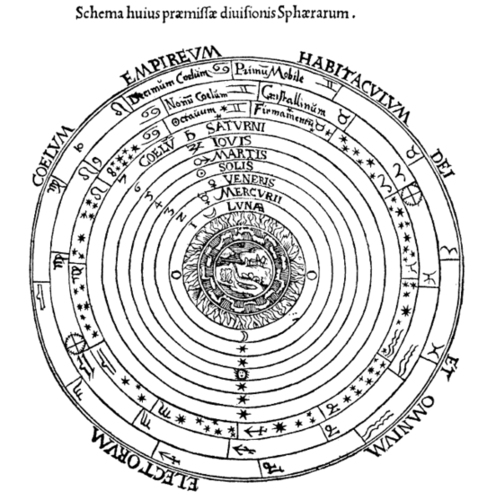
The geocentric model is a historical cosmological theory that posits Earth as the center of the universe, with all celestial bodies, including the sun, moon, planets, and stars, revolving around it. This concept dominated scientific and philosophical thought for centuries until it was eventually replaced by the heliocentric model proposed by Copernicus and later refined by Kepler and Galileo.
Historical Significance
Aristotle and Ptolemy were among the ancient Greek philosophers who contributed to the development of the geocentric model. They believed that Earth was stationary at the center of a series of concentric spheres carrying celestial bodies in circular motion. This model provided a simple explanation for the apparent movements of heavenly bodies in the sky.
Challenges and Revisions
Despite its intuitive appeal, the geocentric model faced challenges as astronomers made more precise observations. Discrepancies in planetary motions led to complex modifications, such as epicycles and deferents, to maintain its explanatory power. The work of Copernicus, who proposed a sun-centered system with Earth as a planet orbiting around it, marked a significant shift in cosmological thinking.
Legacy and Lessons
While the geocentric model has been largely superseded by modern heliocentric theories supported by observational evidence and mathematical rigor, its historical significance cannot be understated. It serves as a reminder of humanity’s evolving understanding of our place in the cosmos and the importance of critical inquiry in scientific progress.
In conclusion, the geocentric model offers valuable insights into how ancient civilizations conceptualized their relationship with the universe. By studying its principles and limitations, we gain a deeper appreciation for the ongoing quest to unravel the mysteries of space and time.
9 Essential Tips to Understand the Geocentric Model and Its Historical Impact
- Understand the geocentric model places Earth at the center of the universe.
- Recognize that ancient civilizations, such as Greeks and Egyptians, believed in a geocentric universe.
- Learn about Ptolemy’s geocentric model, which included epicycles to explain planetary motion.
- Know that Copernicus proposed a heliocentric model, challenging the geocentric view.
- Appreciate how Galileo’s observations supported the heliocentric model over the geocentric one.
- Explore how Kepler’s laws of planetary motion provided further evidence for a heliocentric system.
- Realize that modern understanding of astronomy favors a heliocentric solar system over a geocentric one.
- Study historical debates between proponents of geocentrism and heliocentrism in scientific thought.
- Keep in mind that while the geocentric model was once widely accepted, it has been largely replaced by modern astronomical models.
Understand the geocentric model places Earth at the center of the universe.
The geocentric model asserts that Earth occupies a central position in the universe, with celestial bodies orbiting around it. This concept, rooted in ancient philosophical and astronomical beliefs, symbolizes humanity’s historical perspective on our cosmic significance. Understanding the geocentric model provides insight into how early civilizations perceived their place in the vast expanse of space, shaping their worldview and influencing scientific thought for centuries.
Recognize that ancient civilizations, such as Greeks and Egyptians, believed in a geocentric universe.
Ancient civilizations, including the Greeks and Egyptians, held a firm belief in a geocentric universe where Earth was considered the center of all celestial motion. This foundational concept shaped their understanding of the cosmos and influenced their astronomical observations and philosophical inquiries. By recognizing the historical significance of the geocentric model in shaping early cosmological thought, we gain valuable insights into how ancient societies perceived their place in the vastness of the universe.
Learn about Ptolemy’s geocentric model, which included epicycles to explain planetary motion.
To understand the geocentric model, it is essential to delve into Ptolemy’s contributions, particularly his incorporation of epicycles to account for planetary motion. Ptolemy’s innovative use of epicycles, which are small circles within a planet’s orbit, allowed him to reconcile observed celestial movements with the Earth-centered view of the universe. By studying Ptolemy’s geocentric model and its reliance on epicycles, one gains insight into the intricate ways in which ancient astronomers sought to make sense of the cosmos and its complexities.
Know that Copernicus proposed a heliocentric model, challenging the geocentric view.
Copernicus’s groundbreaking proposal of a heliocentric model revolutionized our understanding of the cosmos by challenging the long-held geocentric perspective. By asserting that the sun, rather than Earth, was at the center of the solar system with planets orbiting around it, Copernicus paved the way for a new era of scientific inquiry and discovery. This pivotal shift in cosmological thinking not only transformed our perception of Earth’s place in the universe but also laid the foundation for future advancements in astronomy and physics.
Appreciate how Galileo’s observations supported the heliocentric model over the geocentric one.
Galileo’s groundbreaking observations played a pivotal role in supporting the heliocentric model over the geocentric one. Through his telescopic observations of the heavens, Galileo provided concrete evidence that supported Copernicus’ sun-centered model of the solar system. By observing the phases of Venus, the moons of Jupiter, and the mountains on the Moon, Galileo demonstrated that not all celestial bodies revolved around Earth. His empirical findings challenged the geocentric worldview and contributed significantly to the eventual acceptance of the heliocentric model, marking a transformative moment in our understanding of Earth’s place in the universe.
Explore how Kepler’s laws of planetary motion provided further evidence for a heliocentric system.
By delving into Kepler’s laws of planetary motion, one can uncover compelling evidence that bolstered the case for a heliocentric system over the geocentric model. Kepler’s groundbreaking discoveries, including his laws describing the elliptical orbits of planets and the relationship between a planet’s distance from the sun and its orbital speed, provided a more accurate explanation for celestial phenomena than the intricate epicycles of the geocentric model. Through Kepler’s meticulous observations and mathematical formulations, the scientific community gained crucial insights that supported the sun-centered view of our solar system, ultimately reshaping our understanding of Earth’s place in the cosmos.
Realize that modern understanding of astronomy favors a heliocentric solar system over a geocentric one.
In modern astronomy, it is crucial to acknowledge that the prevailing scientific consensus supports a heliocentric model of the solar system, where the sun is at the center and planets, including Earth, orbit around it. This paradigm shift from the geocentric view highlights the importance of empirical evidence and mathematical models in shaping our understanding of celestial mechanics. Embracing the heliocentric perspective allows us to appreciate the intricate dynamics of our solar system and reinforces the ever-evolving nature of scientific knowledge.
Study historical debates between proponents of geocentrism and heliocentrism in scientific thought.
Studying historical debates between proponents of geocentrism and heliocentrism in scientific thought provides a fascinating glimpse into the evolution of our understanding of the cosmos. Delving into the arguments, observations, and controversies that shaped these contrasting models offers valuable insights into how scientific paradigms are formed, challenged, and eventually revised. By exploring the intellectual clashes between geocentric and heliocentric theories, we gain a deeper appreciation for the complexity of astronomical inquiry and the enduring quest to unravel the mysteries of our celestial surroundings.
Keep in mind that while the geocentric model was once widely accepted, it has been largely replaced by modern astronomical models.
It is important to keep in mind that while the geocentric model was once widely accepted as the prevailing cosmological theory, it has since been largely replaced by modern astronomical models, such as the heliocentric model. The evolution of scientific understanding and advancements in observational technology have led to a more accurate depiction of Earth’s place in the universe, highlighting the dynamic nature of scientific progress and the continuous refinement of our knowledge about the cosmos.