
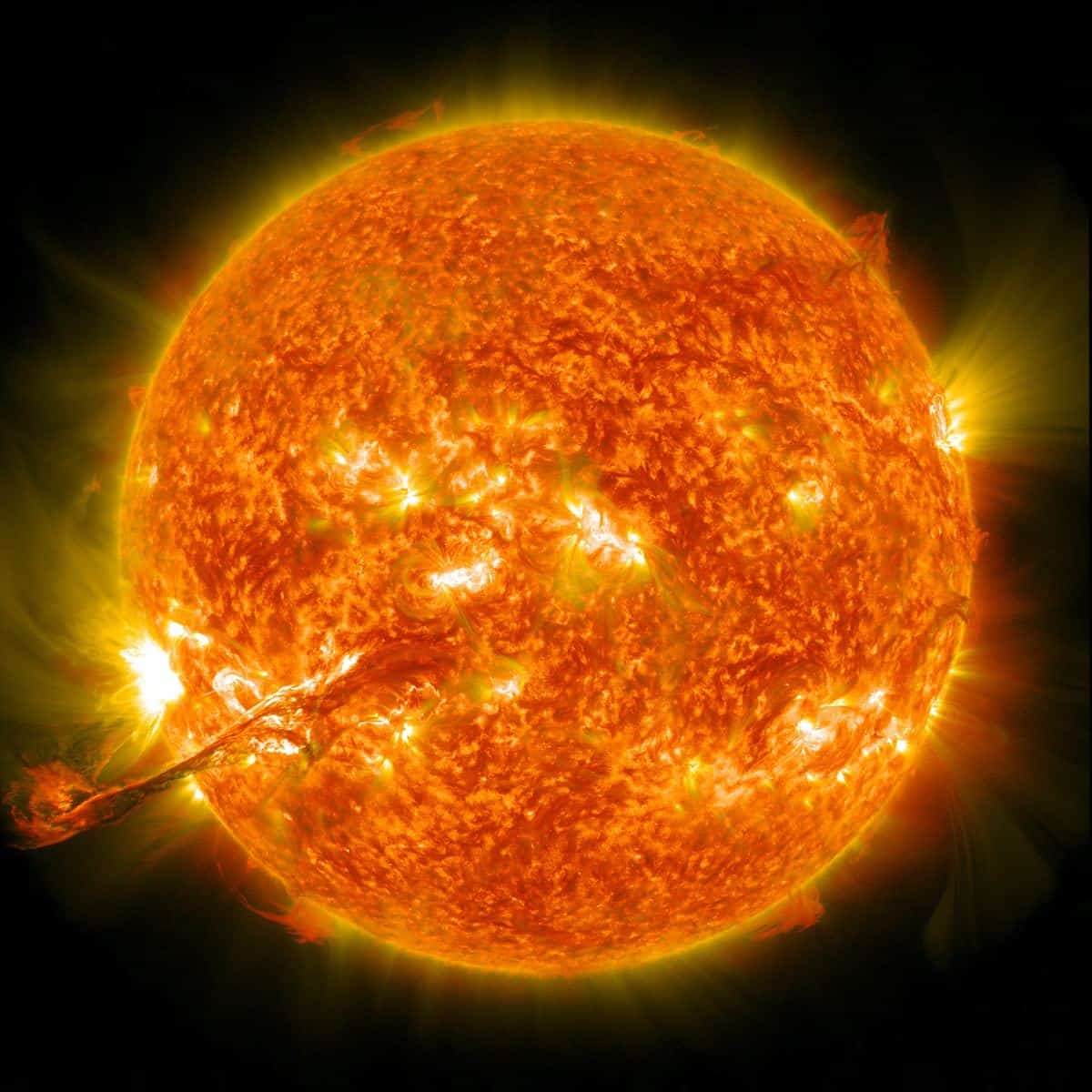
The Sun: A Star of Wonders
The Sun, our nearest star, is a fascinating celestial body that plays a crucial role in sustaining life on Earth. Here are some intriguing facts about this radiant orb:
Composition and Size
The Sun is primarily composed of hydrogen (about 74%) and helium (about 24%). It has a diameter of about 1.4 million kilometers, which is approximately 109 times that of Earth.
Energy Source
The Sun generates energy through a process called nuclear fusion, where hydrogen atoms fuse together to form helium, releasing vast amounts of energy in the process. This energy sustains life on Earth and drives the dynamics of our solar system.
Surface Features
The Sun’s surface is marked by dark spots known as sunspots, which are areas of intense magnetic activity. These sunspots can vary in size and shape and are often accompanied by solar flares and coronal mass ejections.
Temperature and Layers
The surface temperature of the Sun is about 5,500 degrees Celsius (9,932 degrees Fahrenheit), while its core temperature reaches an astounding 15 million degrees Celsius (27 million degrees Fahrenheit). The Sun has several layers, including the core, radiative zone, convective zone, photosphere, chromosphere, and corona.
Solar Cycle
The Sun goes through an approximately 11-year solar cycle marked by changes in sunspot activity and solar flares. This cycle influences space weather phenomena such as geomagnetic storms and auroras on Earth.
Distance from Earth
Despite being our nearest star, the Sun is located at an average distance of about 93 million miles (150 million kilometers) from Earth. Its light takes around 8 minutes to reach us.
Exploring the Sun: Top 5 Frequently Asked Questions and Fascinating Facts
- What is the Sun’s real name?
- What is the Sun facts for kids?
- What are some true facts about the Sun?
- How rare is our sun?
- What are 20 interesting facts about the Sun?
What is the Sun’s real name?
The Sun, as we commonly refer to it in our solar system, does not have a specific “real” name beyond its generic title. In scientific terms, the Sun is known simply as “the Sun,” derived from the Latin word “Sol.” It is a star that plays a central role in our planetary system, providing light, heat, and energy essential for life on Earth. While other stars in the universe have unique names assigned by astronomers based on cataloging systems, our Sun is distinguished by its fundamental significance to our existence rather than a personalized moniker.
What is the Sun facts for kids?
When exploring the Sun facts for kids, it’s important to present information in a way that is engaging and easy to understand. Children can learn that the Sun is a massive star at the center of our solar system, providing light and heat to Earth. They can discover that the Sun is made mostly of hydrogen and helium gases and that it is incredibly hot, with temperatures reaching millions of degrees at its core. Kids can also learn about sunspots, solar flares, and the solar cycle, which affect space weather. Understanding these basic facts about the Sun can spark curiosity and inspire young minds to delve deeper into the wonders of our closest star.
What are some true facts about the Sun?
The Sun, our dazzling star at the center of our solar system, is a celestial marvel teeming with captivating truths. Some veritable facts about the Sun include its composition primarily of hydrogen and helium, its colossal size dwarfing Earth’s diameter by 109 times, and its energy production through the awe-inspiring process of nuclear fusion. Additionally, the Sun’s surface showcases dynamic features like sunspots and solar flares, while its scorching temperatures range from 5,500 degrees Celsius on the surface to a staggering 15 million degrees Celsius at its core. These facts illuminate the Sun’s pivotal role in sustaining life on Earth and shaping the intricate dance of celestial bodies in our cosmic neighborhood.
How rare is our sun?
The Sun, our very own star, is a common type of star in the universe known as a G-type main-sequence star. While each star is unique in its own way, G-type stars like our Sun are actually quite common in the Milky Way galaxy. In fact, they make up a significant portion of the stellar population. What makes our Sun truly special to us is its proximity and the vital role it plays in sustaining life on Earth. Despite being just one of billions of stars in our galaxy, the Sun’s significance to us cannot be overstated, serving as the primary source of light, heat, and energy that allows life to flourish on our planet.
What are 20 interesting facts about the Sun?
The Sun, our radiant star at the center of our solar system, holds a myriad of fascinating secrets waiting to be uncovered. From its immense size, composed primarily of hydrogen and helium, to its core temperature reaching an astonishing 15 million degrees Celsius, the Sun never fails to astound us with its sheer power and complexity. Its dynamic surface features, including sunspots and solar flares, showcase the intense magnetic activity that shapes its appearance. As we marvel at the Sun’s role in sustaining life on Earth through nuclear fusion and its 11-year solar cycle influencing space weather phenomena, we are reminded of the profound impact this celestial body has on our daily lives and the wonders that continue to captivate astronomers and enthusiasts alike.