
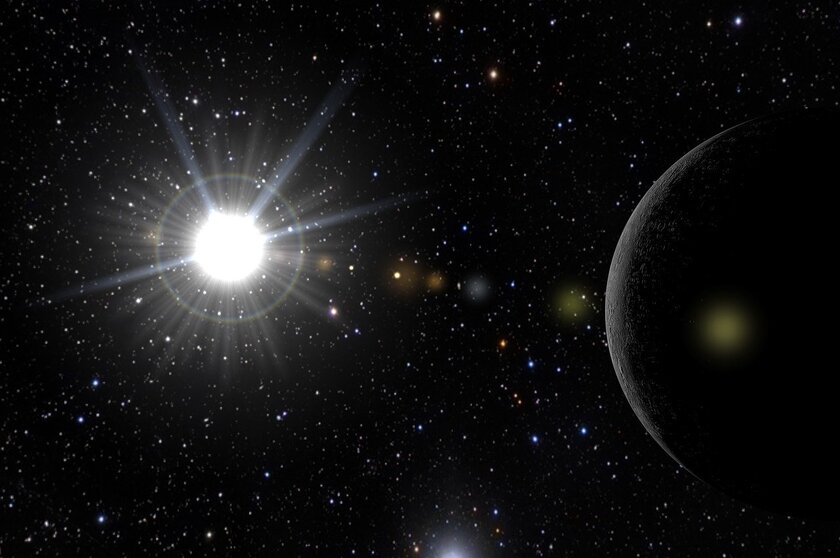
Fascinating Facts About the Sun and Stars
The sun and stars have captivated humans for centuries with their brilliance and mystery. Here are some intriguing facts about these celestial bodies:
The Sun:
- The sun is a massive ball of hot gas primarily composed of hydrogen and helium.
- It is located at the center of our solar system, providing light and heat to sustain life on Earth.
- The sun’s energy is generated through nuclear fusion, where hydrogen atoms combine to form helium, releasing vast amounts of energy in the process.
- It takes around 8 minutes for sunlight to reach Earth, traveling at a speed of about 186,282 miles per second.
- The sun’s surface temperature reaches about 10,000 degrees Fahrenheit (5,500 degrees Celsius), while its core temperature can soar up to 27 million degrees Fahrenheit (15 million degrees Celsius).
Stars:
- Stars are luminous spheres of plasma held together by their own gravity.
- They come in various sizes, colors, and temperatures, with some being hundreds or even thousands of times larger than our sun.
- Stars emit light and heat through nuclear fusion reactions occurring in their cores.
- The color of a star indicates its temperature – blue stars are hotter than red stars.
- Stars play a crucial role in the universe by producing heavy elements through nucleosynthesis that eventually form planets, moons, and life as we know it.
Studying the sun and stars not only deepens our understanding of the cosmos but also sheds light on our own existence within this vast universe.
Exploring the Sun and Stars: Answers to 8 Common Questions
- What is the sun made of?
- How far is the sun from Earth?
- How does the sun produce energy?
- What is the temperature of the sun’s surface?
- What is nuclear fusion in relation to the sun?
- Why does sunlight take 8 minutes to reach Earth?
- How hot is the core of the sun?
- What role do stars play in the universe?
What is the sun made of?
The sun, our nearest star, is primarily composed of hydrogen and helium gases. These elements make up the majority of the sun’s mass, with hydrogen accounting for about 75% and helium for around 24%. Additionally, the sun contains trace amounts of heavier elements like oxygen, carbon, neon, and iron. Through the process of nuclear fusion in its core, hydrogen atoms combine to form helium, releasing immense amounts of energy in the form of light and heat. This continuous fusion reaction sustains the sun’s brightness and warmth, providing light to our solar system and supporting life on Earth.
How far is the sun from Earth?
One frequently asked question regarding facts about the sun and stars is “How far is the sun from Earth?” The average distance between the sun and Earth is about 93 million miles (150 million kilometers), a measurement known as an astronomical unit (AU). This distance can vary slightly due to the elliptical shape of Earth’s orbit around the sun. Despite the vast expanse separating us from our nearest star, the sun’s energy and influence reach us every day, sustaining life on our planet and providing warmth and light to all living beings.
How does the sun produce energy?
The sun produces energy through a process called nuclear fusion. In the sun’s core, hydrogen atoms are fused together to form helium in a series of reactions. This fusion process releases an immense amount of energy in the form of heat and light. The intense pressure and temperature at the sun’s core create the conditions necessary for nuclear fusion to occur, converting mass into energy according to Einstein’s famous equation, E=mc^2. This continuous release of energy is what sustains the sun’s brightness and warmth, providing light and heat to our solar system.
What is the temperature of the sun’s surface?
One frequently asked question regarding facts about the sun and stars is, “What is the temperature of the sun’s surface?” The temperature of the sun’s surface reaches approximately 10,000 degrees Fahrenheit (5,500 degrees Celsius). This intense heat is a result of the sun’s energy-generating nuclear fusion processes that occur within its core. Despite its scorching surface temperature, the sun continues to be a vital source of light and heat that sustains life on Earth.
What is nuclear fusion in relation to the sun?
Nuclear fusion, in relation to the sun, is the process by which the sun produces energy. It occurs in the sun’s core where hydrogen atoms combine to form helium. This fusion process releases an immense amount of energy in the form of light and heat, which sustains the sun’s luminosity and warmth. The high temperatures and pressures at the sun’s core are crucial for initiating and maintaining nuclear fusion reactions. Through this continuous fusion process, the sun shines brightly as a result of converting mass into energy, following Einstein’s famous equation E=mc^2.
Why does sunlight take 8 minutes to reach Earth?
Sunlight takes approximately 8 minutes to reach Earth because of the vast distance between the Sun and our planet. Light travels at a speed of about 186,282 miles per second, which is incredibly fast, but the Sun is located around 93 million miles away from Earth. This distance means that it takes light about 8 minutes to travel from the Sun to Earth. So, when we look up at the Sun during the day, we are actually seeing it as it was 8 minutes ago due to the time it takes for sunlight to reach us across this immense expanse of space.
How hot is the core of the sun?
The core of the sun is an incredibly hot and intense region, with temperatures reaching up to a staggering 27 million degrees Fahrenheit (15 million degrees Celsius). This extreme heat is generated by the process of nuclear fusion, where hydrogen atoms fuse together to form helium, releasing immense amounts of energy in the form of light and heat. The sun’s core serves as the powerhouse that sustains its luminosity and provides the energy that fuels life on Earth. Understanding the temperature of the sun’s core offers a glimpse into the extraordinary forces at play within this celestial body and highlights the awe-inspiring nature of our closest star.
What role do stars play in the universe?
Stars play a fundamental role in the universe by serving as the cosmic engines that drive the processes of creation and evolution. These luminous spheres of plasma are not only sources of light and heat but also act as stellar factories, producing heavy elements through nuclear fusion reactions in their cores. These elements, such as carbon, oxygen, and iron, are essential building blocks for planets, moons, and life itself. Stars influence the formation of galaxies, shape the dynamics of stellar systems, and contribute to the intricate web of interconnected cosmic phenomena that define our universe. In essence, stars are not just celestial bodies in the sky; they are active participants in shaping the tapestry of existence on a universal scale.