
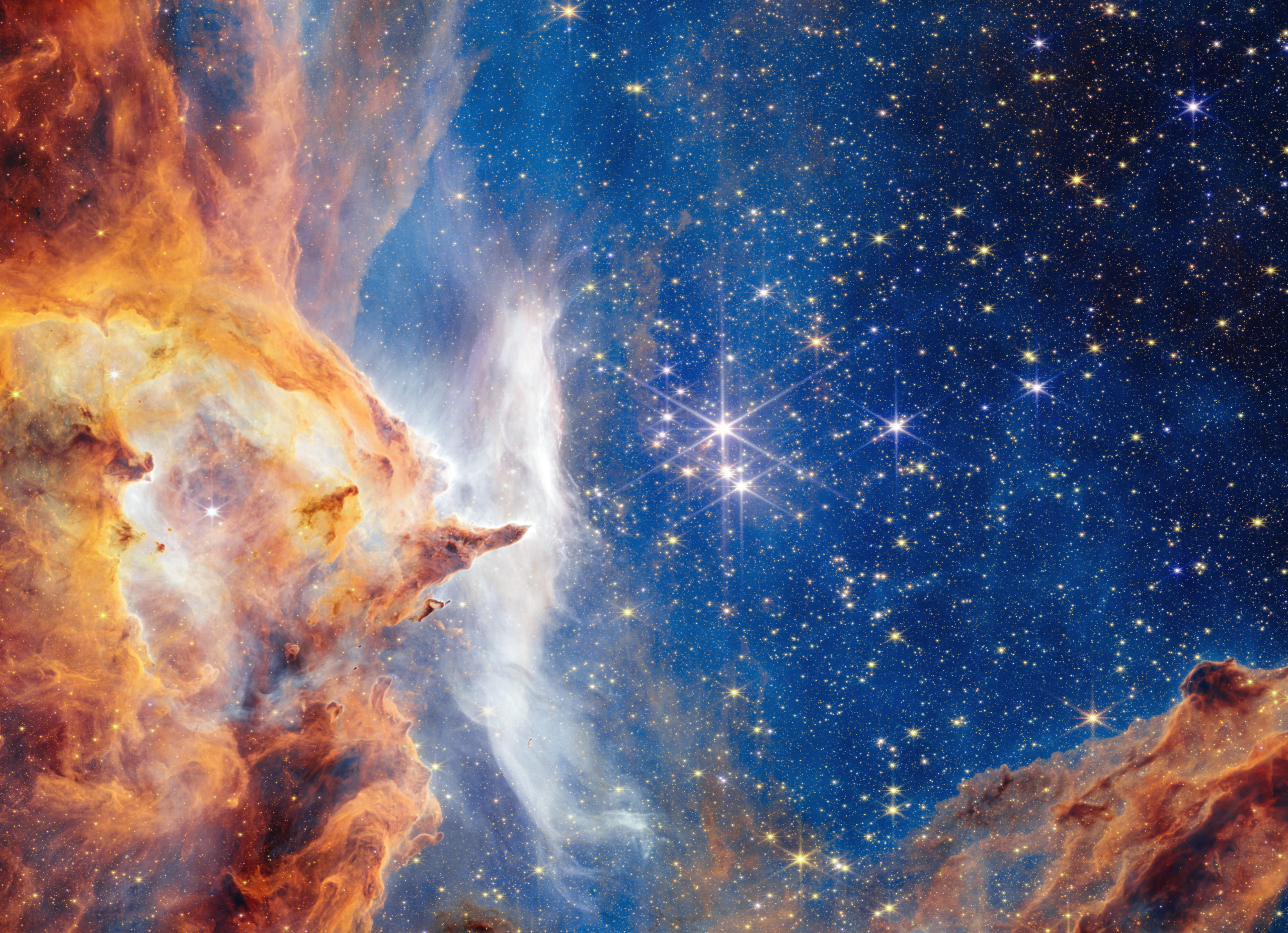
Nebulae Through the Eyes of the James Webb Space Telescope
Searches for “nebula Webb” often lead to some of the most striking images from the James Webb Space Telescope. Webb is not a nebula itself—it is a space observatory that studies the universe, including the vast clouds of gas and dust where stars are born and die. Its infrared vision reveals details that visible-light telescopes can miss, helping astronomers explore these cosmic structures in new ways.
What Is a Nebula?
A nebula is a large cloud of gas and dust in space. Some nebulae are stellar nurseries, where gravity draws material together to form new stars. Others are created when aging stars shed their outer layers or explode. Nebulae can span many light-years and contain complex shapes sculpted by radiation, stellar winds, and gravity.
Why Webb Observes Nebulae in Infrared
The James Webb Space Telescope detects infrared light, which is invisible to the human eye. Infrared observations can pass through some of the dust that blocks visible light, allowing Webb to reveal stars and structures hidden within dusty regions. The telescope’s detailed images also help scientists study the temperature, composition, and movement of material in nebulae.
Webb’s observations do not simply produce beautiful pictures. They provide data that researchers use to investigate how stars form, how young stars affect their surroundings, and how elements are distributed through space.
Notable Nebulae Observed by Webb
The Carina Nebula
Webb’s view of the Carina Nebula shows a dramatic, uneven landscape of gas and dust. Bright young stars shape the surrounding clouds with intense radiation and stellar winds. The image offers a close look at a region where stars are forming and influencing their cosmic neighborhood.
The Southern Ring Nebula
The Southern Ring Nebula is an expanding cloud of gas released by a dying star. Webb’s observations revealed intricate layers within the nebula and helped astronomers study the central stars responsible for its appearance. The object illustrates how stars can transform their surroundings near the end of their lives.
The Tarantula Nebula
Located in the Large Magellanic Cloud, the Tarantula Nebula is one of the most active star-forming regions in our nearby cosmic neighborhood. Webb has captured its young stars and surrounding clouds in remarkable detail. Studying this region helps scientists examine star formation under conditions that differ from those found in the Milky Way.
The Pillars of Creation
The Pillars of Creation are part of the Eagle Nebula, a famous region of gas and dust shaped by young stars. Webb’s infrared observations peer into the pillars, revealing stars forming within and around them. The images provide a fresh view of a well-known celestial landmark.
What Webb’s Nebula Images Teach Us
Webb helps researchers connect the structures seen in nebulae with the physical processes that create them. By analyzing infrared light, scientists can identify certain molecules, examine warm dust, and observe young stars still surrounded by the material from which they formed. Comparing Webb’s findings with observations from other telescopes adds further context and helps build a fuller picture of how stars evolve.
A New View of the Universe
The James Webb Space Telescope has made nebulae more than spectacular sights: they are places where astronomers can investigate the life cycle of stars. Each observation reveals another piece of the story, from the first gathering of star-forming material to the clouds left behind by stars nearing the end of their lives. Through Webb, these distant regions become clearer—and the processes shaping the universe become easier to study.
9 Tips for Exploring Nebulae in James Webb Space Telescope Images
- Look for glowing gas and dust clouds.
- Notice the colors that reveal different elements.
- Compare infrared views with visible-light images.
- Watch for newborn stars inside dusty regions.
- Look for dark lanes where dust blocks light.
- Remember that Webb detects infrared light.
- Check the image caption for the nebula’s name.
- Use a scale guide to understand its size.
- Explore multiple Webb images to spot fine details.
Look for glowing gas and dust clouds.
When exploring nebula images from the James Webb Space Telescope, look for glowing clouds of gas and dust. Webb’s infrared observations reveal warm material and structures hidden behind dust, often showing bright edges, wispy strands, and dense pockets where stars may be forming. The colors in these images are assigned to represent different infrared wavelengths, helping highlight details that human eyes can’t see.
Notice the colors that reveal different elements.
When exploring a nebula image from the James Webb Space Telescope, notice how different colors can highlight different materials and conditions. Many Webb images use assigned colors to represent infrared wavelengths invisible to the human eye, and scientists can use the light’s signatures to identify elements and molecules such as hydrogen, oxygen, and sulfur. The colors aren’t always what the nebula would look like to the naked eye, but they help reveal its structure and composition.
Compare infrared views with visible-light images.
Compare infrared views of a nebula from the James Webb Space Telescope with visible-light images to see how different wavelengths reveal different details. Visible light often highlights glowing gas and colorful structures, while infrared can peer through some dust to show hidden stars and warmer material. Looking at the images side by side offers a richer view of the nebula and helps explain how astronomers study its structure and star formation.
Watch for newborn stars inside dusty regions.
Look for newborn stars hidden inside dusty regions of a nebula. These young stars can be difficult to spot in visible-light images because surrounding dust blocks their light, but the James Webb Space Telescope’s infrared observations can reveal them shining through the clouds. Finding these stellar nurseries helps astronomers understand how stars form and how their energy reshapes the nebula around them.
Look for dark lanes where dust blocks light.
When exploring James Webb Space Telescope images of nebulae, look for dark lanes and patches where thick clouds of dust block or scatter light from stars behind them. These shadowy features can outline dense regions where new stars may be forming. Webb’s infrared instruments can see through some dust, so compare its images with visible-light views to notice how hidden structures become clearer.
Remember that Webb detects infrared light.
Remember that the James Webb Space Telescope detects infrared light, not visible light. This lets Webb peer through some cosmic dust and reveal warm objects and hidden details in nebulae that may be difficult to see with visible-light telescopes. Its images are often translated into colors people can see, so the colors shown represent scientific data rather than a direct view through human eyes.
Check the image caption for the nebula’s name.
Check the image caption for the nebula’s name. Webb images often show colorful clouds of gas and dust that can look similar, so the caption is the easiest way to identify the object and learn where it is located. It may also include helpful details about the image, such as which instruments or wavelengths Webb used to capture it.
Use a scale guide to understand its size.
Use a scale guide to understand the size of a nebula in a Webb image. These colorful clouds can stretch across many light-years, but photographs often lack familiar reference points, making their true scale hard to grasp. Check the image caption or accompanying diagram for measurements, and compare the nebula’s dimensions with the distance between stars or the size of our solar system. This context can turn a beautiful image into a clearer picture of the immense structures Webb observes.
Explore multiple Webb images to spot fine details.
Explore multiple James Webb Space Telescope images of the same nebula to spot details you might miss at first glance. Different images may use different infrared filters, highlighting features such as glowing gas, dust clouds, and newly forming stars. Comparing them can reveal how these structures fit together and make your view of the nebula even richer.