
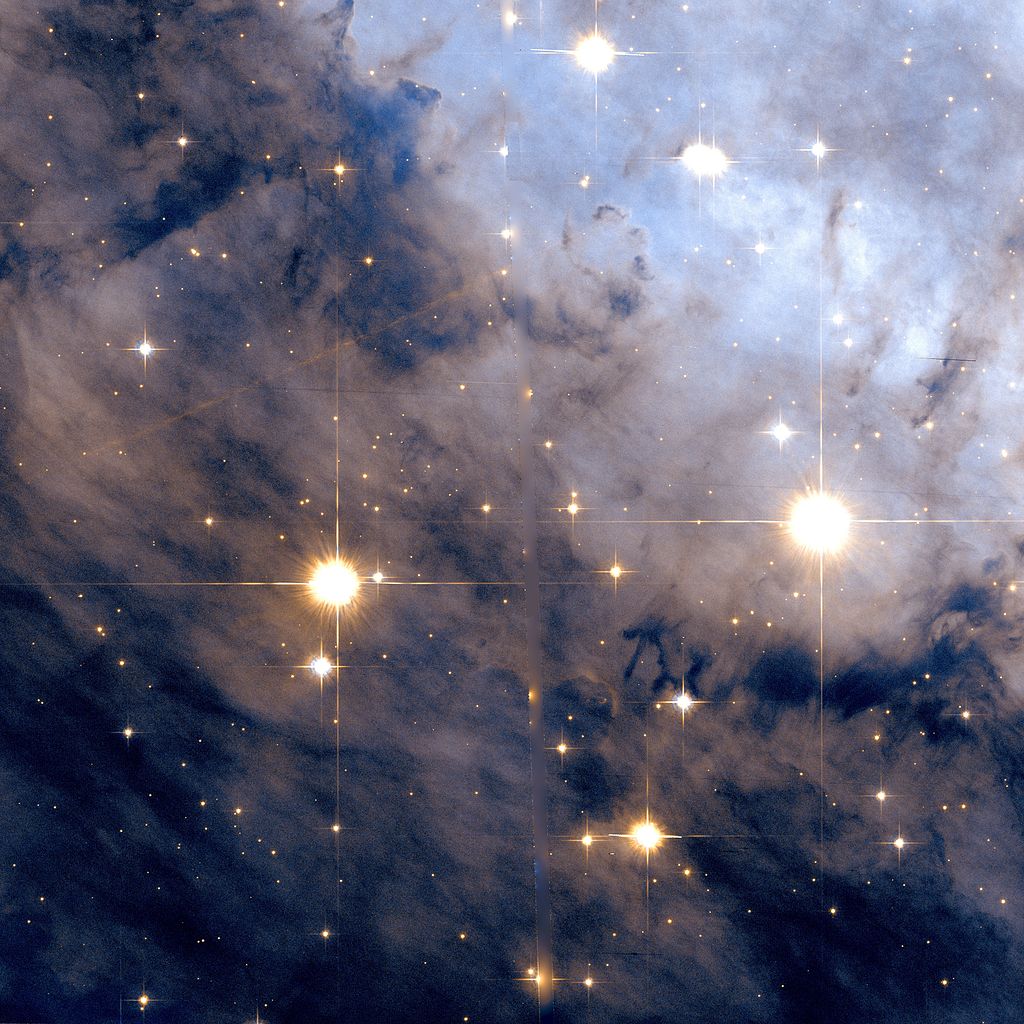
The Eagle Nebula: A Stellar Nursery Captured by NASA
The Eagle Nebula is one of the best-known star-forming regions in the Milky Way. Located about 6,500 light-years from Earth in the constellation Serpens, it is also cataloged as Messier 16, or M16. Its towering clouds of gas and dust have become famous through some of NASA’s most striking space images.
A Nebula Where Stars Are Born
Like other nebulae, the Eagle Nebula is made of interstellar gas and dust. Within its clouds, gravity draws material together. Dense regions can collapse and grow hot enough to form new stars. The bright young stars in and around M16 give off intense radiation that illuminates and shapes the surrounding cloud.
This process can be both creative and destructive. Radiation and powerful winds from massive stars erode nearby clouds, carving out dramatic shapes. At the same time, the pressure can compress parts of the gas and dust, potentially helping new stars form.
The Pillars of Creation
The Eagle Nebula’s most famous feature is the Pillars of Creation: immense columns of cool gas and dust where stars are forming. NASA’s Hubble Space Telescope made the pillars iconic with an image released in 1995. The tallest pillar stretches roughly four to five light-years, a distance far greater than the span of our solar system.
Hubble photographed the region again in 2014, providing a sharper view in visible and near-infrared light. The images show bright young stars, glowing gas, and dense pockets of dust. Some of the small, fingerlike structures at the edges of the pillars contain newly forming stars.
What the James Webb Space Telescope Reveals
In 2022, NASA’s James Webb Space Telescope observed the Pillars of Creation in near-infrared light. Infrared observations can reveal features hidden behind some of the dust that blocks visible light. Webb’s image shows many stars in the background and helps scientists study how stars form inside and around the pillars.
The colors in telescope images are often assigned to represent different wavelengths of light. They help researchers distinguish features that human eyes cannot see directly, rather than showing exactly how the nebula would look to a person in space.
Why NASA Studies the Eagle Nebula
Images of the Eagle Nebula are more than beautiful portraits. By comparing observations made at different wavelengths and over time, astronomers can investigate how radiation affects clouds, how young stars develop, and how new stellar systems take shape. The Eagle Nebula offers a nearby laboratory for studying processes that have helped build stars throughout the universe.
From Hubble’s landmark view to Webb’s infrared observations, NASA’s images have transformed the Pillars of Creation into a window on stellar birth. The Eagle Nebula reminds us that the universe is not static: its clouds are constantly being sculpted, and new stars are emerging within them.
8 Tips for Exploring NASA’s Eagle Nebula Images
- Search NASA’s Eagle Nebula images under the name Messier 16, or M16.
- Look for the famous Pillars of Creation in NASA’s Hubble and Webb images.
- Remember that the Eagle Nebula is a star-forming region in the constellation Serpens.
- The nebula is about 6,500 light-years from Earth.
- Compare Hubble’s visible-light views with Webb’s infrared images.
- Use NASA image captions to learn what the colors represent.
- Zoom in to spot young stars forming inside clouds of gas and dust.
- Check NASA’s Astronomy Picture of the Day for more Eagle Nebula views.
Search NASA’s Eagle Nebula images under the name Messier 16, or M16.
When searching NASA’s image collections for the Eagle Nebula, try its catalog names, Messier 16 or M16. The nebula may appear under either designation, especially in image captions and telescope archives. Using both terms can help you find more NASA images and information about its famous Pillars of Creation.
Look for the famous Pillars of Creation in NASA’s Hubble and Webb images.
Look for the Eagle Nebula’s famous Pillars of Creation in images from NASA’s Hubble and James Webb Space Telescopes. Hubble’s visible-light views reveal towering clouds of gas and dust, while Webb’s infrared observations peer through some of the dust to show stars forming within and around the pillars. Comparing the images offers a remarkable look at how different wavelengths reveal different details of this stellar nursery.
Remember that the Eagle Nebula is a star-forming region in the constellation Serpens.
Remember that the Eagle Nebula is a star-forming region in the constellation Serpens, about 6,500 light-years from Earth. Also known as Messier 16 (M16), it contains clouds of gas and dust where new stars are born. Its most famous feature, the Pillars of Creation, has been photographed by NASA telescopes, including Hubble and the James Webb Space Telescope.
The nebula is about 6,500 light-years from Earth.
The Eagle Nebula is about 6,500 light-years from Earth, in the constellation Serpens. That means the light captured by NASA’s telescopes began its journey roughly 6,500 years ago, giving astronomers a view of the nebula as it appeared in the distant past.
Compare Hubble’s visible-light views with Webb’s infrared images.
Compare Hubble’s visible-light views of the Eagle Nebula with NASA’s James Webb Space Telescope infrared images to see how different wavelengths reveal different details. Hubble highlights glowing gas and the dramatic shapes of the Pillars of Creation, while Webb’s infrared observations can peer through some of the dust to reveal stars and structures hidden from visible light. Together, the images offer a richer picture of how stars form and reshape this remarkable region.
Use NASA image captions to learn what the colors represent.
When viewing NASA images of the Eagle Nebula, read the image caption to understand what the colors represent. Telescope images often combine observations made through different filters or at wavelengths invisible to the human eye, with colors assigned to help show features such as gas, dust, and stars. The caption explains how to interpret those colors, so the image reveals more than its striking appearance.
Zoom in to spot young stars forming inside clouds of gas and dust.
Zoom in on NASA’s images of the Eagle Nebula to explore the dense clouds of gas and dust where stars are forming. Look for tiny, bright points and glowing knots within the pillars—these may reveal young stars and regions shaped by their energy. Infrared images from the James Webb Space Telescope can show details hidden behind dust, offering a closer look at this stellar nursery.
Check NASA’s Astronomy Picture of the Day for more Eagle Nebula views.
For more views of the Eagle Nebula, visit NASA’s Astronomy Picture of the Day (APOD). Its archive features astronomy images and explanations from different observatories, so you may find striking views of the nebula, including the famous Pillars of Creation, captured in different wavelengths and levels of detail.