
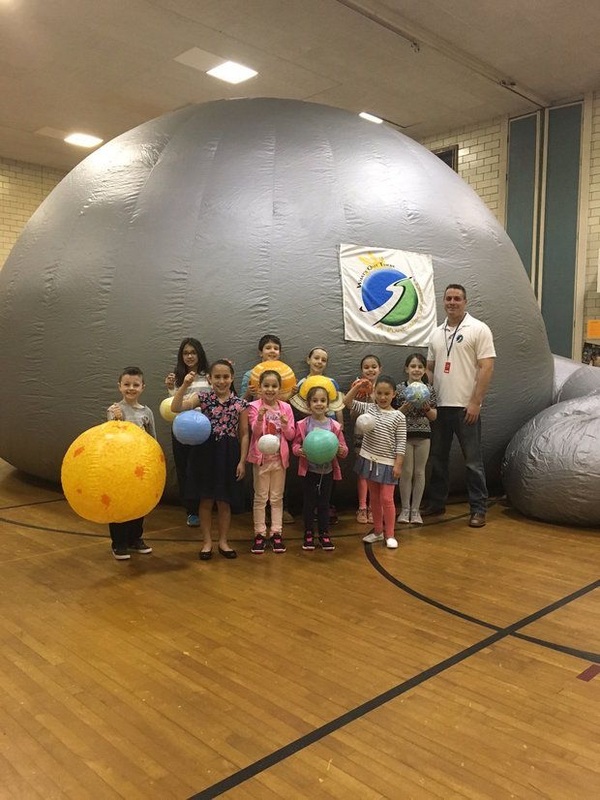
Mobile Planetarium for Schools: Bringing the Universe to the Classroom
A mobile planetarium can turn an ordinary school day into an immersive journey through space. Instead of traveling to a science center, students experience a simulated night sky inside a portable, dome-shaped theater set up at their school. Stars, planets, constellations, and other celestial objects appear overhead, helping learners explore astronomy in a memorable, hands-on way.
What Is a Mobile Planetarium?
A mobile planetarium is a portable dome that can be assembled in a school gym, auditorium, or other suitable indoor space. A projector displays images across the inside of the dome, surrounding the audience with a wide view of the sky or other educational visuals. Depending on the program, students might investigate the solar system, travel through the Milky Way, learn how to identify constellations, or explore topics beyond astronomy.
Programs are often led by an educator or trained presenter. Some providers also offer recorded presentations, live demonstrations, or shows tailored to different grade levels.
Why Bring a Planetarium to School?
Space is exciting, but many astronomical concepts can be difficult to picture from a textbook. A planetarium helps students visualize ideas such as the scale of the solar system, the movement of planets, and the apparent motion of stars across the night sky. Seeing these concepts represented around them can make abstract ideas easier to discuss and remember.
- Creates an immersive learning experience: The dome’s surrounding visuals can help capture students’ attention and make lessons feel more vivid.
- Supports science instruction: Programs can complement lessons about Earth and space science, the solar system, stars, and the universe.
- Encourages curiosity: A striking demonstration can prompt students to ask questions, make observations, and explore further.
- Serves multiple grade levels: With age-appropriate programming, the same visit may offer learning opportunities for elementary, middle, and high school students.
- Reduces travel needs: Because the experience comes to the school, classes can participate without a field trip to a distant facility.
Connecting a Planetarium Visit to the Curriculum
A mobile planetarium can be most effective when its presentation connects with classroom learning. Before booking, teachers can review the available topics and choose a program that fits current lessons. Younger students might focus on patterns in the sky and the Sun, Moon, and stars. Older students may be ready to explore planetary motion, the life cycles of stars, or the structure of the universe.
Teachers can extend the experience before and after the visit. Before the presentation, students might record what they already know and prepare questions. Afterward, they can draw a model, write a reflection, compare observations, or research a question that came up during the show. These activities help connect the excitement of the presentation with deeper classroom learning.
Planning a Successful School Visit
Every mobile planetarium has its own space, equipment, and scheduling requirements, so it is important to confirm details with the provider. Ask how much floor space and ceiling clearance the dome needs, whether the school must provide power, how many students can attend each session, and how long setup and takedown will take.
It is also helpful to discuss accessibility and student needs in advance. Ask whether the dome accommodates mobility devices and whether the provider can adapt the presentation for students who may be sensitive to darkness, sound, or immersive visuals. Clear information allows staff to plan seating, supervision, and transitions between groups.
Choosing the Right Provider
When comparing providers, consider more than the visual effects. Look for programs that are suitable for your students’ ages, clearly describe their learning goals, and allow time for questions or discussion. Schools may also want to ask about presenter qualifications, equipment requirements, safety procedures, accessibility, and available lesson materials.
Reviews or references from other schools can help you understand what to expect. Before confirming a date, request a written outline of the visit, including the program length, number of sessions, setup needs, and total cost.
A Memorable Way to Explore Space
A mobile planetarium brings the night sky into the school building and gives students a fresh way to engage with science. With thoughtful planning and a program suited to the class, it can support lessons, inspire questions, and make astronomy feel closer than ever. For many students, stepping inside the dome may be the beginning of a lasting interest in space and the world beyond Earth.
6 Essential Tips for Bringing a Mobile Planetarium to Your School
- Check the dome size and room requirements before booking.
- Choose shows that match students’ ages and curriculum.
- Ask about accessibility and sensory-friendly options.
- Schedule setup time around classes and school events.
- Prepare students with a lesson or sky-watching activity.
- Confirm safety, supervision, and emergency procedures.
Check the dome size and room requirements before booking.
Before booking a mobile planetarium, check the dome’s dimensions and the provider’s room requirements to make sure your school has a suitable space. Ask about the minimum floor area, ceiling height, access to power, and any setup or clearance needs. Confirming these details in advance helps prevent scheduling problems and ensures the dome can be installed safely and comfortably for students.
Choose shows that match students’ ages and curriculum.
Choose mobile planetarium shows that suit both your students’ ages and what they’re learning in class. Younger students may enjoy an introduction to the Moon, planets, and constellations, while older students may be ready for topics like planetary motion, star formation, or the scale of the universe. Matching the show to your curriculum helps connect the immersive experience to classroom lessons and gives students a stronger foundation for asking questions and exploring the subject further.
Ask about accessibility and sensory-friendly options.
Before booking a mobile planetarium, ask the provider about accessibility and sensory-friendly options so every student can participate as comfortably as possible. Find out whether the dome can accommodate mobility devices and whether the presentation can be adjusted for students who are sensitive to darkness, sound, motion, or immersive visuals. Providers may be able to offer advance explanations, quieter audio, modified lighting, or other accommodations. Sharing students’ needs ahead of time gives the school and provider a chance to plan a welcoming experience for everyone.
Schedule setup time around classes and school events.
Plan the mobile planetarium’s setup and takedown around the school day, not just the presentation times. Confirm with the provider how long they need to prepare the dome, then choose a location and schedule that won’t conflict with classes, lunch periods, assemblies, or other school events. Building in extra time for setup, transitions, and cleanup can help avoid disruptions and keep the visit running smoothly.
Prepare students with a lesson or sky-watching activity.
Before a mobile planetarium visit, introduce students to a few key ideas or invite them to observe the real night sky. They might look for the Moon, notice its shape, or spot familiar constellations, then bring their questions to the presentation. This simple preparation gives students something to connect with during the show and helps them get more out of the experience.
Confirm safety, supervision, and emergency procedures.
Before your mobile planetarium visit, confirm the provider’s safety guidelines, supervision requirements, and emergency procedures with school staff. Ask how students should enter and exit the dome, how many adults need to be present, and what to do if a student feels uncomfortable or needs assistance during the show. Make sure everyone knows how to reach the exit and follow the school’s usual emergency plan. Reviewing these details in advance helps the experience run smoothly and keeps students safe.