
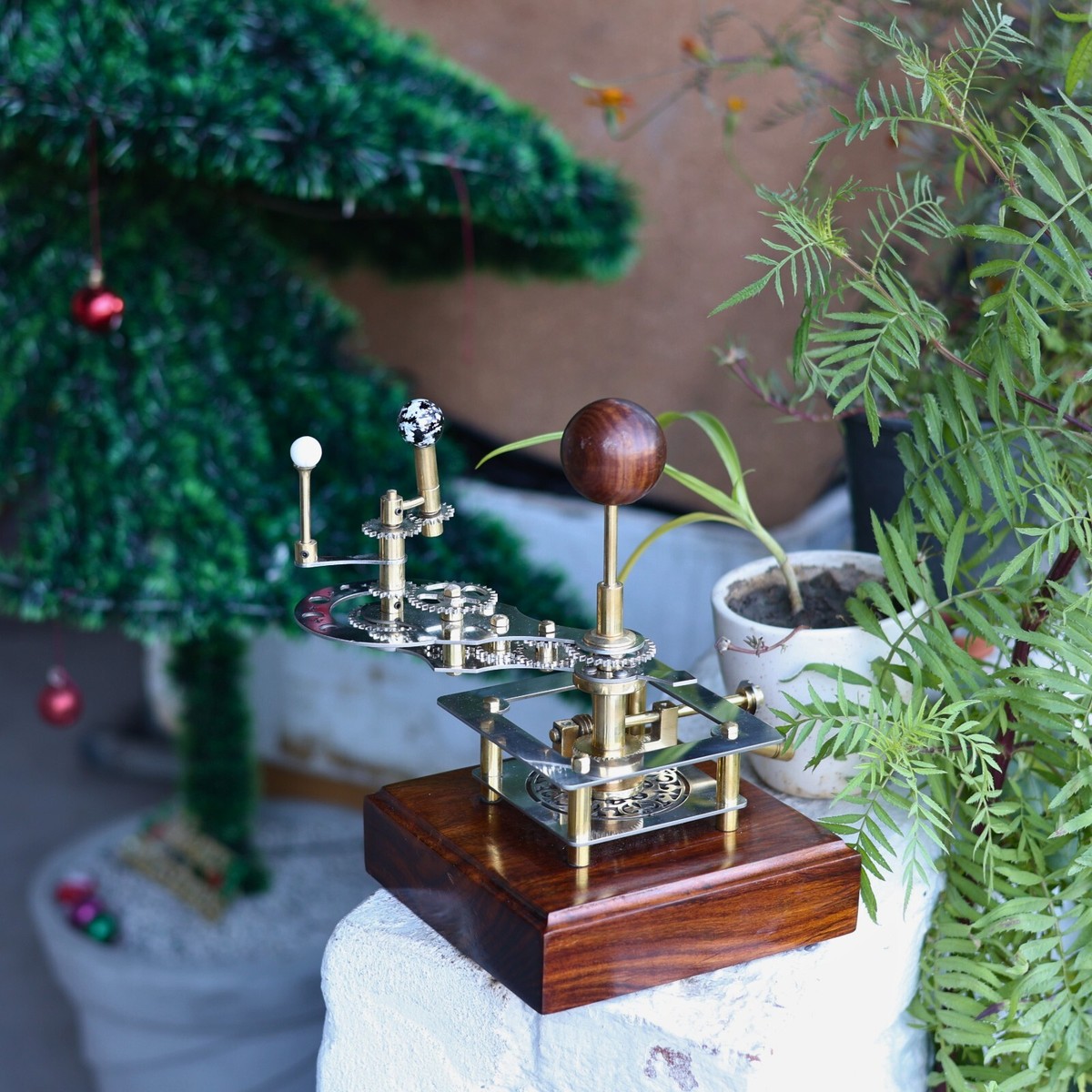
The Fascinating World of Orreries
Have you ever gazed up at the night sky and marveled at the movement of celestial bodies? Imagine having a miniature representation of the solar system right in front of you, where you can witness the orbits of planets around the sun in real-time. This captivating device is known as an orrery.
Originating in the 18th century, orreries are mechanical models that demonstrate the relative positions and motions of planets in our solar system. Typically crafted with intricate detail, these devices showcase the orbits of planets such as Mercury, Venus, Earth, Mars, Jupiter, and Saturn around the sun.
One of the most remarkable aspects of an orrery is its ability to accurately depict planetary movements based on scientific data. By turning a crank or rotating a handle, one can observe how each planet revolves around the sun at its own unique speed and distance. This visual representation not only educates viewers about astronomy but also sparks a sense of wonder and curiosity about the cosmos.
While traditional orreries were made of brass or wood and operated manually, modern versions may incorporate electronic components for enhanced interactivity. Some contemporary orreries even include additional features such as moons orbiting planets and adjustable settings to simulate specific dates and astronomical events.
Orreries serve not only as educational tools but also as works of art that blend science with craftsmanship. These intricate models are often displayed in museums, observatories, and private collections, where they continue to inspire awe and appreciation for the beauty and complexity of our solar system.
Whether you’re a science enthusiast, a history buff, or simply someone captivated by celestial wonders, exploring an orrery can offer a unique glimpse into the harmonious dance of planets in space. It’s a reminder that while we may be small in comparison to the vast universe, our curiosity and imagination know no bounds.
Exploring Orreries: Answers to 8 Frequently Asked Questions
- What is an orrery?
- How does an orrery work?
- What planets are typically included in an orrery?
- Are modern orreries different from traditional ones?
- Where can I see an orrery in person?
- Can I customize an orrery to include specific features?
- Are there miniature versions of orreries available for purchase?
- How accurate are orreries in depicting planetary movements?
What is an orrery?
An orrery is a mechanical device that provides a visual representation of the relative positions and movements of planets in our solar system. Often crafted with intricate detail, an orrery showcases the orbits of planets around the sun, allowing observers to witness the fascinating dance of celestial bodies in miniature form. This educational tool not only demonstrates planetary motion but also sparks curiosity and wonder about the vastness of the universe. Orreries serve as captivating pieces of art that combine science, craftsmanship, and a sense of awe for the mysteries of space.
How does an orrery work?
An orrery works by utilizing a system of gears and mechanisms to replicate the movements of celestial bodies in our solar system. Each planet is represented by a sphere or disk that is connected to a central sun, typically located at the center of the device. As the user manually rotates a crank or handle, these interconnected components move in accordance with the actual orbital periods and distances of the planets. The gears within the orrery are carefully calibrated to ensure that each planet moves at the correct speed relative to one another, providing an accurate depiction of their positions in space. This intricate design allows observers to witness the dynamic relationships between planets as they orbit the sun, offering a mesmerizing glimpse into the wonders of our cosmic neighborhood.
What planets are typically included in an orrery?
An orrery typically includes the major planets of our solar system: Mercury, Venus, Earth, Mars, Jupiter, and Saturn. These planets are represented in an orrery to showcase their relative positions and movements around the sun. While some orreries may also feature additional elements such as moons orbiting planets or adjustable settings for specific astronomical events, the core focus remains on illustrating the orbits of these key celestial bodies. This representation allows viewers to observe the intricate dance of planets in our solar system and gain a deeper understanding of their relationships and movements in space.
Are modern orreries different from traditional ones?
Modern orreries have evolved to incorporate advanced technology and enhanced features that set them apart from traditional models. While traditional orreries were primarily mechanical, operated manually, and made of materials like brass or wood, modern versions may include electronic components for increased interactivity and accuracy. Contemporary orreries often offer additional functionalities such as adjustable settings to depict specific dates and astronomical events, as well as the inclusion of moons orbiting planets for a more comprehensive representation of the solar system. These innovations not only make modern orreries more dynamic and engaging but also showcase the seamless blend of artistry, science, and technology in capturing the celestial movements of our universe.
Where can I see an orrery in person?
If you’re eager to witness the mesmerizing beauty of an orrery up close, there are several places where you can experience these intricate celestial models in person. Many museums around the world showcase ornate orreries as part of their astronomy or history exhibits, offering visitors a chance to marvel at the precision and craftsmanship of these mechanical wonders. Planetariums and science centers often feature interactive orreries that provide a hands-on exploration of planetary motion and celestial mechanics. Additionally, some universities and observatories display unique orreries as educational tools for students and visitors interested in astronomy. Whether you’re seeking to learn more about our solar system’s dynamics or simply appreciate the artistry behind these devices, visiting these institutions can offer a memorable and enlightening encounter with the captivating world of orreries.
Can I customize an orrery to include specific features?
Customizing an orrery to include specific features is a common inquiry among enthusiasts and collectors. While traditional orreries typically showcase the main planets of our solar system, many individuals are interested in personalizing these mechanical models to reflect unique preferences or astronomical interests. Depending on the craftsmanship and design capabilities of the artisan or manufacturer, customization options may vary. Some may offer the inclusion of additional celestial bodies, such as moons or dwarf planets, while others might provide customization in terms of materials, size, or even incorporating special dates or celestial events into the design. Customizing an orrery can be a rewarding experience that allows individuals to create a one-of-a-kind piece that resonates with their fascination for astronomy and the wonders of the universe.
Are there miniature versions of orreries available for purchase?
For those intrigued by the enchanting world of orreries, miniature versions of these celestial models are indeed available for purchase. These scaled-down replicas capture the essence of larger orreries, allowing enthusiasts to enjoy the beauty and intricacy of planetary motion on a smaller scale. Whether crafted with traditional materials like brass and wood or featuring modern designs with electronic components, these miniature orreries offer a fascinating way to bring the wonders of the solar system into your home or workspace. With their detailed craftsmanship and educational value, these compact celestial devices make for unique and captivating additions to any collection or learning environment.
How accurate are orreries in depicting planetary movements?
Orreries are renowned for their precision in depicting planetary movements within the solar system. While the accuracy of an orrery can vary depending on its design and construction, many well-crafted models strive to faithfully represent the relative positions and orbits of planets around the sun. By incorporating scientific data and calculations, modern orreries can offer a remarkably close simulation of celestial motions, allowing viewers to observe planetary revolutions with impressive detail and accuracy. Whether crafted with traditional materials or equipped with electronic enhancements, orreries stand as reliable tools for visualizing the dynamic relationships between celestial bodies in our cosmic neighborhood.