
The Fundamentals of Newton’s Law of Universal Gravitation
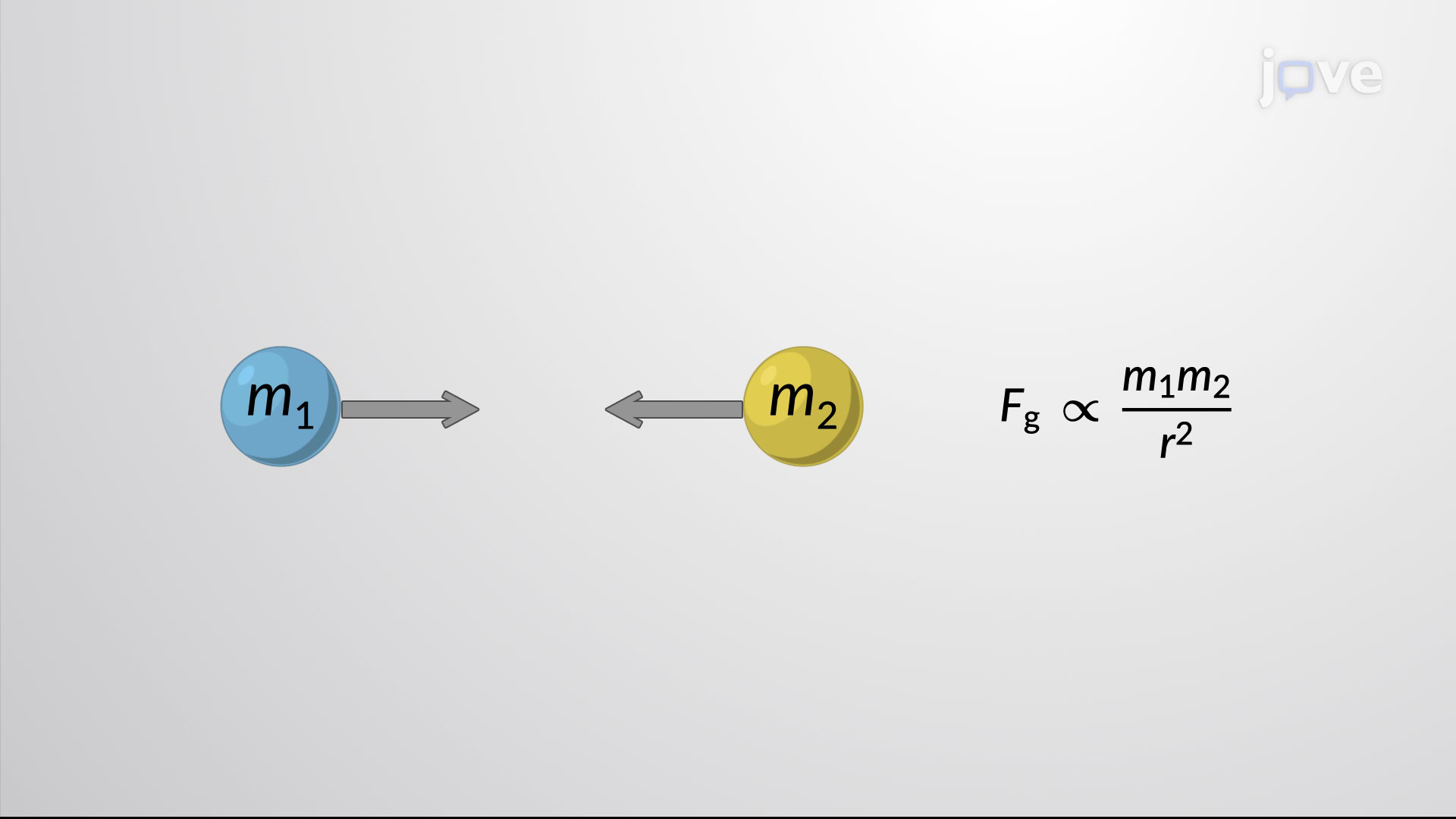
Sir Isaac Newton, one of the most influential scientists in history, formulated the law of universal gravitation, which revolutionized our understanding of the physical world. Newton’s law states that every particle in the universe attracts every other particle with a force that is directly proportional to the product of their masses and inversely proportional to the square of the distance between their centers.
The Mathematical Formulation
The mathematical expression of Newton’s law is given by:
F = G * (m1 * m2) / r2
Where:
- F is the gravitational force between two objects,
- G is the gravitational constant,
- m1 and m2 are the masses of the two objects, and
- r is the distance between their centers.
The Significance of Newton’s Law
This law not only explained why objects fall towards Earth but also provided a framework for understanding planetary motion and celestial mechanics. It laid the foundation for modern physics and paved the way for further advancements in science.
Applications in Space Exploration
Newtons’s law plays a crucial role in space exploration by enabling scientists to calculate trajectories, orbits, and gravitational interactions between celestial bodies. It has been instrumental in planning missions to other planets, predicting satellite movements, and understanding the dynamics of our solar system.
In Conclusion
Newtons’s law of universal gravitation remains a cornerstone in physics, serving as a fundamental principle that governs interactions between all objects with mass. Its enduring legacy continues to inspire generations of scientists and deepen our appreciation for the elegant simplicity underlying the complexities of our universe.
Understanding Newton’s Law of Universal Gravitation: Key Questions and Insights
- What is Newton’s law of universal gravitation?
- Who formulated Newton’s law of gravity?
- What does Newton’s law state about the attraction between particles?
- What is the mathematical expression of Newton’s law of gravitation?
- How does Newton’s law explain planetary motion?
- What is the significance of Newton’s law in physics?
- How does Newton’s law apply to space exploration?
- Why is Newton’s law considered a foundational principle in modern science?
What is Newton’s law of universal gravitation?
Newton’s law of universal gravitation, formulated by Sir Isaac Newton, is a fundamental principle in physics that describes the gravitational force between two objects with mass. According to this law, every particle in the universe attracts every other particle with a force that is directly proportional to the product of their masses and inversely proportional to the square of the distance between their centers. In essence, Newton’s law explains how gravity works on a macroscopic scale, influencing everything from the motion of celestial bodies to the falling of objects on Earth.
Who formulated Newton’s law of gravity?
Sir Isaac Newton, the renowned English mathematician, physicist, and astronomer, is credited with formulating Newton’s law of gravity. In the 17th century, Newton revolutionized the field of physics by introducing this fundamental principle that explains how every particle in the universe attracts every other particle with a force proportional to their masses and inversely proportional to the square of the distance between them. Newton’s law of gravity has since become a cornerstone in understanding celestial mechanics and remains a pivotal concept in modern physics.
What does Newton’s law state about the attraction between particles?
Newton’s law of universal gravitation states that every particle in the universe attracts every other particle with a force that is directly proportional to the product of their masses and inversely proportional to the square of the distance between their centers. This fundamental principle elucidates the nature of gravitational attraction between objects, highlighting the interconnectedness and influence that all particles exert on one another within the vast expanse of space. By defining this gravitational force mathematically, Newton provided a framework for understanding not only how objects fall towards Earth but also how celestial bodies interact and move in our universe.
What is the mathematical expression of Newton’s law of gravitation?
The mathematical expression of Newton’s law of gravitation is given by the formula: F = G * (m1 * m2) / r^2. In this equation, F represents the gravitational force between two objects, G is the gravitational constant, m1 and m2 denote the masses of the two objects, and r is the distance between their centers. This formula succinctly captures the fundamental relationship proposed by Sir Isaac Newton, stating that every particle in the universe attracts every other particle with a force that is directly proportional to the product of their masses and inversely proportional to the square of the distance between them.
How does Newton’s law explain planetary motion?
Newton’s law of universal gravitation provides a comprehensive explanation for planetary motion within our solar system. According to Newton’s law, every celestial body, including planets, exerts a gravitational force on each other. This force is directly proportional to the product of their masses and inversely proportional to the square of the distance between them. As a result, planets orbit the Sun in elliptical paths due to the gravitational pull exerted by the Sun. The balance between the centripetal force required to keep planets in orbit and the gravitational force from the Sun determines their orbital trajectories. Newton’s law elegantly describes how these gravitational interactions govern planetary motion, offering a profound insight into the dynamics of our celestial neighborhood.
What is the significance of Newton’s law in physics?
The significance of Newton’s law of universal gravitation in physics lies in its profound impact on our understanding of the fundamental forces governing the universe. By providing a mathematical framework to describe how every object with mass attracts every other object, Newton’s law not only explained everyday phenomena like falling apples but also laid the groundwork for explaining complex celestial movements and planetary orbits. This law serves as a cornerstone in physics, enabling scientists to predict and calculate gravitational interactions on Earth and beyond, shaping our comprehension of the cosmos and influencing advancements in fields such as astronomy, space exploration, and theoretical physics.
How does Newton’s law apply to space exploration?
Newton’s law of universal gravitation plays a vital role in space exploration by providing a fundamental framework for understanding the gravitational interactions between celestial bodies. When applied to space missions, Newton’s law allows scientists and engineers to calculate trajectories, orbits, and gravitational forces acting on spacecraft. By utilizing this law, researchers can plan and execute missions to other planets, moons, and celestial objects with precision. Understanding how gravity influences the movement of objects in space is essential for predicting satellite orbits, planning rendezvous maneuvers, and navigating spacecraft through the complexities of our solar system and beyond.
Why is Newton’s law considered a foundational principle in modern science?
Newton’s law of universal gravitation is regarded as a foundational principle in modern science due to its profound impact on shaping our understanding of the physical world. By providing a mathematical framework to describe the gravitational force between objects based on their masses and distances, Newton’s law not only explained everyday phenomena like objects falling towards Earth but also laid the groundwork for studying celestial mechanics and planetary motion. Its universal applicability across various scales, from microscopic particles to astronomical bodies, has made it an essential tool in fields such as astrophysics, space exploration, and engineering. Newton’s law continues to be a fundamental concept that underpins many scientific disciplines, highlighting its enduring significance in shaping our knowledge of the natural world.