
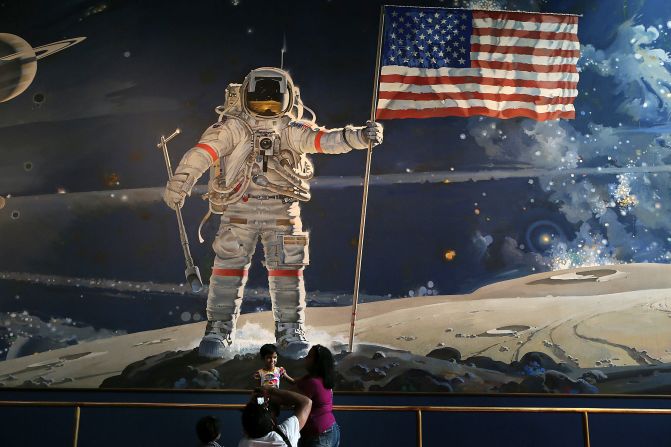
The Historic First Moon Launch
On July 16, 1969, the world held its breath as humanity embarked on an unprecedented journey. The Apollo 11 mission, led by NASA astronauts Neil Armstrong, Buzz Aldrin, and Michael Collins, aimed to achieve what was once thought impossible – landing humans on the moon.
As the Saturn V rocket roared to life at Kennedy Space Center in Florida, millions watched in awe as it soared into the sky, carrying the dreams and aspirations of an entire planet. The mission captured the imagination of people worldwide and symbolized the pinnacle of human achievement.
Four days after liftoff, on July 20, 1969, the lunar module “Eagle” separated from the command module as Armstrong and Aldrin prepared for their descent to the lunar surface. “The Eagle has landed,” Armstrong radioed back to Earth as they touched down on the moon’s Sea of Tranquility.
Then came that historic moment when Neil Armstrong took his first steps onto the lunar surface. With his immortal words, “That’s one small step for man, one giant leap for mankind,” he forever etched his name in history books and inspired generations to come.
The successful moon landing not only marked a technological triumph but also served as a testament to human ingenuity, courage, and perseverance. It united people around the globe in a shared sense of wonder and possibility.
As Armstrong and Aldrin explored the lunar landscape and conducted experiments, Michael Collins orbited above in solitude but remained an integral part of this extraordinary mission. Together, they demonstrated what humanity could achieve when driven by a common goal.
After spending hours on the moon’s surface, collecting samples and planting an American flag, the astronauts returned to Earth as heroes. Their remarkable feat paved the way for further space exploration and ignited a passion for discovery that continues to inspire us today.
The first moon launch remains a defining moment in history – a testament to human curiosity and determination that reminds us of our boundless potential to reach for the stars.
Key Questions About the Historic First Moon Launch: Apollo 11’s Journey
- When was the first moon launch?
- Who were the astronauts on the first moon launch?
- What was the name of the mission for the first moon launch?
- Where did the first moon launch take place?
- What type of rocket was used for the first moon launch?
- What were Neil Armstrong’s famous words during the first moon landing?
- How long did it take to reach the moon on the first moon launch mission?
- What did astronauts do on the lunar surface during the first moon landing?
- How did the success of Apollo 11 impact space exploration?
When was the first moon launch?
The first moon launch took place on July 16, 1969, as part of the historic Apollo 11 mission led by NASA. This monumental event marked a significant milestone in human history as astronauts Neil Armstrong, Buzz Aldrin, and Michael Collins embarked on a daring journey to land humans on the moon for the very first time. The successful mission captured the world’s attention and symbolized the culmination of years of scientific innovation and exploration, forever changing our understanding of space travel and pushing the boundaries of human achievement.
Who were the astronauts on the first moon launch?
The historic first moon launch, known as the Apollo 11 mission, was led by three courageous astronauts from NASA. The crew consisted of Neil Armstrong, who became the first person to set foot on the lunar surface; Buzz Aldrin, who followed Armstrong onto the moon and conducted experiments; and Michael Collins, who piloted the command module in orbit around the moon while Armstrong and Aldrin explored its surface. Together, these three astronauts made history on July 20, 1969, by successfully landing on the moon and returning safely to Earth, marking a monumental achievement for humanity’s space exploration endeavors.
What was the name of the mission for the first moon launch?
The mission for the first moon launch, which made history by landing humans on the lunar surface for the first time, was named Apollo 11. Led by NASA astronauts Neil Armstrong, Buzz Aldrin, and Michael Collins, Apollo 11 successfully achieved its goal of landing on the moon on July 20, 1969. The mission’s success not only marked a significant milestone in space exploration but also captured the world’s imagination and inspired future generations to reach for new heights in scientific discovery and human achievement.
Where did the first moon launch take place?
The historic first moon launch took place at Kennedy Space Center in Florida. On July 16, 1969, the Saturn V rocket carrying the Apollo 11 mission astronauts Neil Armstrong, Buzz Aldrin, and Michael Collins lifted off from Launch Complex 39A. This iconic launch site served as the starting point for humanity’s remarkable journey to the moon, capturing the world’s attention and paving the way for one of the most significant achievements in space exploration history.
What type of rocket was used for the first moon launch?
The first moon launch, known as the Apollo 11 mission, utilized the Saturn V rocket for its historic journey to the moon. The Saturn V, one of the most powerful rockets ever built, was specifically designed by NASA for the Apollo program with the capability to carry astronauts and equipment beyond Earth’s orbit. Standing over 360 feet tall and consisting of three stages, the Saturn V played a crucial role in propelling the Apollo 11 spacecraft towards its destination and ultimately achieving humanity’s dream of landing on the lunar surface.
What were Neil Armstrong’s famous words during the first moon landing?
During the historic first moon landing on July 20, 1969, Neil Armstrong uttered his now-famous words as he set foot on the lunar surface. His iconic phrase, “That’s one small step for man, one giant leap for mankind,” encapsulated the significance of this monumental achievement. Armstrong’s profound statement not only marked a pivotal moment in human history but also symbolized the collective ambition and spirit of exploration that drove the Apollo 11 mission.
How long did it take to reach the moon on the first moon launch mission?
During the historic first moon launch mission of Apollo 11 in 1969, it took approximately three days for the spacecraft to reach the moon. The journey began on July 16th, and after a series of carefully calculated maneuvers and orbital adjustments, the crew successfully landed on the lunar surface on July 20th. This remarkable feat showcased the incredible precision and planning required for human space exploration and marked a significant milestone in our understanding of outer space.
What did astronauts do on the lunar surface during the first moon landing?
During the first moon landing, astronauts Neil Armstrong and Buzz Aldrin conducted several activities on the lunar surface. After landing the lunar module “Eagle” in the Sea of Tranquility, Armstrong famously took his historic first steps on the moon, followed by Aldrin. They collected rock and soil samples, deployed scientific instruments like seismometers, and set up experiments to study the moon’s geology and environment. They also planted an American flag as a symbol of their achievement. Throughout their time on the moon, Armstrong and Aldrin communicated with mission control back on Earth, providing valuable data and images that expanded our understanding of Earth’s celestial neighbor.
How did the success of Apollo 11 impact space exploration?
The success of Apollo 11 had a profound impact on space exploration, shaping the course of humanity’s ventures beyond Earth’s atmosphere. By achieving the historic moon landing, NASA and the Apollo program demonstrated the feasibility of manned missions to celestial bodies and showcased the capabilities of human spaceflight technology. The success of Apollo 11 fueled a new era of scientific discovery and technological advancement in space exploration, inspiring further missions to explore the depths of our solar system and beyond. It solidified the United States’ position as a leader in space exploration and sparked international collaboration in peaceful endeavors beyond our planet. The legacy of Apollo 11 continues to influence and drive innovation in space exploration efforts to this day.