
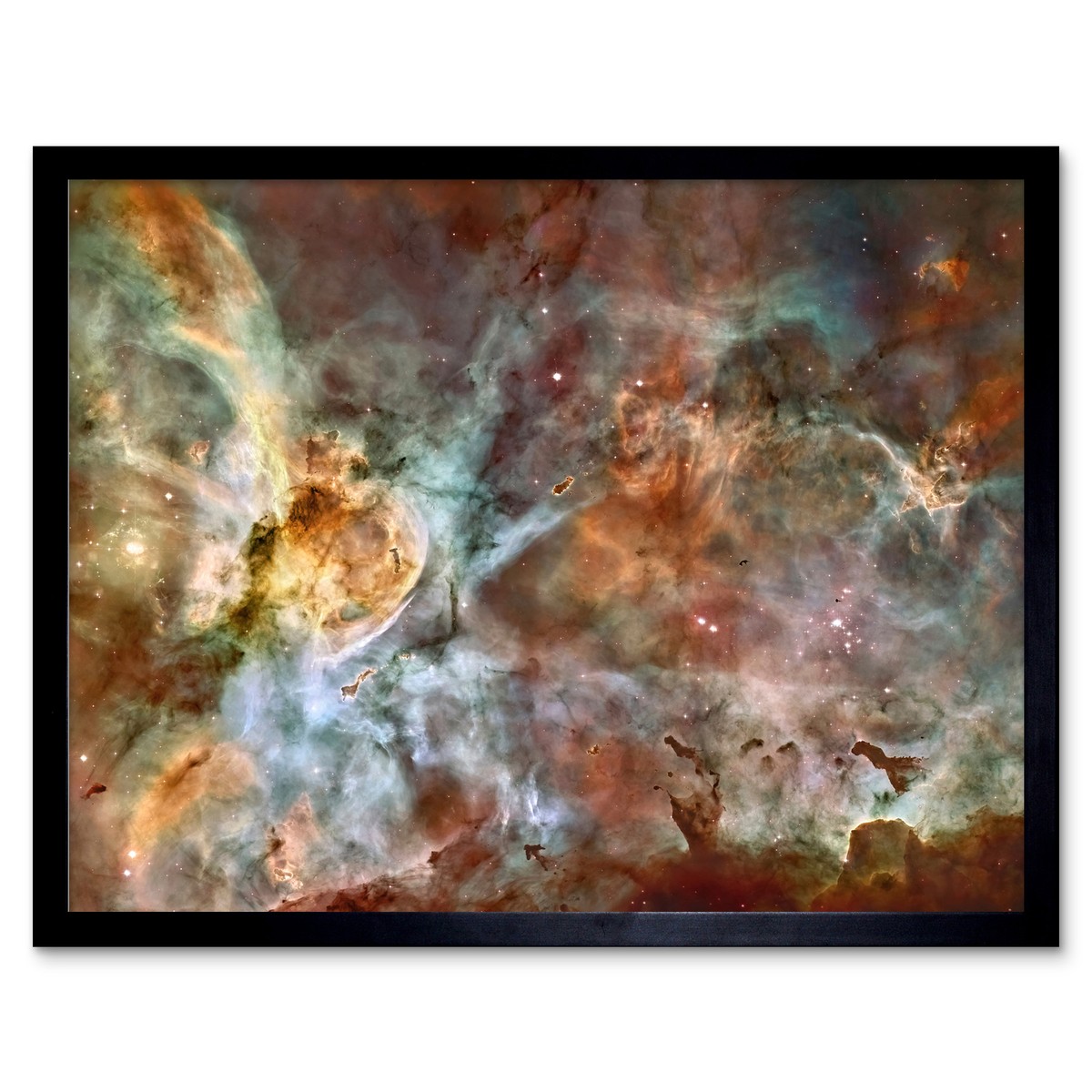
The Carina Nebula Through Hubble’s Eyes
The Carina Nebula is one of the Milky Way’s most dramatic stellar nurseries. Located about 7,500 light-years from Earth in the southern constellation Carina, this vast cloud of gas and dust is home to young stars, towering clouds, and some of the most massive stars known. Observations from the Hubble Space Telescope have revealed striking details of this active region, showing how stars are born—and how they reshape their surroundings.
A Stellar Nursery in the Southern Sky
Also known as NGC 3372, the Carina Nebula is a large, bright emission nebula. Its clouds glow as radiation from hot, young stars energizes the surrounding gas. The nebula is also a place of ongoing change: powerful stellar winds and intense radiation carve cavities into the clouds, compress some regions, and disperse others.
Among the nebula’s most famous residents is Eta Carinae, a massive and unstable star system that has undergone dramatic outbursts. Its history and behavior make it a subject of continuing study, while the surrounding nebula provides a broader view of how massive stars affect the space around them.
Hubble’s “Mystic Mountain”
One of Hubble’s best-known views of the Carina Nebula features a towering pillar of gas and dust nicknamed “Mystic Mountain.” Released to mark the telescope’s 20th anniversary in 2010, the image shows a structure roughly three light-years tall. Bright, young stars near the pillar’s top send out radiation and winds that erode its surface.
The image captures a snapshot of stellar formation in progress. Dense knots of material within the pillar may contain forming stars, while jets of gas stream from some young objects. These features make the scene more than a beautiful portrait: they offer clues about the processes that shape new stars and their planetary systems.
What Hubble Reveals
Hubble observes the universe in visible and other wavelengths, allowing astronomers to study structures that would otherwise be difficult to distinguish. In the Carina Nebula, its sharp views help researchers trace the boundaries between glowing gas, dark dust, and exposed stars. Different filters highlight particular elements and physical conditions, turning the nebula into a detailed map of stellar activity.
Hubble’s images are also valuable because they show how quickly the environment around massive stars can change. Radiation and stellar winds sculpt the clouds over time, while the stars themselves influence whether nearby material continues collapsing or is blown away.
A Window Into Star Formation
The Carina Nebula offers a nearby laboratory for studying the birth and lives of massive stars. Hubble’s observations help scientists investigate how these stars form, how they interact with surrounding clouds, and how their energy can influence future generations of stars.
Its vivid pillars and glowing clouds are a reminder that the universe is not static. In the Carina Nebula, stars are emerging from their dusty cradles even as other stars transform—and sometimes destroy—the environments that formed them. Through Hubble’s lens, this distant region becomes both a spectacular celestial landscape and an important setting for understanding how stars are made.
Exploring the Carina Nebula: 7 Fascinating Insights from Hubble’s Images
- Look for the Carina Nebula in Hubble’s vivid star-forming-region images.
- The nebula is about 7,500 light-years from Earth.
- Its catalog name is NGC 3372.
- Hubble’s “Mystic Mountain” image shows towering gas and dust pillars.
- New stars are forming within the nebula’s clouds.
- Powerful young stars sculpt the surrounding gas with radiation and stellar winds.
- Eta Carinae, a massive star system, lies within the Carina Nebula.
Look for the Carina Nebula in Hubble’s vivid star-forming-region images.
Look for the Carina Nebula in Hubble’s vivid images of star-forming regions, where towering clouds of gas and dust glow around young, massive stars. Known for dramatic features such as the “Mystic Mountain” pillar, the nebula offers a striking view of how stars shape the space around them. Check image captions and credits to learn which details Hubble captured and what wavelengths or filters were used.
The nebula is about 7,500 light-years from Earth.
The Carina Nebula is about 7,500 light-years from Earth, meaning its light takes roughly 7,500 years to reach us. Although that distance is immense, the nebula is relatively close by astronomical standards, making it an important target for telescopes such as Hubble. Its detailed images help astronomers study the glowing gas, dust clouds, and young stars within this remarkable stellar nursery.
Its catalog name is NGC 3372.
The Carina Nebula’s catalog designation is NGC 3372. Astronomers use this identifier to distinguish the nebula in catalogs and research, while “Carina Nebula” is its more familiar name, taken from the constellation Carina, where it appears in the southern sky.
Hubble’s “Mystic Mountain” image shows towering gas and dust pillars.
Hubble’s famous “Mystic Mountain” image captures towering pillars of gas and dust in the Carina Nebula, a stellar nursery about 7,500 light-years from Earth. The structures rise several light-years high, shaped by intense radiation and powerful winds from nearby young stars. Within the dense clouds, new stars may be forming, making this striking view a glimpse of the ongoing process of stellar birth.
New stars are forming within the nebula’s clouds.
New stars are forming within the Carina Nebula’s vast clouds of gas and dust. As gravity pulls dense pockets of material together, they can collapse and grow into young stars. Hubble’s detailed observations reveal glowing regions, dark dust lanes, and sculpted pillars where this process is underway, offering a glimpse of stellar birth in a nearby corner of the Milky Way.
Powerful young stars sculpt the surrounding gas with radiation and stellar winds.
In the Carina Nebula, powerful young stars shape the clouds around them with intense radiation and fast-moving stellar winds. These forces heat and erode the gas, carving out cavities and towering pillars while compressing some regions into dense clumps where new stars may form. The result is a constantly changing stellar nursery, offering astronomers a vivid look at how massive stars influence their surroundings.
Eta Carinae, a massive star system, lies within the Carina Nebula.
Eta Carinae is a massive, unstable star system located within the Carina Nebula, one of the Milky Way’s most active regions of star formation. Hubble images capture the surrounding clouds of gas and dust, offering a dramatic view of the environment shaped by powerful stars like Eta Carinae. Its location in the nebula helps astronomers study how massive stars interact with—and transform—their cosmic surroundings.