
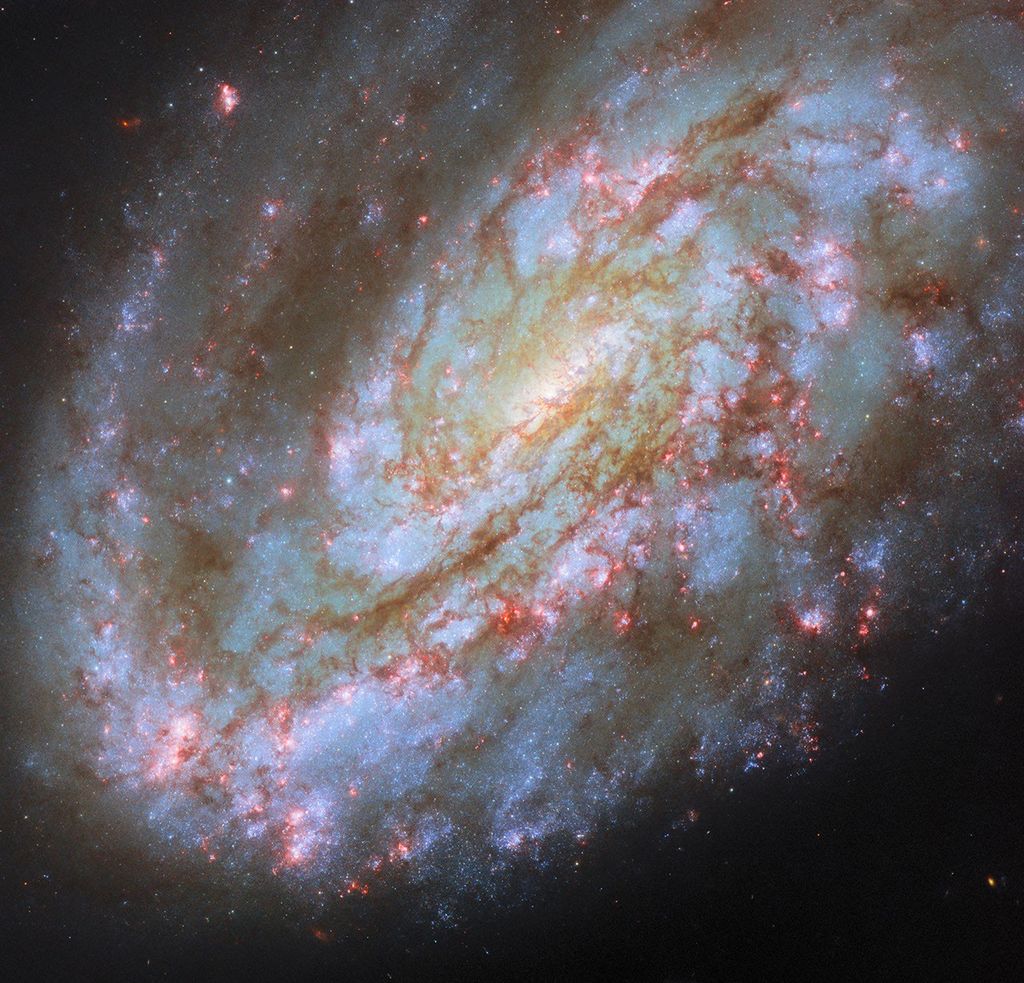
The Crab Nebula Through the Eyes of the James Webb Space Telescope
The James Webb Space Telescope has offered a striking new view of the Crab Nebula, a supernova remnant about 6,500 light-years from Earth. By observing in infrared light, Webb reveals features that are difficult to see in visible-light images, including intricate gas filaments, dust, and the energetic activity surrounding the nebula’s central pulsar.
A Cosmic Explosion with a Recorded History
The Crab Nebula is the remains of a star that exploded as a supernova. People on Earth witnessed the event in 1054, when it appeared as a bright “guest star” in the sky. The expanding debris from that explosion now forms a vast, intricate cloud in the constellation Taurus.
At the nebula’s center is a pulsar: the extremely dense, rapidly spinning remnant of the star. It rotates roughly 30 times per second and emits powerful beams of radiation. Its energy helps shape the surrounding nebula.
What Webb Reveals
Webb observed the Crab Nebula using its Near-Infrared Camera (NIRCam) and Mid-Infrared Instrument (MIRI). Infrared observations let astronomers study structures and materials that can be obscured or less apparent in visible light.
In Webb’s images, glowing filaments of gas weave through the nebula, tracing the debris from the exploded star. Dust also contributes to the nebula’s appearance. Within the central region, a hazy, smoke-like glow comes from synchrotron radiation: light produced by fast-moving charged particles spiraling through magnetic fields.
The images also show how the pulsar influences its surroundings. Its powerful wind of particles interacts with the material thrown outward by the explosion, creating changing patterns and structures. Together, these features make the Crab Nebula more than a static cloud: it is an active environment shaped by the remains of a star.
Why Infrared Observations Matter
Different wavelengths of light reveal different aspects of an astronomical object. Visible-light images show many of the Crab’s familiar filaments, while infrared observations help astronomers examine dust and other details in the nebula. Comparing Webb’s data with observations from telescopes that see other wavelengths gives researchers a fuller picture of the remnant’s composition and evolution.
Webb’s view does not simply provide a sharper portrait. It gives astronomers additional clues about how the supernova’s debris has changed over time and how the central pulsar continues to shape it. The Crab Nebula remains a valuable natural laboratory for studying stellar explosions, cosmic dust, and the energetic objects left behind.
A Remnant Still in Motion
Nearly a thousand years after the supernova was recorded on Earth, the Crab Nebula is still expanding and evolving. The James Webb Space Telescope’s infrared observations reveal new layers of detail in this famous remnant—and help turn the light from an ancient explosion into a deeper understanding of how stars live, die, and enrich the universe.
9 Insights into the Crab Nebula: Exploring the Supernova Remnant with the James Webb Telescope
- The Crab Nebula is a supernova remnant in Taurus.
- Its supernova was observed from Earth in 1054.
- James Webb Space Telescope views the nebula in infrared light.
- Infrared images reveal warm dust and glowing gas.
- The nebula’s filaments are expanding debris from the exploded star.
- A rapidly spinning neutron star powers the nebula’s glow.
- Webb images show intricate structures around the central pulsar.
- Different infrared filters highlight different materials and features.
- Compare Webb’s view with visible-light images to see more of the remnant.
The Crab Nebula is a supernova remnant in Taurus.
The Crab Nebula is a supernova remnant located in the constellation Taurus, formed from the debris of a star that exploded nearly a thousand years ago. Observations from the James Webb Space Telescope reveal intricate details in its glowing gas and dust, helping astronomers study how the stellar explosion’s remains continue to expand and evolve.
Its supernova was observed from Earth in 1054.
The Crab Nebula began forming after a massive star exploded in a supernova, an event observed from Earth in 1054. Astronomers recorded the sudden appearance of a bright “guest star,” which was visible in daylight for weeks and at night for nearly two years. Today, the James Webb Space Telescope studies the nebula’s expanding remains in infrared light, helping reveal details of the ancient explosion and the energetic object left at its center.
James Webb Space Telescope views the nebula in infrared light.
The James Webb Space Telescope observes the Crab Nebula in infrared light, revealing details that can be difficult to see with visible-light telescopes. Its infrared view helps astronomers study the nebula’s intricate gas filaments, dust, and glowing material shaped by the pulsar at its center.
Infrared images reveal warm dust and glowing gas.
James Webb Space Telescope’s infrared images reveal warm dust and glowing gas woven through the Crab Nebula, the expanding remains of a star that exploded nearly a thousand years ago. These wavelengths help astronomers see structures that are difficult to study in visible light, offering fresh clues about the nebula’s composition and how the stellar debris continues to evolve.
The nebula’s filaments are expanding debris from the exploded star.
The Crab Nebula’s glowing filaments are expanding strands of gas and other material hurled into space when its star exploded. In James Webb Space Telescope images, infrared light helps reveal these intricate structures, offering astronomers a closer look at how the supernova’s debris continues to spread and evolve.
A rapidly spinning neutron star powers the nebula’s glow.
At the heart of the Crab Nebula, a rapidly spinning neutron star called a pulsar drives much of the nebula’s glow. As it rotates, the pulsar releases energetic particles that interact with magnetic fields and surrounding debris, producing radiation across the nebula. James Webb’s infrared observations help reveal the complex structures shaped by this powerful stellar remnant.
Webb images show intricate structures around the central pulsar.
Webb’s infrared images reveal intricate structures surrounding the Crab Nebula’s central pulsar, where the fast-spinning stellar remnant drives energetic particles into the debris of the exploded star. These observations bring out fine details in the glowing gas and dust, helping astronomers study how the pulsar shapes the nebula and keeps this ancient supernova remnant active.
Different infrared filters highlight different materials and features.
Different infrared filters give astronomers distinct views of the Crab Nebula by detecting different wavelengths of light, which can highlight different materials and structures. Some filters bring out glowing gas filaments, while others reveal dust or the diffuse emission produced by energetic particles near the pulsar. Comparing these images helps researchers map the nebula’s components and better understand how the supernova’s debris interacts with the pulsar’s powerful winds.
Compare Webb’s view with visible-light images to see more of the remnant.
Compare the James Webb Space Telescope’s infrared view of the Crab Nebula with visible-light images to see how different wavelengths reveal different details. Visible light highlights many of the nebula’s bright filaments, while Webb’s infrared observations bring out additional features in its dust, gas, and energetic central region. Together, the views offer a more complete picture of the expanding remains of the ancient stellar explosion.