
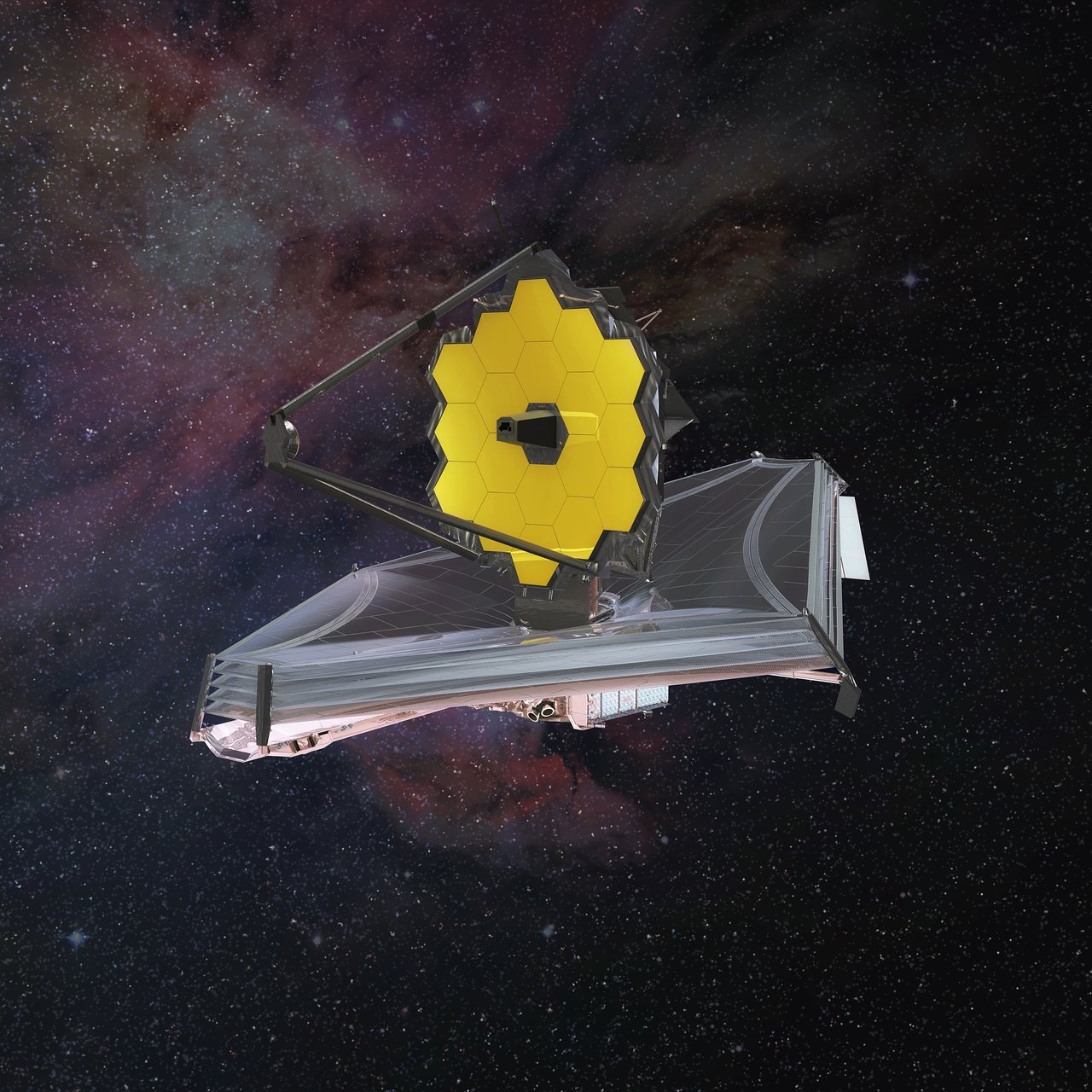
The James Webb Space Telescope: Unveiling the Mysteries of the Universe
The James Webb Space Telescope (JWST) is a revolutionary observatory set to transform our understanding of the cosmos. Named after James E. Webb, a key figure in the early days of NASA, this cutting-edge telescope represents a giant leap forward in space exploration and astronomy.
Unprecedented Capabilities
Unlike its predecessor, the Hubble Space Telescope, the JWST is designed to operate primarily in the infrared spectrum. This enables it to peer through cosmic dust clouds, observe the formation of stars and galaxies, and even study exoplanets in distant solar systems.
Technical Marvels
The JWST boasts a massive 6.5-meter primary mirror composed of 18 hexagonal segments that can be adjusted individually. This intricate design allows for unparalleled precision and image clarity, making it one of the most powerful space telescopes ever constructed.
Origins and Collaboration
The development of the JWST is a testament to international cooperation, with NASA partnering with the European Space Agency (ESA) and the Canadian Space Agency (CSA) to bring this ambitious project to fruition. Scientists and engineers from around the world have contributed their expertise to ensure its success.
Launch and Mission
After years of meticulous planning and construction, the JWST is scheduled for launch aboard an Ariane 5 rocket from French Guiana. Once deployed at its designated Lagrange point beyond Earth’s orbit, it will begin its mission of unlocking some of the universe’s most profound mysteries.
Anticipated Discoveries
With its advanced instruments and unprecedented sensitivity, the JWST is poised to make groundbreaking discoveries across various fields of astronomy. From studying distant galaxies to probing the atmospheres of exoplanets, this telescope promises to revolutionize our understanding of the cosmos.
Legacy and Impact
The James Webb Space Telescope represents a beacon of human ingenuity and curiosity, pushing the boundaries of what we thought possible in space exploration. Its legacy will endure for generations as we continue to unravel the secrets of our vast universe.
As we eagerly await its launch and subsequent discoveries, one thing is certain: The James Webb Space Telescope will inspire awe and wonder as it unveils new realms of knowledge about our place in the cosmos.
Revolutionizing Astronomy: Six Key Advantages of the James Webb Space Telescope
- 1. Unprecedented infrared capabilities for studying cosmic phenomena hidden by dust clouds.
- 2. Cutting-edge 6.5-meter primary mirror with individual segment adjustment for superior image clarity.
- 3. International collaboration involving NASA, ESA, and CSA ensures diverse expertise and resources.
- 4. Advanced instruments enable detailed observations of distant galaxies and exoplanet atmospheres.
- 5. Positioned at a Lagrange point beyond Earth’s orbit for optimal viewing conditions and stability.
- 6. Promises groundbreaking discoveries that will revolutionize our understanding of the universe.
Challenges Facing the James Webb Space Telescope: Cost, Complexity, and Operational Limitations
- 1. Cost Overruns
- 2. Complexity
- 3. Limited Repair Options
- 4. Communication Lag
- 5. Shorter Operational Lifespan
1. Unprecedented infrared capabilities for studying cosmic phenomena hidden by dust clouds.
The James Webb Space Telescope stands out for its unprecedented infrared capabilities, allowing researchers to study cosmic phenomena that are typically obscured by dense dust clouds. By operating primarily in the infrared spectrum, the JWST can peer through these obstructions to observe the formation of stars and galaxies, as well as investigate distant exoplanets in ways previously impossible. This unique ability to see through cosmic dust opens up a new window into the universe, offering insights into hidden realms of space and shedding light on mysteries that have long eluded astronomers.
2. Cutting-edge 6.5-meter primary mirror with individual segment adjustment for superior image clarity.
The James Webb Space Telescope’s cutting-edge 6.5-meter primary mirror, featuring individual segment adjustment capabilities, represents a remarkable advancement in astronomical technology. This innovative design ensures superior image clarity by allowing precise calibration of each mirror segment, resulting in unprecedented detail and resolution in the telescope’s observations. The ability to adjust these segments independently enhances the JWST’s capability to capture intricate celestial phenomena with unparalleled precision, promising groundbreaking discoveries and insights into the mysteries of the universe.
3. International collaboration involving NASA, ESA, and CSA ensures diverse expertise and resources.
The James Webb Space Telescope benefits greatly from international collaboration involving NASA, the European Space Agency (ESA), and the Canadian Space Agency (CSA). This partnership brings together a diverse range of expertise, resources, and perspectives, enhancing the overall success of the project. By pooling their knowledge and capabilities, these agencies can tackle complex challenges more effectively, ensuring that the JWST remains at the forefront of space exploration and astronomy.
4. Advanced instruments enable detailed observations of distant galaxies and exoplanet atmospheres.
The James Webb Space Telescope’s advanced instruments represent a significant pro, allowing for intricate observations of distant galaxies and exoplanet atmospheres. By harnessing the power of infrared technology, the telescope can penetrate cosmic dust clouds and capture detailed images that were previously unattainable. This capability opens up new avenues for studying the formation and evolution of galaxies, as well as analyzing the composition and dynamics of exoplanet atmospheres. Such detailed observations promise to deepen our understanding of the universe’s vast complexities and offer insights into the diversity of planetary systems beyond our own.
5. Positioned at a Lagrange point beyond Earth’s orbit for optimal viewing conditions and stability.
The James Webb Space Telescope’s strategic positioning at a Lagrange point beyond Earth’s orbit offers unparalleled advantages in terms of optimal viewing conditions and stability. By being stationed at this unique vantage point, the telescope can observe celestial phenomena with minimal interference from Earth’s atmosphere and heat sources, allowing for clearer and more precise observations. Additionally, the stability provided by the Lagrange point ensures that the telescope can maintain its orientation and focus on distant objects for extended periods, maximizing its scientific capabilities and potential for groundbreaking discoveries in the realm of astronomy.
6. Promises groundbreaking discoveries that will revolutionize our understanding of the universe.
The James Webb Space Telescope holds the promise of delivering groundbreaking discoveries that have the potential to revolutionize our understanding of the universe. With its advanced capabilities and unprecedented sensitivity, the JWST is poised to unveil new insights into the cosmos, offering a glimpse into realms previously unexplored. From studying the formation of galaxies to probing the atmospheres of distant exoplanets, the discoveries made possible by this cutting-edge telescope have the power to reshape our knowledge of the universe and inspire future generations of astronomers and space enthusiasts alike.
1. Cost Overruns
The James Webb Space Telescope has encountered significant challenges, notably in the form of cost overruns. The project has experienced delays and financial setbacks, resulting in it becoming one of the most costly endeavors in the realm of space exploration. The substantial budget overruns have raised concerns about the management and execution of the mission, highlighting the complexities and uncertainties inherent in pushing the boundaries of scientific discovery on such a grand scale.
2. Complexity
The complexity of the James Webb Space Telescope poses a significant con, as its intricate design and cutting-edge technology increase the risk of technical challenges and potential malfunctions once deployed in orbit. With its large segmented mirror and sophisticated instruments, the JWST’s operational success hinges on flawless execution and precise coordination of its complex systems. Any unforeseen issues or malfunctions could disrupt its mission objectives and require intricate troubleshooting measures to address, highlighting the inherent risks associated with pushing the boundaries of space exploration.
3. Limited Repair Options
The James Webb Space Telescope faces a significant drawback in terms of limited repair options. In contrast to the Hubble Space Telescope, which was strategically designed for servicing missions by astronauts, the JWST is situated at a location where repairs are exceedingly challenging, if not impossible. This means that any technical issues or malfunctions that arise with the JWST may be much more difficult to address compared to its predecessor, potentially impacting the telescope’s operational lifespan and overall effectiveness in exploring the mysteries of the universe.
4. Communication Lag
One significant drawback of the James Webb Space Telescope is the communication lag caused by its operation at a distant Lagrange point. This delay in communication poses a challenge as real-time adjustments or troubleshooting may be hindered due to the time it takes for signals to travel back and forth between Earth and the telescope. This limitation could potentially impact the efficiency of mission operations and require meticulous planning to account for these communication delays in conducting observations and addressing any technical issues that may arise during the JWST’s mission.
5. Shorter Operational Lifespan
The James Webb Space Telescope faces a significant con with its shorter operational lifespan. This limitation is primarily due to its reliance on fuel reserves and other consumables, which could hinder its capacity for long-term observations when compared to ground-based telescopes. The finite nature of these resources poses a challenge in sustaining the JWST’s mission over an extended period, potentially impacting the depth and duration of its scientific investigations into the mysteries of the universe.