
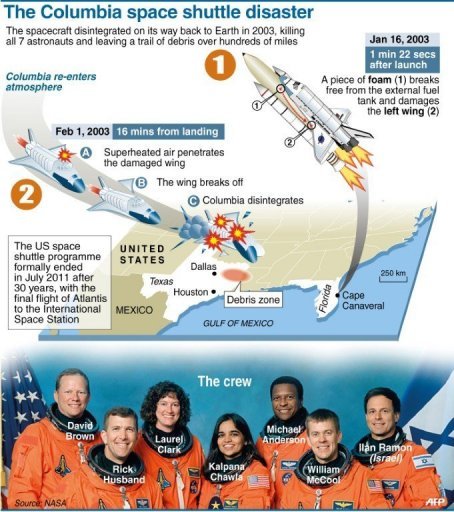
The Columbia Space Shuttle Disaster: A Tragic Day in Space Exploration History
On February 1, 2003, the world watched in horror as the space shuttle Columbia disintegrated upon re-entry into Earth’s atmosphere, claiming the lives of all seven crew members on board. The disaster marked a somber day in space exploration history and served as a stark reminder of the risks and challenges inherent in human spaceflight.
The mission, designated STS-107, had been a 16-day scientific research expedition that involved conducting experiments in various fields such as biology, physics, and materials science. However, tragedy struck when a piece of foam insulation broke off from the shuttle’s external fuel tank during launch and struck the left wing of the orbiter, causing critical damage that went undetected.
As Columbia attempted to return to Earth at the end of its mission, hot gases penetrated the damaged wing during re-entry, leading to structural failure and the eventual breakup of the spacecraft over Texas. The loss of communication with the crew and subsequent debris found scattered across several states signaled a devastating end to what was meant to be a routine mission.
The crew members who perished in the disaster were Commander Rick Husband, Pilot William McCool, Mission Specialists Michael Anderson, Kalpana Chawla, David Brown, Laurel Clark, and Payload Specialist Ilan Ramon – Israel’s first astronaut. Their dedication to advancing scientific knowledge and exploration will always be remembered.
The investigation that followed revealed flaws in NASA’s safety protocols and organizational culture that contributed to the disaster. Changes were implemented to improve shuttle safety measures and prevent similar tragedies from occurring in future missions.
The Columbia space shuttle disaster serves as a poignant reminder of the sacrifices made by astronauts in their pursuit of knowledge and discovery beyond Earth’s boundaries. It stands as a testament to humanity’s resilience in the face of adversity and our unwavering commitment to pushing the boundaries of exploration despite the inherent risks involved.
As we honor the memory of those who lost their lives aboard Columbia on that fateful day, we also reflect on their courage and dedication to expanding our understanding of the universe – a legacy that continues to inspire generations of explorers and dreamers.
Frequently Asked Questions About the Columbia Shuttle Disaster: Crew Awareness, Last Words, and Recovery Efforts
- Did Columbia crew know they were in trouble?
- What were the last words of the Columbia crew?
- Were the bodies of Columbia astronauts recovered?
- Were the bodies of the Columbia crew recovered?
- How long did Columbia’s crew survive?
- Did the Columbia crew know there was a problem?
- Were the bodies of the Challenger crew recovered?
Did Columbia crew know they were in trouble?
In the aftermath of the Columbia space shuttle disaster, a frequently asked question revolves around whether the crew members knew they were in trouble as the tragic events unfolded. While the exact details remain unclear, it is believed that the crew likely became aware of some anomalies or issues with the spacecraft during re-entry. The loss of communication with Mission Control and the subsequent disintegration of the shuttle over Texas suggest that the crew may have faced a dire situation without full knowledge of the extent of the damage to their spacecraft. Despite their training and expertise, the crew members’ final moments serve as a poignant reminder of the risks and uncertainties inherent in space exploration.
What were the last words of the Columbia crew?
The last words of the Columbia crew before the tragic disaster on February 1, 2003, remain a poignant and solemn subject. As communication with the shuttle was lost during re-entry, the exact final words spoken by the crew members are not publicly known. However, their bravery and commitment to exploration serve as a lasting tribute to their legacy in space exploration history. The crew of Columbia will always be remembered for their dedication to advancing scientific knowledge and pushing the boundaries of human discovery, even in the face of unimaginable challenges.
Were the bodies of Columbia astronauts recovered?
Following the tragic Columbia space shuttle disaster on February 1, 2003, the remains of the seven astronauts who lost their lives were recovered by search and recovery teams. The debris from the disintegrated spacecraft was scattered across several states, and efforts were made to locate and retrieve both human remains and shuttle components for investigation. The recovery process was a solemn and meticulous endeavor aimed at honoring the memory of the fallen astronauts and piecing together crucial information to understand the circumstances surrounding the tragedy.
Were the bodies of the Columbia crew recovered?
Following the tragic Columbia space shuttle disaster in 2003, the bodies of the seven crew members were indeed recovered. In the aftermath of the shuttle’s disintegration upon re-entry, search and recovery teams located human remains and debris scattered across several states, aiding in the identification process. The recovery efforts were conducted with utmost respect and dignity for the fallen astronauts, ensuring that they were brought home to their families for proper memorials and honors. The recovery of the Columbia crew members served as a solemn reminder of the risks inherent in space exploration and highlighted the bravery and sacrifice of those who venture into the unknown in pursuit of scientific knowledge.
How long did Columbia’s crew survive?
Following the tragic Columbia space shuttle disaster on February 1, 2003, the crew’s survival was a matter of minutes after the spacecraft disintegrated upon re-entry into Earth’s atmosphere. The seven crew members, including Commander Rick Husband, Pilot William McCool, and five mission specialists, tragically lost their lives as the shuttle broke apart over Texas. Despite NASA’s efforts to re-establish communication with the crew during the descent, the critical damage sustained during launch led to a rapid and devastating chain of events that resulted in the loss of all onboard within a short timeframe. The crew’s bravery and dedication to space exploration will always be remembered as part of their enduring legacy.
Did the Columbia crew know there was a problem?
Following the Columbia space shuttle disaster, one frequently asked question is whether the crew knew there was a problem during the mission. As investigations revealed, the crew was unaware of the critical damage sustained by the shuttle’s left wing during launch. The lack of real-time monitoring or external views of the wing made it impossible for the astronauts to detect the impending danger. Tragically, it was only during re-entry that the catastrophic consequences of the damage became apparent, leading to the loss of communication with the crew and ultimately resulting in the shuttle’s disintegration. This heartbreaking reality highlights the challenges and complexities inherent in space exploration, where even experienced astronauts can be unaware of looming threats beyond their control.
Were the bodies of the Challenger crew recovered?
Following the tragic Challenger space shuttle disaster in 1986, the bodies of the seven crew members, including teacher Christa McAuliffe, were not recovered intact. The explosion that occurred 73 seconds after liftoff resulted in the disintegration of the spacecraft, scattering debris over a large area of the Atlantic Ocean. Despite extensive search and recovery efforts, only remains and personal effects were found, but not the crew members’ bodies in a recognizable state. The loss of the Challenger crew remains a poignant reminder of the risks inherent in space exploration and serves as a solemn chapter in NASA’s history.