
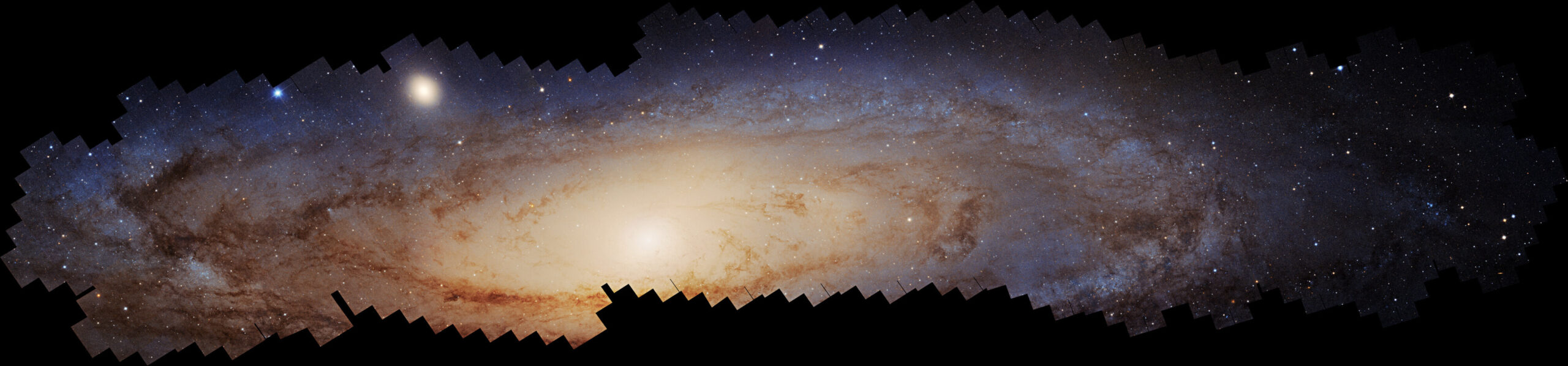
The Andromeda Galaxy: A Cosmic Neighbor in the Night Sky
The Andromeda Galaxy, also known as M31, is a majestic spiral galaxy located approximately 2.537 million light-years away from Earth. Visible to the naked eye in the night sky, Andromeda is our closest galactic neighbor and a fascinating subject of study for astronomers and stargazers alike.
Characteristics of the Andromeda Galaxy
Spanning an impressive diameter of around 220,000 light-years, the Andromeda Galaxy is larger than our own Milky Way galaxy. It contains an estimated trillion stars, along with vast clouds of gas and dust that give birth to new stars. At its center lies a supermassive black hole that exerts a powerful gravitational pull on surrounding matter.
Exploration and Discovery
The Andromeda Galaxy has been observed and studied for centuries, but it wasn’t until the 20th century that its true nature was revealed. Through advancements in telescopic technology and astronomical research, scientists have been able to uncover many of the galaxy’s secrets, including its structure, composition, and evolutionary history.
Interaction with the Milky Way
One of the most intriguing aspects of the Andromeda Galaxy is its eventual collision course with our own Milky Way galaxy. In approximately 4.5 billion years, these two galactic giants are projected to merge into a single, larger galaxy known as Milkomeda. This cosmic event will reshape both galaxies and have far-reaching consequences for their respective stellar populations.
Andromeda in Popular Culture
Due to its visibility in the night sky and its status as a prominent celestial object, the Andromeda Galaxy has captured the imagination of many cultures throughout history. It has been referenced in literature, art, music, and science fiction as a symbol of cosmic beauty and mystery.
Stargazing Opportunities
For amateur astronomers and stargazers, observing the Andromeda Galaxy can be a rewarding experience. With clear skies and minimal light pollution, it is possible to see this distant spiral galaxy as a faint smudge of light in the constellation of Andromeda. Telescopes provide a closer view of its spiral arms and bright core, offering glimpses into the vastness of our universe.
The Andromeda Galaxy stands as a testament to the grandeur and complexity of the cosmos. Its beauty serves as a reminder of our place in the universe and inspires us to continue exploring the mysteries that lie beyond our own celestial neighborhood.
Exploring the Andromeda Galaxy: Distance, Size, Visibility, Collision Timeline, and Star Count
- How far away is the Andromeda Galaxy from Earth?
- What is the size of the Andromeda Galaxy?
- Is the Andromeda Galaxy visible to the naked eye?
- When will the Andromeda Galaxy collide with the Milky Way?
- How many stars are estimated to be in the Andromeda Galaxy?
How far away is the Andromeda Galaxy from Earth?
The Andromeda Galaxy, our closest galactic neighbor, is located approximately 2.537 million light-years away from Earth. This vast distance means that the light we see from Andromeda today has traveled for over two million years to reach our eyes, offering a glimpse into the galaxy’s ancient past. Despite its immense distance, Andromeda remains a prominent feature in our night sky and a captivating subject of study for astronomers and space enthusiasts alike.
What is the size of the Andromeda Galaxy?
The Andromeda Galaxy, also known as M31, is an expansive spiral galaxy with a diameter of approximately 220,000 light-years. This vast size makes Andromeda larger than our own Milky Way galaxy and allows it to contain an estimated trillion stars within its stellar boundaries. Its immense scale and intricate structure have captivated astronomers and stargazers alike, showcasing the sheer magnitude and complexity of the cosmic wonders that exist beyond our own galactic realm.
Is the Andromeda Galaxy visible to the naked eye?
The Andromeda Galaxy, also known as M31, is indeed visible to the naked eye under optimal viewing conditions. Located approximately 2.5 million light-years away from Earth, Andromeda appears as a faint smudge of light in the night sky. It is best observed from dark, rural locations with minimal light pollution. With its proximity and size, the Andromeda Galaxy serves as a captivating sight for stargazers and provides a glimpse into the vastness of our cosmic neighborhood.
When will the Andromeda Galaxy collide with the Milky Way?
One of the most frequently asked questions about the Andromeda Galaxy is regarding its impending collision with the Milky Way. Scientists predict that in approximately 4.5 billion years, the Andromeda Galaxy and our own Milky Way galaxy will collide and merge into a single, larger galaxy known as Milkomeda. This cosmic event, while still billions of years away, highlights the dynamic and ever-changing nature of the universe. Studying the future collision of these two galactic giants provides valuable insights into the evolution of galaxies and the forces that shape our cosmic neighborhood.
How many stars are estimated to be in the Andromeda Galaxy?
The Andromeda Galaxy is estimated to contain around a trillion stars, making it one of the most populous galaxies in our cosmic neighborhood. This vast number of stars contributes to the galaxy’s luminous appearance and highlights the sheer scale of its stellar population. Astronomers have used advanced techniques and observations to arrive at this estimate, providing valuable insights into the richness and diversity of celestial bodies within the Andromeda Galaxy.