
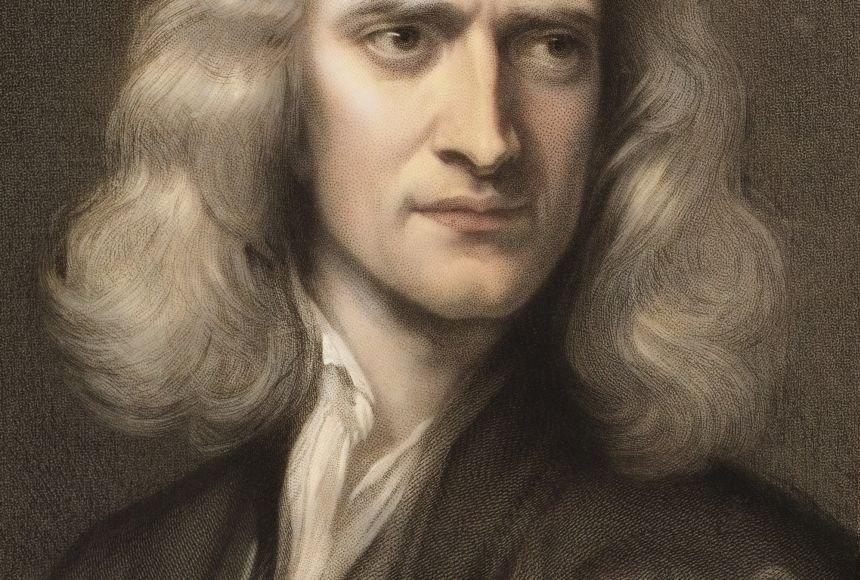
Understanding Newton’s Law of Universal Gravitation
Sir Isaac Newton, one of the most influential scientists in history, revolutionized our understanding of the physical world with his laws of motion and theory of gravity. Newton’s law of universal gravitation, formulated in the 17th century, laid the foundation for modern physics and continues to be a fundamental principle in the study of celestial mechanics.
The Basics of Newton’s Law of Universal Gravitation
Newton’s law states that every particle in the universe attracts every other particle with a force that is directly proportional to the product of their masses and inversely proportional to the square of the distance between their centers. Mathematically, this can be expressed as:
F = G * (m1 * m2) / r^2
Where:
- F is the gravitational force between two objects,
- G is the gravitational constant,
- m1 and m2 are the masses of the two objects, and
- r is the distance between their centers.
Implications and Applications
Newton’s law of universal gravitation explains why objects fall to the ground, why planets orbit around stars, and why moons orbit around planets. It provides a quantitative framework for understanding the motion of celestial bodies and has been instrumental in predicting astronomical phenomena such as eclipses and planetary movements.
Moreover, Newton’s law laid the groundwork for Albert Einstein’s general theory of relativity, which expanded our understanding of gravity to include concepts like spacetime curvature. Despite these advancements, Newton’s law remains highly accurate for most everyday applications and continues to be a cornerstone principle in physics education.
In Conclusion
Newton’s law of universal gravitation represents a pivotal moment in scientific history, demonstrating humanity’s ability to unravel the mysteries of nature through observation, experimentation, and mathematical reasoning. Its enduring legacy serves as a testament to Newton’s brilliance and has inspired generations of scientists to explore further into the workings of our universe.
Six Key Advantages of Newton’s Gravity: From Everyday Applications to Celestial Mechanics
- 1. Provides a simple and accurate explanation for why objects fall to the ground.
- 2. Offers a quantitative framework for understanding planetary motion and celestial mechanics.
- 3. Instrumental in predicting astronomical phenomena such as eclipses and planetary movements.
- 4. Forms the basis for calculating gravitational forces between objects of varying masses.
- 5. Continues to be highly accurate for most everyday applications despite advancements in modern physics.
- 6. Laid the foundation for further exploration of gravity, leading to the development of Einstein’s general theory of relativity.
Limitations of Newton’s Gravity: Seven Key Challenges in Modern Physics
- Does not fully explain gravitational anomalies in the motion of Mercury
- Does not account for the behavior of gravity at extremely small scales, such as quantum phenomena
- Assumes that gravitational force acts instantaneously across any distance, which conflicts with the principles of special relativity
- Cannot be directly applied to describe the behavior of objects moving at speeds close to the speed of light
- Does not incorporate dark matter or dark energy, which are believed to play significant roles in the universe’s gravitational dynamics
- Fails to provide a complete explanation for certain cosmological observations, such as the accelerated expansion of the universe
- Limited in its ability to predict gravitational interactions in extreme conditions, such as near black holes or during the early stages of the universe
1. Provides a simple and accurate explanation for why objects fall to the ground.
Newton’s law of universal gravitation offers a straightforward and precise explanation for why objects fall to the ground. According to this principle, every object in the universe attracts every other object with a force that is directly proportional to their masses and inversely proportional to the square of the distance between them. This gravitational force pulls objects towards each other, causing them to accelerate towards the center of the Earth when dropped. By applying Newton’s law, we can easily understand and predict the behavior of falling objects, making it a fundamental concept in physics education and everyday observations of gravity’s effects on Earth.
2. Offers a quantitative framework for understanding planetary motion and celestial mechanics.
Newton’s law of universal gravitation offers a valuable pro by providing a quantitative framework for understanding planetary motion and celestial mechanics. By mathematically defining the gravitational force between objects based on their masses and distances, Newton’s law allows scientists to predict and analyze the movements of planets, moons, and other celestial bodies with precision. This quantitative approach not only enhances our comprehension of the dynamics of the cosmos but also enables us to make accurate calculations and predictions regarding astronomical phenomena, contributing significantly to our knowledge of the universe.
3. Instrumental in predicting astronomical phenomena such as eclipses and planetary movements.
Newton’s law of universal gravitation has been instrumental in predicting astronomical phenomena such as eclipses and planetary movements. By providing a quantitative framework for understanding the gravitational interactions between celestial bodies, Newton’s law allows astronomers to forecast the precise timing and occurrence of natural events like solar and lunar eclipses. Additionally, the law’s application in calculating the orbits of planets has enabled scientists to accurately predict planetary movements and positions in the night sky, contributing to our overall comprehension of the dynamics of our solar system and beyond.
4. Forms the basis for calculating gravitational forces between objects of varying masses.
Newton’s law of universal gravitation serves as the foundation for calculating gravitational forces between objects of varying masses. This pro highlights the versatility and applicability of Newton’s theory, allowing scientists and researchers to determine the gravitational interaction between celestial bodies regardless of their sizes. By providing a mathematical framework that accounts for mass differences, Newton’s law enables precise calculations that are essential for understanding the dynamics of planetary motion, stellar systems, and other astronomical phenomena.
5. Continues to be highly accurate for most everyday applications despite advancements in modern physics.
Newton’s law of universal gravitation, with its simplicity and effectiveness, continues to be highly accurate for most everyday applications despite advancements in modern physics. From calculating the force needed to lift an object to predicting the trajectory of a thrown ball, Newton’s gravitational theory remains a reliable tool in practical scenarios. Its straightforward formula and ease of application make it a go-to principle for engineers, architects, and scientists working on a wide range of everyday problems. Despite the evolution of scientific knowledge, the enduring accuracy and versatility of Newton’s gravity serve as a testament to its timeless relevance in our daily lives.
6. Laid the foundation for further exploration of gravity, leading to the development of Einstein’s general theory of relativity.
Newton’s law of universal gravitation laid the foundation for further exploration of gravity by providing a framework for understanding the interactions between masses in the universe. This groundbreaking principle not only explained the motion of celestial bodies but also paved the way for more advanced theories. One significant outcome was the development of Albert Einstein’s general theory of relativity, which expanded upon Newton’s ideas and introduced revolutionary concepts such as spacetime curvature. By building upon Newton’s work, Einstein was able to offer a more comprehensive and accurate description of gravity, showcasing how scientific progress is often built upon the discoveries of those who came before.
Does not fully explain gravitational anomalies in the motion of Mercury
One of the notable shortcomings of Newton’s law of universal gravitation is its inability to fully account for certain gravitational anomalies observed in the motion of Mercury. While the law accurately predicts the orbits of most planets within our solar system, Mercury’s orbit deviates slightly from what would be expected based on Newtonian physics alone. This inconsistency led to the development of Einstein’s general theory of relativity, which offers a more precise explanation by considering the curvature of spacetime caused by massive objects. The discrepancy in Mercury’s orbit highlights a limitation of Newton’s gravity in extreme gravitational environments and underscores the need for more comprehensive theories to describe complex celestial dynamics.
Does not account for the behavior of gravity at extremely small scales, such as quantum phenomena
Newton’s law of universal gravitation, while a groundbreaking principle in classical physics, falls short when applied to the realm of quantum phenomena. At extremely small scales, such as those observed in the subatomic world, the behavior of gravity deviates from Newtonian predictions. Quantum mechanics introduces uncertainty and peculiar interactions that challenge the deterministic nature of classical physics, highlighting the limitations of Newton’s gravity in explaining the complexities of the microscopic universe. The discrepancy between Newtonian gravity and quantum behavior underscores the need for a more comprehensive theory that can reconcile both macroscopic and microscopic observations of gravitational forces.
Assumes that gravitational force acts instantaneously across any distance, which conflicts with the principles of special relativity
Newton’s law of universal gravitation, while a groundbreaking concept in its time, has a notable limitation that conflicts with the principles of special relativity. One significant con is that Newton’s theory assumes gravitational force acts instantaneously across any distance. This assumption contradicts the fundamental tenets of special relativity, which posit that information and influences cannot travel faster than the speed of light. In the context of modern physics, this discrepancy highlights the need for a more nuanced understanding of gravity that aligns with the relativistic framework proposed by Albert Einstein in his general theory of relativity.
Cannot be directly applied to describe the behavior of objects moving at speeds close to the speed of light
Newton’s law of universal gravitation, while a foundational principle in classical physics, encounters limitations when describing the behavior of objects moving at speeds approaching the speed of light. At such extreme velocities, the predictions provided by Newton’s law no longer hold true due to the effects of special relativity as described by Albert Einstein. The constant speed of light and its implications on mass, energy, and spacetime curvature necessitate a more comprehensive framework like Einstein’s theory of general relativity to accurately describe the gravitational interactions in these high-speed scenarios. Thus, Newton’s gravity falls short in addressing the complexities of relativistic phenomena where traditional Newtonian mechanics prove inadequate.
Does not incorporate dark matter or dark energy, which are believed to play significant roles in the universe’s gravitational dynamics
Newton’s law of universal gravitation, while a groundbreaking concept in its time, has limitations that become apparent in the context of modern astrophysics. One significant drawback is its failure to account for dark matter and dark energy, two mysterious components believed to constitute a substantial portion of the universe’s mass-energy content. Dark matter and dark energy are hypothesized to exert gravitational effects on cosmic scales, influencing the dynamics of galaxies and the expansion of the universe. Since Newton’s law does not incorporate these elusive entities, its predictions may not accurately reflect the full extent of gravitational interactions at play in the cosmos, highlighting the need for more comprehensive theories such as those found in contemporary cosmology and physics.
Fails to provide a complete explanation for certain cosmological observations, such as the accelerated expansion of the universe
Newton’s law of universal gravitation, while a groundbreaking concept in physics, falls short in providing a comprehensive explanation for certain cosmological phenomena observed in the universe. One significant limitation is its inability to account for the accelerated expansion of the universe, a phenomenon that has been well-documented through astronomical observations. The discrepancy between the predictions based on Newton’s law and the actual observations of cosmic expansion highlights the need for more advanced theories, such as Einstein’s general theory of relativity, to fully grasp the complexities of the cosmos at a larger scale.
Limited in its ability to predict gravitational interactions in extreme conditions, such as near black holes or during the early stages of the universe
Newton’s law of universal gravitation, while a groundbreaking concept in physics, has its limitations when it comes to predicting gravitational interactions in extreme conditions. For instance, near black holes where gravitational forces are immensely strong and spacetime is severely warped, Newton’s law becomes inadequate and fails to accurately describe the complex dynamics at play. Similarly, during the early stages of the universe where densities and energies were exceptionally high, Newtonian gravity falls short in providing a complete understanding of the gravitational interactions that shaped cosmic evolution. In these extreme scenarios, more advanced theories like general relativity are required to offer a more comprehensive explanation of gravitational phenomena.