
Exploring the James Webb Space Telescope
The James Webb Space Telescope, often referred to as JWST or simply Webb, is a revolutionary space observatory set to transform our understanding of the universe. Named after James E. Webb, who was a key figure in the early years of NASA, this telescope is a joint project of NASA, the European Space Agency (ESA), and the Canadian Space Agency (CSA).
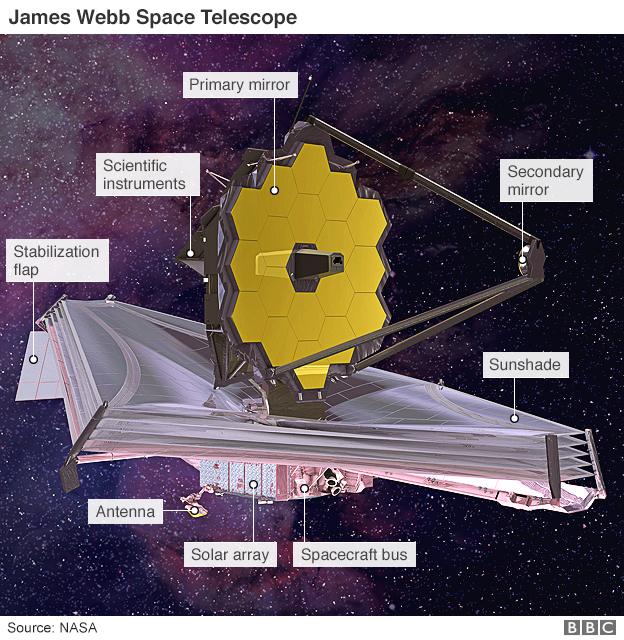
One of the most anticipated aspects of the James Webb Space Telescope is its advanced technology. With a primary mirror over 6 meters in diameter, made up of 18 hexagonal segments coated in gold to optimize infrared reflection, JWST will be able to capture incredibly detailed images of celestial objects.
Unlike its predecessor, the Hubble Space Telescope, which primarily observes in visible and ultraviolet light, JWST is designed to focus on the infrared spectrum. This will allow it to peer through cosmic dust clouds and observe distant galaxies that emit infrared radiation due to their extreme distance from Earth.
Another key feature of JWST is its location in space. Positioned at the second Lagrange point (L2), approximately 1.5 million kilometers from Earth, this observatory will benefit from minimal interference from Earth’s atmosphere and heat radiation. This vantage point will enable JWST to capture clear and precise images without distortion.
Scientists and astronomers are eagerly awaiting the data that will be collected by the James Webb Space Telescope. From studying exoplanets and their atmospheres to exploring the formation of galaxies and stars, JWST is poised to revolutionize our understanding of the cosmos.
As we look toward the future of space exploration and discovery, the James Webb Space Telescope stands as a testament to human ingenuity and curiosity. Its launch represents a significant milestone in our quest to unravel the mysteries of the universe and expand our knowledge beyond what we currently comprehend.
8 Fascinating Facts About the James Webb Space Telescope: The Next Frontier in Space Exploration
- The James Webb Space Telescope is set to be the most powerful space telescope ever launched.
- It will orbit the Sun at a distance about 1.5 million kilometers from Earth.
- The telescope’s primary mirror is made up of 18 hexagonal segments that will unfold after launch.
- James Webb will observe the universe in infrared light, allowing it to see through dust clouds and study distant galaxies.
- Its instruments are designed to study every phase in the history of our Universe, from the first luminous glows after the Big Bang to the formation of solar systems capable of supporting life.
- Webb will help answer outstanding questions about how galaxies formed, evolved, and interact with each other.
- It is a joint project between NASA, ESA (European Space Agency), and CSA (Canadian Space Agency).
- The James Webb Space Telescope is scheduled for launch on December 18, 2021.
The James Webb Space Telescope is set to be the most powerful space telescope ever launched.
The James Webb Space Telescope is poised to become the most powerful space telescope ever launched, promising to revolutionize our exploration of the cosmos. With its advanced technology and unprecedented capabilities, JWST is expected to provide groundbreaking insights into the universe, offering a new perspective on celestial phenomena and pushing the boundaries of our understanding of space.
It will orbit the Sun at a distance about 1.5 million kilometers from Earth.
The James Webb Space Telescope is planned to orbit the Sun at a distance of approximately 1.5 million kilometers from Earth. This strategic positioning at the second Lagrange point (L2) will provide the telescope with a stable and advantageous vantage point for conducting its groundbreaking observations of the cosmos. By being stationed at this distance, the telescope will be able to minimize interference from Earth’s atmosphere and heat radiation, allowing it to capture clear and detailed images of celestial objects with unparalleled precision and clarity.
The telescope’s primary mirror is made up of 18 hexagonal segments that will unfold after launch.
The James Webb Space Telescope’s primary mirror is a marvel of engineering, composed of 18 hexagonal segments that will unfurl like a cosmic puzzle after its launch into space. This innovative design allows for a larger mirror than what could be launched in one piece, enabling the telescope to capture intricate details of celestial objects with unprecedented clarity. As these segments align and come together seamlessly in the harsh environment of space, they will form a powerful optical instrument ready to unveil the mysteries of the universe in ways never before possible.
James Webb will observe the universe in infrared light, allowing it to see through dust clouds and study distant galaxies.
The James Webb Space Telescope, equipped to observe the universe in infrared light, possesses the remarkable ability to peer through cosmic dust clouds and delve into the mysteries of distant galaxies. By harnessing the power of infrared radiation, JWST opens a window to previously unseen realms of the cosmos, promising groundbreaking insights into the formation and evolution of celestial bodies that lie beyond our current reach.
Its instruments are designed to study every phase in the history of our Universe, from the first luminous glows after the Big Bang to the formation of solar systems capable of supporting life.
The instruments on the James Webb Space Telescope are meticulously crafted to delve into every chapter of our Universe’s history. From capturing the initial luminous glimmers following the Big Bang to examining the intricate process of solar system formation conducive to sustaining life, JWST’s capabilities promise to unveil the cosmic narrative in unprecedented detail.
Webb will help answer outstanding questions about how galaxies formed, evolved, and interact with each other.
The James Webb Space Telescope, known as Webb, is poised to play a pivotal role in addressing longstanding inquiries regarding the formation, evolution, and interactions of galaxies. By harnessing its advanced technology and focusing on the infrared spectrum, Webb will provide invaluable insights into the processes that have shaped galaxies over cosmic time. With its ability to peer through cosmic dust clouds and observe distant galaxies emitting infrared radiation, this groundbreaking observatory is set to unravel the mysteries surrounding the intricate dance of galactic evolution and interaction in the vast expanse of the universe.
It is a joint project between NASA, ESA (European Space Agency), and CSA (Canadian Space Agency).
The James Webb Space Telescope, known as JWST, is a collaborative endeavor involving NASA, the European Space Agency (ESA), and the Canadian Space Agency (CSA). This partnership highlights the international cooperation and shared commitment to advancing space exploration and pushing the boundaries of scientific discovery. By pooling resources, expertise, and technological capabilities, these agencies have come together to create a groundbreaking space observatory that promises to revolutionize our understanding of the universe.
The James Webb Space Telescope is scheduled for launch on December 18, 2021.
The James Webb Space Telescope, a groundbreaking observatory set to revolutionize our understanding of the universe, is eagerly anticipated for its scheduled launch on December 18, 2021. This highly awaited event marks a significant milestone in space exploration and promises to unveil new insights into the mysteries of the cosmos. As we count down to this momentous occasion, scientists and astronomy enthusiasts alike are poised to witness the next chapter in our quest for knowledge beyond Earth’s boundaries.