
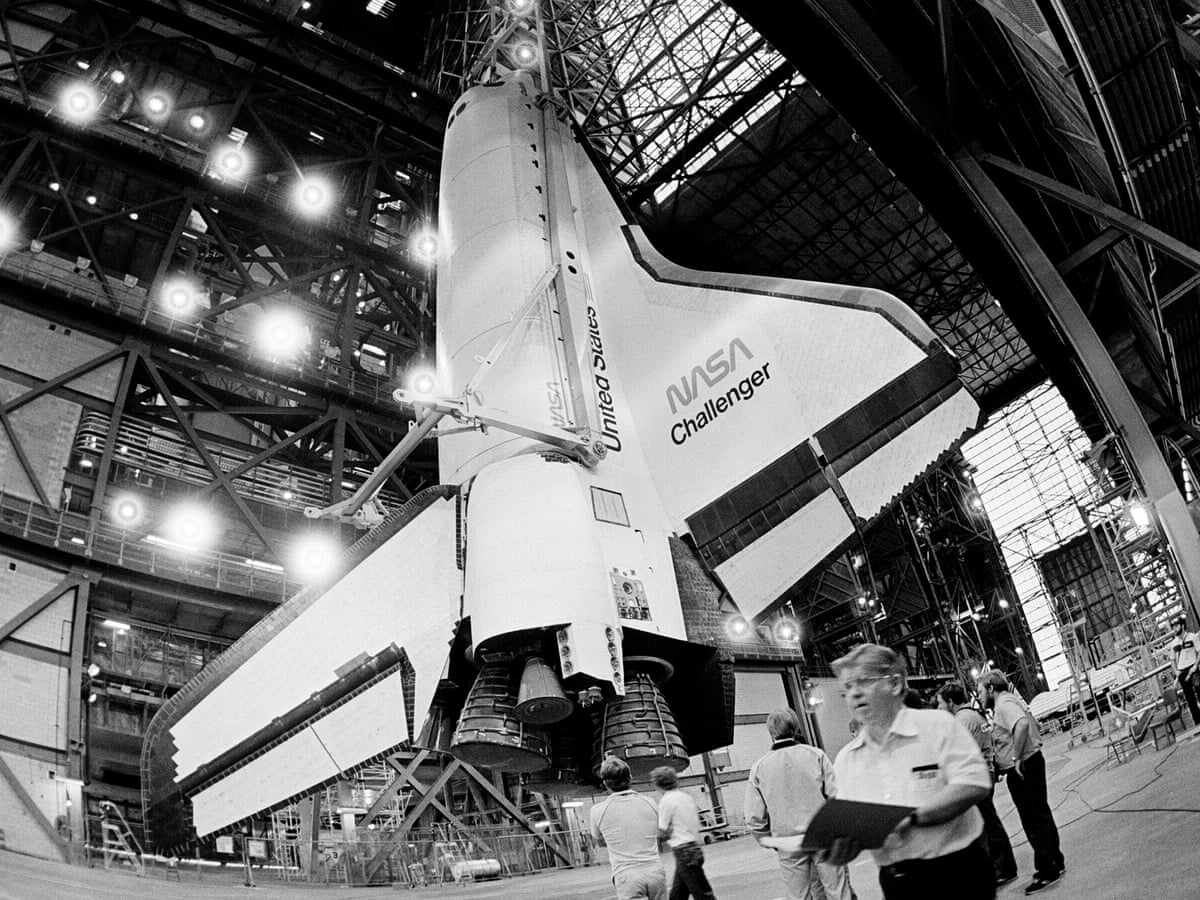
The Challenger Shuttle Disaster: Remembering a Tragic Day in Space Exploration
On January 28, 1986, the world watched in horror as the space shuttle Challenger broke apart just 73 seconds after liftoff, resulting in the tragic deaths of all seven crew members on board. The disaster was a devastating blow to NASA and a sobering reminder of the risks inherent in space exploration.
The mission, designated STS-51-L, was supposed to carry out various tasks, including deploying a satellite and conducting experiments. Among the crew members was Christa McAuliffe, a high school teacher who was set to become the first civilian in space as part of NASA’s Teacher in Space Project.
Just moments after liftoff, an O-ring seal in one of the solid rocket boosters failed due to cold weather conditions, leading to the catastrophic structural failure of the shuttle. The nation watched helplessly as the shuttle disintegrated before their eyes.
The loss of the Challenger crew had a profound impact on NASA and the space program as a whole. It prompted a thorough investigation into the causes of the disaster and led to significant changes in shuttle design and safety protocols.
Despite the tragedy, the legacy of the Challenger crew lives on as a symbol of courage, dedication, and sacrifice. Their willingness to push boundaries and explore new frontiers serves as an enduring inspiration for future generations of astronauts and space enthusiasts.
As we remember the Challenger shuttle disaster, we honor the memory of those who lost their lives in pursuit of knowledge and discovery. May their bravery never be forgotten.
Understanding the Challenger Shuttle Disaster: Key Questions and Lasting Impact
- What caused the Challenger shuttle disaster?
- How many crew members were on board the Challenger shuttle?
- Who was Christa McAuliffe and what was her role in the mission?
- What was the mission designation of the Challenger shuttle flight?
- What were the consequences of the Challenger disaster for NASA?
- How did the O-ring failure lead to the structural failure of the shuttle?
- What changes were implemented in shuttle design and safety protocols after the disaster?
- What impact did the Challenger disaster have on public perception of space exploration?
- How is the legacy of the Challenger crew remembered today?
What caused the Challenger shuttle disaster?
The Challenger shuttle disaster was caused by the failure of an O-ring seal in one of the solid rocket boosters. This critical component malfunctioned due to cold weather conditions at the time of liftoff, leading to the structural failure of the shuttle just 73 seconds into its flight. The tragic event highlighted the importance of thorough safety protocols and engineering diligence in space exploration, prompting significant changes in shuttle design and launch procedures to prevent such a catastrophe from happening again.
How many crew members were on board the Challenger shuttle?
The Challenger shuttle disaster tragically claimed the lives of all seven crew members who were on board the spacecraft during the ill-fated mission. The crew included astronauts Francis R. Scobee, Michael J. Smith, Ronald McNair, Ellison Onizuka, Judith Resnik, Gregory Jarvis, and Christa McAuliffe. Their untimely deaths serve as a poignant reminder of the risks and sacrifices involved in space exploration.
Who was Christa McAuliffe and what was her role in the mission?
Christa McAuliffe was a high school teacher from New Hampshire who was selected to be part of the NASA Teacher in Space Project. She was chosen to be the first civilian in space and was a member of the crew on board the ill-fated Challenger shuttle mission, designated STS-51-L. McAuliffe’s role in the mission was to conduct lessons and experiments from space, sharing the experience with students back on Earth. Her presence on the Challenger was meant to inspire a new generation of learners and bring the wonders of space exploration into classrooms across the country. Tragically, her dream of teaching from space was cut short by the disaster that claimed her life along with those of her fellow crew members.
What was the mission designation of the Challenger shuttle flight?
The mission designation of the Challenger shuttle flight that tragically ended in disaster was STS-51-L. This mission was intended to carry out various tasks, including deploying a satellite and conducting experiments in space. The crew, including Christa McAuliffe, a high school teacher selected to be the first civilian in space as part of NASA’s Teacher in Space Project, embarked on this fateful journey with high hopes and aspirations for scientific discovery and exploration.
What were the consequences of the Challenger disaster for NASA?
The consequences of the Challenger disaster for NASA were profound and far-reaching. The tragic event led to a reevaluation of safety protocols and design practices within the agency, resulting in significant changes to ensure the future reliability and safety of space missions. NASA implemented stricter measures to prevent similar incidents from occurring, enhancing oversight and testing procedures to minimize risks. The disaster also prompted a renewed focus on crew safety, leading to improvements in astronaut training, emergency procedures, and spacecraft technology. Ultimately, the Challenger disaster served as a pivotal moment for NASA, spurring a culture of continuous improvement and vigilance in pursuit of space exploration goals.
How did the O-ring failure lead to the structural failure of the shuttle?
The O-ring failure in the solid rocket booster of the Challenger shuttle played a critical role in the structural failure of the spacecraft. The O-rings were designed to seal the joints between sections of the rocket booster and prevent hot gases from escaping during launch. When the O-ring failed due to cold weather conditions on that fateful day, it allowed hot gases to escape and breach the integrity of the shuttle’s external fuel tank. This breach led to a chain reaction of events, ultimately causing the catastrophic disintegration of the Challenger and resulting in the tragic loss of all seven crew members on board.
What changes were implemented in shuttle design and safety protocols after the disaster?
Following the tragic Challenger shuttle disaster in 1986, significant changes were implemented in shuttle design and safety protocols to prevent such a catastrophe from happening again. One of the key improvements was the redesign of the solid rocket boosters to enhance their resilience to extreme temperatures. Additionally, NASA implemented stricter launch criteria and enhanced safety procedures, including more thorough pre-launch inspections and improved communication between engineers and decision-makers. These changes aimed to prioritize crew safety and ensure that lessons learned from the Challenger disaster were integrated into future space missions, emphasizing a commitment to continuous improvement and risk mitigation in space exploration endeavors.
What impact did the Challenger disaster have on public perception of space exploration?
The Challenger disaster had a profound impact on public perception of space exploration. The tragic event shook the public’s confidence in the safety and reliability of space missions, highlighting the inherent risks involved in venturing beyond Earth’s atmosphere. The loss of the Challenger crew, including civilian teacher Christa McAuliffe, brought a sense of vulnerability and human tragedy to the forefront of space exploration. This incident served as a somber reminder of the dangers faced by astronauts and the need for stringent safety measures in all future missions. The Challenger disaster sparked introspection and scrutiny within NASA and prompted a reevaluation of protocols to ensure that such a devastating loss would never occur again, ultimately shaping how the public viewed the challenges and risks associated with space exploration.
How is the legacy of the Challenger crew remembered today?
The legacy of the Challenger crew is remembered today through various tributes and memorials that honor their courage and dedication to space exploration. Their tragic sacrifice serves as a poignant reminder of the risks and challenges inherent in pushing the boundaries of human knowledge. Educational programs, scholarships, and awards have been established in their memory to inspire future generations to pursue careers in science, technology, engineering, and mathematics (STEM) fields. Additionally, anniversaries of the Challenger disaster are marked with ceremonies and events that pay homage to the crew members’ lasting impact on space exploration and their enduring legacy of bravery and determination.