
The James Webb Space Telescope: Unveiling the Mysteries of the Universe
The James Webb Space Telescope (JWST) is poised to revolutionize our understanding of the cosmos. As the successor to the Hubble Space Telescope, this cutting-edge observatory is designed to peer deeper into space and time than ever before, unlocking a treasure trove of scientific discoveries.
Unprecedented Capabilities
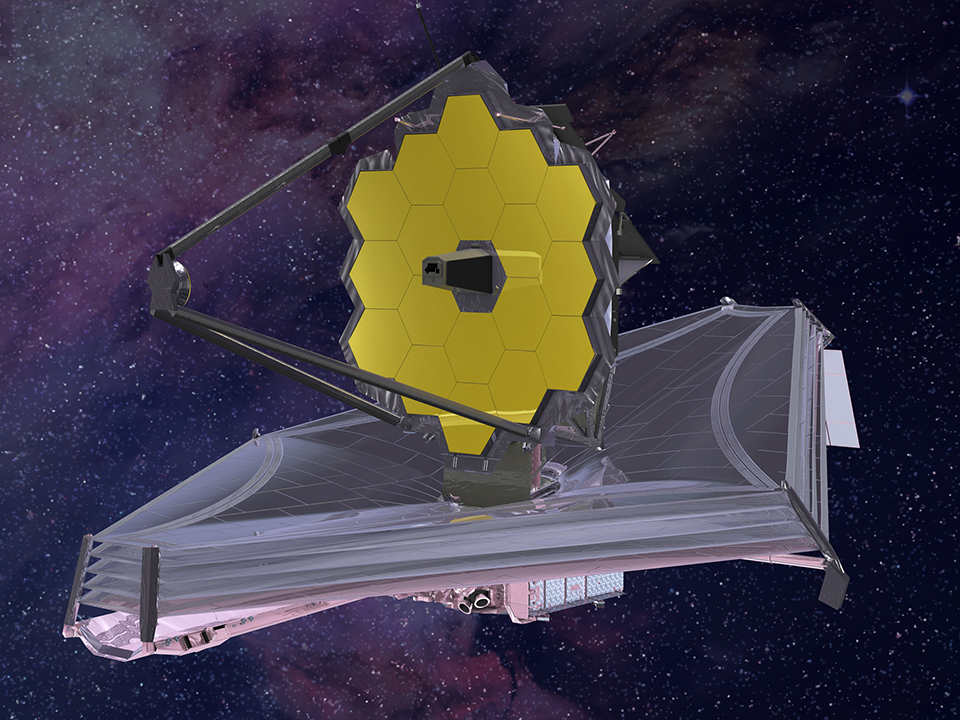
Launching into orbit around Earth’s second Lagrange point, approximately 1.5 million kilometers away, the JWST boasts a massive 6.5-meter primary mirror composed of 18 hexagonal segments. This mirror will capture infrared radiation from celestial objects with unparalleled sensitivity and resolution.
Unlike Hubble, which primarily observes in visible and ultraviolet light, the JWST’s focus on infrared wavelengths will enable it to penetrate dusty regions where new stars and planets are born. By studying these obscured realms, scientists hope to unravel long-standing mysteries about star formation and galaxy evolution.
Scientific Objectives
One of the key goals of the JWST is to investigate the atmospheres of exoplanets orbiting distant stars. By analyzing starlight as it passes through these planetary atmospheres during transits, astronomers can deduce their chemical compositions and search for signs of habitability or even life.
In addition to exoplanet studies, the JWST will delve into the early universe by observing some of the first galaxies that formed after the Big Bang. By capturing light that has traveled billions of years across space, this telescope will provide crucial insights into cosmic history and evolution.
International Collaboration
The JWST is a collaborative effort involving NASA, ESA (European Space Agency), and CSA (Canadian Space Agency). With contributions from multiple countries and scientific institutions worldwide, this ambitious project represents a global commitment to advancing our knowledge of astrophysics and cosmology.
Anticipated Discoveries
As astronomers eagerly await the launch and commissioning of the James Webb Space Telescope, anticipation runs high for groundbreaking discoveries that could reshape our understanding of the universe. From unraveling the mysteries of dark matter to probing the origins of life in distant planetary systems, this remarkable observatory holds immense promise for expanding human knowledge beyond our wildest dreams.
Exploring the Universe: 8 Reasons the James Webb Space Telescope Revolutionizes Space Observation
- 1. Enhanced Infrared Capabilities for Deep Space Observation
- 2. Superior Sensitivity and Resolution Compared to Previous Telescopes
- 3. Ability to Study Exoplanet Atmospheres for Signs of Life
- 4. Investigation of Dusty Star-Forming Regions Unreachable by Visible Light Telescopes
- 5. Exploration of the Early Universe and First Galaxies Post-Big Bang
- 6. International Collaboration Among NASA, ESA, and CSA
- 7. Potential for Groundbreaking Discoveries in Astrophysics and Cosmology
- 8. Global Effort to Advance Human Understanding of the Cosmos
Challenges Facing the James Webb Space Telescope: Budget, Deployment, and Maintenance
1. Enhanced Infrared Capabilities for Deep Space Observation
The James Webb Space Telescope’s enhanced infrared capabilities for deep space observation represent a significant advancement in our quest to unravel the mysteries of the universe. By focusing on infrared wavelengths, the JWST can peer through cosmic dust clouds that obscure traditional telescopes, allowing scientists to study the birth of stars and planets in unprecedented detail. This cutting-edge technology opens new frontiers in astrophysics, promising to reveal hidden celestial phenomena and deepen our understanding of the cosmos’s evolution over billions of years.
2. Superior Sensitivity and Resolution Compared to Previous Telescopes
The James Webb Space Telescope offers a significant advantage in terms of superior sensitivity and resolution when compared to its predecessors. With a massive 6.5-meter primary mirror composed of 18 hexagonal segments, the JWST is designed to capture infrared radiation from celestial objects with unprecedented clarity and precision. This enhanced capability allows astronomers to observe distant galaxies, nebulae, and exoplanets with exceptional detail, providing valuable insights into the mysteries of the universe that were previously beyond reach.
3. Ability to Study Exoplanet Atmospheres for Signs of Life
The James Webb Space Telescope’s remarkable ability to study exoplanet atmospheres for signs of life represents a significant advancement in our quest to understand the potential habitability of distant worlds. By analyzing the composition and characteristics of exoplanetary atmospheres, scientists can search for key molecules such as water vapor, methane, and oxygen that may indicate the presence of biological activity. This capability opens up new possibilities for detecting potential biosignatures and exploring the tantalizing question of whether life exists beyond Earth in the vast expanse of the cosmos.
4. Investigation of Dusty Star-Forming Regions Unreachable by Visible Light Telescopes
The James Webb Space Telescope’s ability to investigate dusty star-forming regions unreachable by visible light telescopes is a game-changer in the field of astrophysics. By focusing on infrared wavelengths, the JWST can penetrate dense clouds of dust where new stars and planetary systems are born. This capability allows scientists to peer into obscured regions of space, unveiling the intricate processes involved in star formation that were previously hidden from traditional telescopes. The JWST’s unique perspective promises to shed light on the mysteries of cosmic evolution and deepen our understanding of the universe’s complex mechanisms.
5. Exploration of the Early Universe and First Galaxies Post-Big Bang
The James Webb Space Telescope’s capability to explore the early universe and observe the first galaxies that emerged post-Big Bang is a monumental advancement in astrophysics. By capturing light that has traveled billions of years across space, the telescope will provide unprecedented insights into the formation and evolution of galaxies, shedding light on the cosmic processes that shaped the universe as we know it today. This groundbreaking research has the potential to deepen our understanding of fundamental questions about the origins of galaxies, stars, and ultimately, life itself.
6. International Collaboration Among NASA, ESA, and CSA
The James Webb Space Telescope exemplifies the power of international collaboration, with NASA, ESA (European Space Agency), and CSA (Canadian Space Agency) joining forces to bring this groundbreaking observatory to life. By pooling resources, expertise, and technological capabilities, these agencies have created a truly global effort that transcends national boundaries. This partnership not only showcases the spirit of cooperation in space exploration but also highlights the collective commitment to advancing scientific knowledge for the betterment of humankind.
7. Potential for Groundbreaking Discoveries in Astrophysics and Cosmology
The James Webb Space Telescope holds the promise of ushering in a new era of groundbreaking discoveries in astrophysics and cosmology. With its advanced capabilities to peer deeper into space and time than ever before, the JWST has the potential to unveil secrets of the universe that were previously inaccessible. By studying distant galaxies, probing the atmospheres of exoplanets, and exploring cosmic phenomena, this revolutionary observatory is poised to expand our understanding of the cosmos and shed light on fundamental questions about our place in the universe.
8. Global Effort to Advance Human Understanding of the Cosmos
The James Webb Space Telescope represents a global effort to advance human understanding of the cosmos. With collaboration from NASA, ESA (European Space Agency), and CSA (Canadian Space Agency), this pioneering observatory showcases international cooperation at its finest. By uniting the expertise and resources of multiple countries and scientific institutions, the JWST embodies a shared commitment to pushing the boundaries of astrophysics and cosmology. This collaborative spirit not only enhances the telescope’s capabilities but also underscores the universal quest for knowledge about the mysteries of the universe.
Cost Overruns
Cost Overruns: The James Webb Space Telescope has faced significant delays and cost overruns during its development, leading to budget concerns and criticisms. Originally scheduled for launch in 2007 with an estimated cost of $1 billion, the project has experienced numerous setbacks that have pushed its completion date back by over a decade and inflated its budget to nearly $10 billion. These challenges have sparked debate within the scientific community and among policymakers about the management of large-scale space initiatives and the need for greater oversight to ensure fiscal responsibility in future astronomical endeavors.
Complex Deployment
The James Webb Space Telescope faces a significant challenge in its complex deployment process. With its intricate design and delicate instruments, the deployment of the JWST in space is a high-stakes operation fraught with risks of technical failures. The precise unfolding and calibration of its massive primary mirror and sensitive infrared detectors require meticulous planning and execution to ensure the telescope’s functionality and scientific success. Any misstep during deployment could potentially jeopardize the mission’s objectives and compromise years of research efforts.
Limited Servicing Options
The James Webb Space Telescope faces a significant drawback in terms of limited servicing options. In contrast to the Hubble Space Telescope, which has benefited from multiple astronaut servicing missions, the JWST is situated at a location where such missions are not viable. This lack of on-site servicing capabilities poses a challenge for addressing potential malfunctions or implementing upgrades on the telescope. As a result, the JWST must rely on meticulous planning and robust engineering to ensure its functionality and performance over its operational lifespan without the option of direct human intervention in space.