
The James Webb Space Telescope: Unveiling the Mysteries of the Universe
The James Webb Space Telescope (JWST) is poised to revolutionize our understanding of the cosmos and unveil secrets hidden in the depths of space. As the successor to the Hubble Space Telescope, JWST represents a giant leap forward in our ability to observe distant galaxies, stars, and planets with unprecedented clarity and detail.
Unprecedented Power and Precision
Planned for launch by NASA in 2021, the JWST is a joint project involving NASA, the European Space Agency (ESA), and the Canadian Space Agency (CSA). This cutting-edge telescope is designed to operate primarily in the infrared range, enabling it to peer through cosmic dust clouds and capture images of celestial objects that are invisible or obscured to other telescopes.
Key Features of JWST
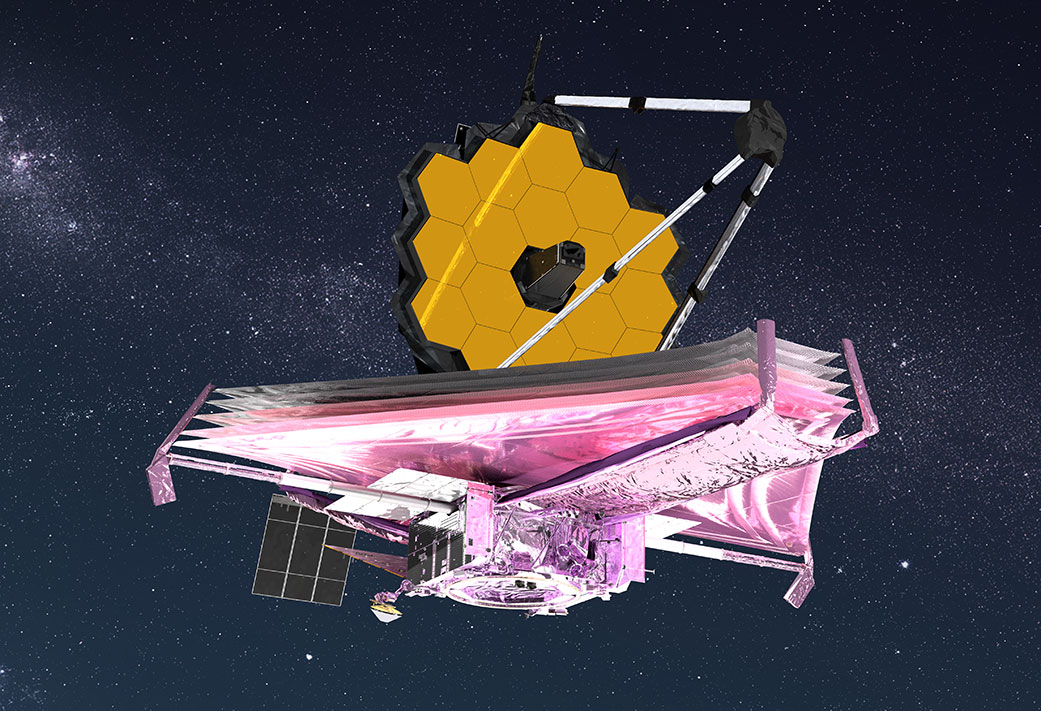
One of the standout features of JWST is its massive segmented primary mirror, measuring 6.5 meters (21 feet) in diameter. This mirror is composed of 18 hexagonal segments that can be individually adjusted to achieve optimal focus. In addition, JWST carries four state-of-the-art scientific instruments that will enable astronomers to study a wide range of phenomena, from exoplanets to distant galaxies.
Scientific Goals and Discoveries
JWST’s mission objectives are diverse and ambitious. By studying the formation of galaxies, stars, and planetary systems, scientists hope to gain insights into the origins of our universe and shed light on fundamental questions about cosmic evolution. The telescope will also play a key role in characterizing exoplanets and searching for signs of habitability beyond our solar system.
Challenges and Innovations
Developing a space telescope as complex as JWST has not been without challenges. From technical hurdles to budget overruns, the project has faced numerous obstacles over its decades-long development process. However, the scientific community remains optimistic about the potential breakthroughs that JWST could deliver once it begins operations.
The Future of Astronomy
As we eagerly await the launch of the James Webb Space Telescope, anticipation runs high among astronomers and space enthusiasts worldwide. With its advanced capabilities and cutting-edge technology, JWST promises to push the boundaries of human knowledge and inspire new generations to explore the wonders of our vast universe.
The James Webb Space Telescope stands as a testament to human ingenuity and curiosity, offering a glimpse into a future where we continue to unravel the mysteries of existence one star at a time.
9 Insights into the James Webb Space Telescope: Revolutionizing Our Understanding of the Universe
- The James Webb Space Telescope is a powerful successor to the Hubble Space Telescope.
- It is designed to study every phase in the history of our Universe, from the first galaxies to the formation of stars and planets.
- The telescope’s primary mirror is made up of 18 hexagonal segments that unfold after launch.
- It will be positioned at the second Lagrange point (L2), about 1.5 million kilometers from Earth.
- Webb will primarily observe in the infrared spectrum, allowing it to see through dust clouds and study cool objects in space.
- Its instruments are designed to detect faint signals from distant objects, helping us understand more about the early Universe.
- The telescope has a sunshield the size of a tennis court to protect it from heat and light coming from the Sun, Earth, and Moon.
- Webb’s mission is expected to last for at least 10 years, providing valuable data for astronomers around the world.
- ‘First Light’ images from Webb are anticipated to revolutionize our understanding of the cosmos.
The James Webb Space Telescope is a powerful successor to the Hubble Space Telescope.
The James Webb Space Telescope represents a significant advancement in space exploration as a powerful successor to the iconic Hubble Space Telescope. With its cutting-edge technology and enhanced capabilities, JWST is poised to revolutionize our understanding of the universe by providing unprecedented insights into distant galaxies, stars, and planetary systems. This next-generation telescope promises to unveil hidden cosmic mysteries and pave the way for groundbreaking discoveries that will shape our knowledge of the cosmos for years to come.
It is designed to study every phase in the history of our Universe, from the first galaxies to the formation of stars and planets.
The James Webb Space Telescope is a marvel of scientific ingenuity, meticulously crafted to delve into every chapter of our cosmic history. With its advanced capabilities, JWST is poised to unravel the mysteries of the universe by studying the evolution from the earliest galaxies to the birth of stars and planets. By peering back in time and capturing the faintest signals from distant celestial bodies, this groundbreaking telescope promises to provide unprecedented insights into the fundamental processes that have shaped our cosmos over billions of years.
The telescope’s primary mirror is made up of 18 hexagonal segments that unfold after launch.
The James Webb Space Telescope’s primary mirror is a marvel of engineering, consisting of 18 hexagonal segments that unfurl like a cosmic puzzle after its launch into space. This intricate design allows the telescope to achieve optimal focus and gather light from distant celestial objects with unparalleled precision. The unfolding of these mirror segments represents a crucial moment in the telescope’s journey, signaling the transition from its compact launch configuration to its fully operational state, ready to unveil the mysteries of the universe in stunning detail.
It will be positioned at the second Lagrange point (L2), about 1.5 million kilometers from Earth.
The James Webb Space Telescope is set to be positioned at the second Lagrange point (L2), located approximately 1.5 million kilometers from Earth. This strategic placement at L2 offers several advantages for the telescope, including a stable gravitational environment and minimal interference from Earth’s heat and light. By being stationed at this vantage point in space, the JWST will be able to conduct its observations with unparalleled precision and clarity, unlocking new insights into the mysteries of the universe that lie beyond our planet’s reach.
Webb will primarily observe in the infrared spectrum, allowing it to see through dust clouds and study cool objects in space.
The James Webb Space Telescope, known as Webb, is set to revolutionize our understanding of the cosmos by primarily observing in the infrared spectrum. This unique capability enables Webb to penetrate dust clouds that obscure traditional telescopes and study cool objects in space with unprecedented clarity. By harnessing the power of infrared light, Webb will unveil hidden phenomena and provide valuable insights into the mysteries of the universe that have long remained beyond our reach.
Its instruments are designed to detect faint signals from distant objects, helping us understand more about the early Universe.
The instruments onboard the James Webb Space Telescope are meticulously crafted to capture faint signals emanating from distant celestial objects, offering a window into the mysteries of the early Universe. By detecting these subtle signals, scientists can delve deeper into the origins and evolution of galaxies, stars, and planetary systems, providing invaluable insights into the cosmic processes that shaped our universe billions of years ago.
The telescope has a sunshield the size of a tennis court to protect it from heat and light coming from the Sun, Earth, and Moon.
The James Webb Space Telescope is equipped with a remarkable sunshield that spans the size of a tennis court, serving as a crucial shield against the intense heat and light emanating from the Sun, Earth, and Moon. This innovative technology plays a vital role in maintaining the telescope’s sensitive instruments at optimal operating temperatures, allowing it to capture clear and precise observations of celestial objects without interference from external sources of radiation.
Webb’s mission is expected to last for at least 10 years, providing valuable data for astronomers around the world.
Webb’s mission is anticipated to extend for a minimum of 10 years, offering a wealth of valuable data that will benefit astronomers globally. Over this extended period, the telescope’s observations and discoveries are poised to deepen our understanding of the universe, uncovering new insights into celestial phenomena and cosmic evolution. The longevity of Webb’s mission underscores its significance as a pivotal tool for advancing astronomical research and expanding our knowledge of the cosmos.
‘First Light’ images from Webb are anticipated to revolutionize our understanding of the cosmos.
Anticipated to revolutionize our understanding of the cosmos, the ‘First Light’ images captured by the James Webb Space Telescope are poised to unveil a new era of discovery in astronomy. These groundbreaking images, expected to be of unparalleled clarity and detail, hold the potential to reveal cosmic phenomena and celestial objects in ways never seen before. With its advanced technology and precision instruments, Webb’s ‘First Light’ images are set to provide astronomers with invaluable insights into the mysteries of our universe, opening doors to new realms of exploration and knowledge.